

If you want the coziest sleep, most people will tell you to pick cotton sheets. Cotton feels soft and lets your skin breathe, which is why 79% of people say it helps them sleep better. Only 12% choose bedding fabric polyester for comfort, but you might like it if you want sheets that are easy to wash and last a long time. People often pick cotton for its natural feel and allergy-friendly qualities, while polyester wins points for price and simple care. Think about what matters most to you—temperature, allergies, or easy cleaning—before you decide.
أهم النقاط
Cotton bedding is soft, breathable, and hypoallergenic, making it ideal for sensitive skin and hot sleepers.
Polyester bedding is durable, easy to care for, and budget-friendly, but it can trap heat and moisture, which may lead to discomfort.
For those with allergies, cotton is a better choice as it helps keep dust mites away and can be washed in hot water to remove allergens.
Consider your sleep preferences: choose cotton for comfort and breathability, and polyester for easy maintenance and longevity.
Bedding Fabric Polyester vs Cotton
Material and Feel
When you touch your sheets, you want them to feel soft and cozy. Cotton bedding feels crisp and smooth, especially if you pick high-quality types like Egyptian cotton. Over time, cotton gets even softer with each wash. You might notice that cotton feels natural and gentle on your skin. It is also hypoallergenic, so it works well if you have sensitive skin.
Bedding fabric polyester feels different. It is smooth and sometimes slippery. Some people like this silky touch, but it does not have the same breathability as cotton. Polyester does not get softer over time like cotton does. If you want sheets that feel more natural and get cozier with every wash, cotton is a great choice.
Here’s a quick look at how these fabrics are made:
مادة | Manufacturing Process | Nature |
|---|---|---|
قطن | Involves agricultural activities such as planting, harvesting, and cleaning | Organic |
بوليستر | Produced through industrial and energy-intensive processes involving polymerization | Synthetic |
Cotton comes from plants and goes through farming and cleaning. Bedding fabric polyester is made in factories using chemicals and energy. This difference affects how each fabric feels and how it reacts to your skin.
قابلية التنفس
If you get hot at night, you want sheets that let air flow. Cotton bedding is famous for its breathability. It lets your skin breathe and helps you stay cool. Studies show that cotton allows more airflow than bedding fabric polyester. When you sleep in a warm room, cotton helps you sweat less and feel more comfortable.
Cotton bedding has better thermal properties and absorbs more moisture than polyester.
Polyester is less hygroscopic, so you might sweat more if you use it in hot and humid conditions.
Cotton’s textile structure makes it more breathable than polyester.
You will notice the difference if you often wake up feeling too warm. Cotton sheets help you stay cool, while bedding fabric polyester can trap heat.
التحكم في الرطوبة
Moisture control is important if you sweat at night or live in a humid place. Cotton does a great job at wicking away moisture. Its open weave, especially in percale cotton, lets air move freely and helps sweat evaporate. This keeps you dry and comfortable.
Polyester sheets usually have lower breathability, which can make you feel hotter.
Modern polyester sheets have improved, but they still do not match cotton’s natural ability to wick moisture.
Cotton percale’s open weave lets in about 40% more airflow than denser fabrics.
The grid-like structure of cotton is great for moving moisture away from your skin, especially when humidity is high.
If you want bedding that keeps you cool and dry, cotton is the better choice. Bedding fabric polyester may work if you want something easy to care for, but it does not manage moisture as well as cotton.
Comfort and Sleep Experience

نعومة
When you slip into bed, you want your sheets to feel soft and inviting. Cotton bedding stands out for its gentle softness. Many people say cotton sheets feel cozier and get even softer every time you wash them. You might notice that natural fibers like cotton give you a light, airy feel. This makes cotton a favorite for people who sweat at night or want a cool, comfortable sleep.
Cotton bedding is known for its gentle softness that improves with each wash.
Many consumers prefer cotton for its cozy yet breathable feel.
Natural fibers like cotton offer more comfort than synthetic options.
Bedding fabric polyester feels different. It can feel smooth and sometimes a bit slippery. Some people like this silky touch, but it does not get softer over time like cotton. If you want sheets that feel more natural and get cozier with every wash, cotton is a great choice.
نصيحة: If you love that fresh, crisp feeling when you get into bed, cotton sheets will likely make you happiest.
حساسية الجلد
If you have sensitive skin, the type of bedding you choose matters a lot. Cotton is gentle and rarely causes irritation. It lets your skin breathe and helps keep you cool. This is important if you have skin conditions like eczema or allergies.
Bedding fabric polyester can sometimes cause problems for sensitive skin. It traps heat and moisture, which can make you sweat more. This warm, damp environment can lead to bacteria and fungi growth. Some people notice itching, redness, or even rashes after sleeping on polyester sheets. The chemicals used to make polyester can also cause allergic reactions in some people.
Polyester traps heat and moisture, which can irritate your skin.
Synthetic fibers may cause itching, redness, or rashes, especially if you have sensitive skin.
Polyester repels water, so sweat stays on your skin and can clog pores.
Static electricity from polyester can attract dust and allergens.
ملاحظة: If you want to avoid skin irritation, choose breathable fabrics like cotton. They help keep your skin cool and dry.
Noise
You might not think about noise when picking out sheets, but it can affect your sleep. Cotton bedding is usually quiet. When you move around at night, cotton sheets do not make much sound. This helps you stay asleep if you are a light sleeper.
Bedding fabric polyester can be a little noisy. The material sometimes makes a rustling or crinkling sound when you shift in bed. If you are sensitive to noise, this could bother you and wake you up during the night.
Cotton sheets are soft and quiet.
Polyester sheets may make a rustling sound when you move.
نصيحة: If you toss and turn at night, quiet cotton sheets can help you sleep more soundly.
Durability and Maintenance
طول العمر
When you buy new sheets, you want them to last. Polyester bedding stands out for its durability. You can expect polyester sheets to last about 5 to 7 years, even with regular use. Cotton bedding usually lasts 2 to 4 years. Polyester keeps its strength after many washes, while cotton loses some strength over time. If you use your sheets every night, polyester will hold up better in high-use settings.
Here’s a quick look at how long each type lasts:
قماش | متوسط العمر | احتفاظ القوة بعد دورات الغسيل | عمر الخدمة في البيئات عالية الاستخدام |
|---|---|---|---|
بوليستر | 5-7 سنوات | ≥90% بعد 50 دورة | 5-7 سنوات |
قطن | 2–4 سنوات | 70–80% بعد 20–30 دورة | 2–4 سنوات |
Cotton sheets can shrink, fade, or pill after repeated washing. Polyester resists shrinking and pilling, so it stays looking new longer. If you want bedding that keeps its shape and color, bedding fabric polyester is a smart pick.
Cotton fibers are more likely to shrink and fade.
Polyester fibers resist pilling and keep their color.
Care and Cleaning
You want sheets that are easy to wash and dry. Polyester bedding is simple to care for. You can wash it in warm water and tumble dry on low heat. It rarely wrinkles, so you don’t need to iron it. Cotton bedding needs a gentle wash and may shrink 3–5% after washing. You might need to iron cotton sheets to keep them smooth.
جانب الرعاية | مفروشات بوليستر | مفروشات قطنية |
|---|---|---|
Washing Instructions | Warm water, mild detergent, no bleach | Warm water, gentle detergent, pre-wash recommended |
Drying Instructions | Tumble dry low heat, remove promptly to avoid wrinkles | Remove promptly, may shrink slightly after washing |
Polyester is machine-washable and does not shrink or require ironing.
Cotton can shrink and often needs ironing to remove wrinkles.
Polyester bedding should not be mixed with other textiles during washing.
Cotton bedding may shrink 4% to 8% after washing, especially at high temperatures.
نصيحة: If you want bedding that’s easy to care for and stays smooth, polyester is a great choice. If you love the feel of cotton, just remember it needs a little more attention.
Health and Allergy Factors
خصائص مضادة للحساسية
If you have allergies or sensitive skin, you want bedding that keeps you comfortable all night. Cotton bedding is a top pick for many people with allergies. It comes from natural fibers and usually does not cause skin irritation. Cotton lets your skin breathe and helps keep dust mites away. You can wash cotton sheets in hot water, which removes allergens like pollen and pet dander.
Polyester bedding is different. It is made from synthetic fibers. Some people with sensitive skin notice more itching or redness when they use polyester sheets. Polyester can trap heat and moisture, which may lead to bacteria or mold growth. This can make allergies worse for some people.
نصيحة: If you have asthma or eczema, cotton bedding may help you sleep better by reducing skin irritation and keeping allergens away.
Chemical Treatments
You might not think about chemicals when you buy new sheets, but they can affect your health. Both cotton and polyester bedding often go through chemical treatments during production. Some of these chemicals can cause problems for your skin or even your overall health.
Here are some common chemicals found in bedding:
Chemical | Where You Find It | Possible Health Effects |
|---|---|---|
Both cotton and polyester | May contain heavy metals like lead; can cause health complaints | |
Formaldehyde | Used in dye production | Can cause skin irritation |
PFAs | Both fabrics | Linked to cancer and fertility problems |
Alkylphenols | Both fabrics | May increase breast cancer risk |
Flame Retardants | Both fabrics | Can disrupt hormones and may cause cancer |
Pesticides | Cotton farming | Harmful to health and the environment |
Some dyes have toxic heavy metals. Formaldehyde, used in some dyes, can irritate your skin. PFAs, sometimes called “forever chemicals,” have links to cancer and fertility issues. Alkylphenols may raise the risk of breast cancer. Flame retardants can disrupt hormones and may even cause cancer. Cotton farming often uses pesticides like glyphosate, which can harm your health and the planet.
ملاحظة: If you want to avoid these chemicals, look for bedding labeled “organic” or “Oeko-Tex certified.” These options use fewer harmful substances and are safer for you and your family.
Pros and Cons Overview
Polyester Pros and Cons
When you look at polyester bedding, you see a lot of practical benefits. You might love how easy it is to care for these sheets. They dry quickly, so you can wash them in the morning and put them back on your bed by night. Polyester costs less than cotton, which helps if you want to save money. The fabric resists wrinkles and keeps its color after many washes. You also get strong, flexible sheets that last a long time.
But polyester bedding does have some downsides. The fabric can trap heat, so you might feel too warm or sweaty at night. If you sweat, the sheets can feel sticky or clammy against your skin. Polyester does not breathe as well as cotton, which can bother you if you have sensitive skin. The material often builds up static, and it can pill over time. Polyester is not eco-friendly. Making these sheets uses a lot of energy and water, and the fabric does not break down in nature.
Here’s a quick list to help you decide:
👍 Quick-drying and easy to wash
👍 Low cost and long-lasting
👍 Resists wrinkles and fading
👎 Can feel hot, sticky, or clammy
👎 Not breathable; may irritate sensitive skin
👎 Prone to static and pilling
👎 Not environmentally friendly
Cotton Pros and Cons
Cotton bedding feels soft and natural. You get sheets that let your skin breathe, so you stay cool and dry. Cotton is gentle, which makes it a great choice if you have allergies or sensitive skin. Many people say cotton sheets help them sleep better and feel more comfortable.
But cotton sheets need a little more care. They can shrink after washing and wrinkle easily. Cotton takes longer to dry than polyester. The fabric may not last as long, especially if you wash it often.
المزايا | سلبيات |
|---|---|
نعومة | متانة |
قابلية التنفس | انكماش |
مضاد للحساسية | مقاومة التجعد |
Guest satisfaction | Drying time |
If you want comfort and breathability, cotton is hard to beat. If you want easy care and durability, polyester might fit your needs better.
Choosing the Right Bedding
للنوم الساخن
If you get hot at night, you want bedding that keeps you cool and dry. Cotton sheets work best for hot sleepers. They feel light and let your skin breathe. Cotton also pulls sweat away from your body, so you stay comfortable. Polyester sheets trap heat and can make you feel sweaty or sticky.
القطن يمتص الرطوبة and helps it evaporate, giving you a cooling feeling.
Cotton is lightweight and breathable.
Polyester holds onto heat and does not let air flow as well.
نصيحة: If you wake up sweaty, pick cotton sheets for a cooler sleep.
For Cold Sleepers
Do you get chilly at night? You might want bedding that keeps you warm. Polyester sheets, especially fleece, hold in heat and feel cozy. Cotton flannel sheets also work well because they trap warmth but still let your skin breathe. Cotton sateen sheets have a heavier weave, so they keep you warmer too.
Polyester fleece is very warm but may feel too hot if you sweat.
Cotton flannel is soft, breathable, and a great insulator.
Cotton sateen traps more heat for extra warmth.
Try cotton flannel or sateen if you want warmth without overheating.
For Allergy Concerns
If you have allergies, your bedding choice matters. Cotton is a safe pick because it is hypoallergenic and easy to wash in hot water. Synthetic bedding, like polyester, can collect more dust mites and allergens. You can also use special covers that block dust mites.
Use zippered, allergen-proof covers for pillows and mattresses.
Wash bedding often to remove dust and pollen.
Choose cotton with a tight weave to keep allergens out.
ملاحظة: Allergy-proof covers and regular washing help you breathe easier at night.
للعناية السهلة
Busy life? Polyester bedding makes laundry simple. You can toss it in the washer and dryer, and it comes out wrinkle-free. Cotton sheets need a little more care. They might shrink or wrinkle, so you may need to iron them or dry them gently.
Polyester bedding is your friend if you hate ironing and delicate laundry days. It stands up to machine washing and drying with very little wrinkle or shrinkage.
القدرة على تحمل التكاليف والقيمة
You might wonder about cost. Polyester bedding usually costs less than cotton. Cotton feels more luxurious and can last longer if you take care of it. Here’s a quick look at prices:
Product Type | مادة | سعر |
|---|---|---|
HEDFRYLE Comforter | بوليستر | $39.99 |
ÄNGSLILJA Duvet Set | قطن | $39.99 |
LUKTVICKER Comforter | قطن | $79.99 |
BERGPALM Comforter | قطن | $69.99 |
DVALA Sheet Set | قطن | $29.99 |
ULLVIDE Sheet Set | بوليستر | $49.99 |
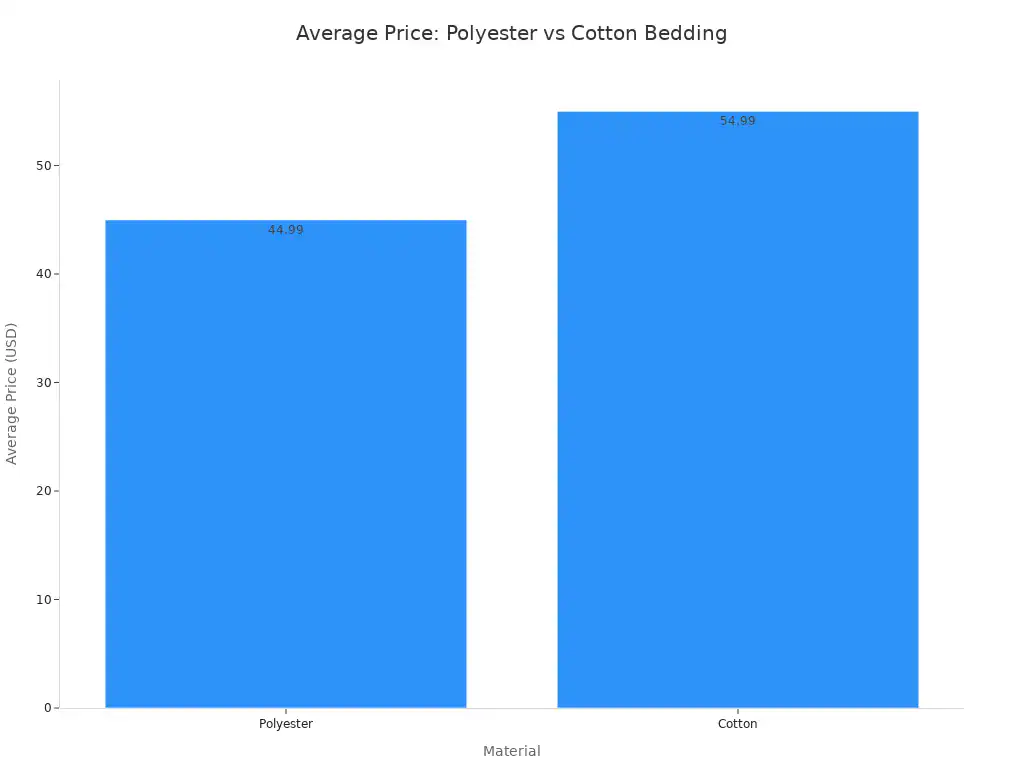
If you want to save money and need easy care, polyester is a smart choice. If you want comfort and breathability, cotton is worth the extra cost.
You want bedding that matches your sleep style. Cotton feels soft, breathes well, and helps if you have allergies or sleep hot. Polyester lasts longer and needs less care, but it can trap heat. Here’s a quick look:
نوع المفروشات | مزايا | قنصل |
|---|---|---|
قطن | Breathable, soft, natural, hypoallergenic | Needs more care, higher price |
بوليستر | Durable, easy care, budget-friendly | أقل نفاذية للهواء، يحبس الحرارة |
Think about what matters most—comfort, easy care, or price. If you want cool, comfy sleep, cotton is your best bet. For easy laundry and savings, polyester works well.
أسئلة شائعة
Is cotton bedding better for sensitive skin?
Cotton feels gentle and soft. You will notice less irritation if you have sensitive skin. The natural fibers let your skin breathe and help keep you cool. Polyester may trap heat and moisture, which can cause itching or redness.
Does polyester bedding last longer than cotton?
Polyester sheets stay strong after many washes. You can use them for years without seeing much wear. Cotton sheets feel softer but may shrink, fade, or pill over time. If you want long-lasting bedding, polyester is a smart choice.
Can you wash cotton and polyester sheets the same way?
You can wash both in a machine. Use warm water for polyester and gentle detergent for cotton. Polyester dries fast and resists wrinkles. Cotton may shrink and wrinkle, so remove it quickly from the dryer. Always check the care label.
Which bedding is best for hot sleepers?
Cotton sheets work best if you get hot at night. The fabric lets air flow and pulls sweat away from your skin. Polyester traps heat and can make you feel sweaty. For cool sleep, pick cotton.
انظر أيضاً
الاختيار بين أغطية سرير من الألياف الدقيقة والبوليستر من أجل الراحة
 Arabic
 English
 Spanish
 French
 Italian
 Portuguese
 Vietnamese
