
What Does Polyester Fabric Look Like?
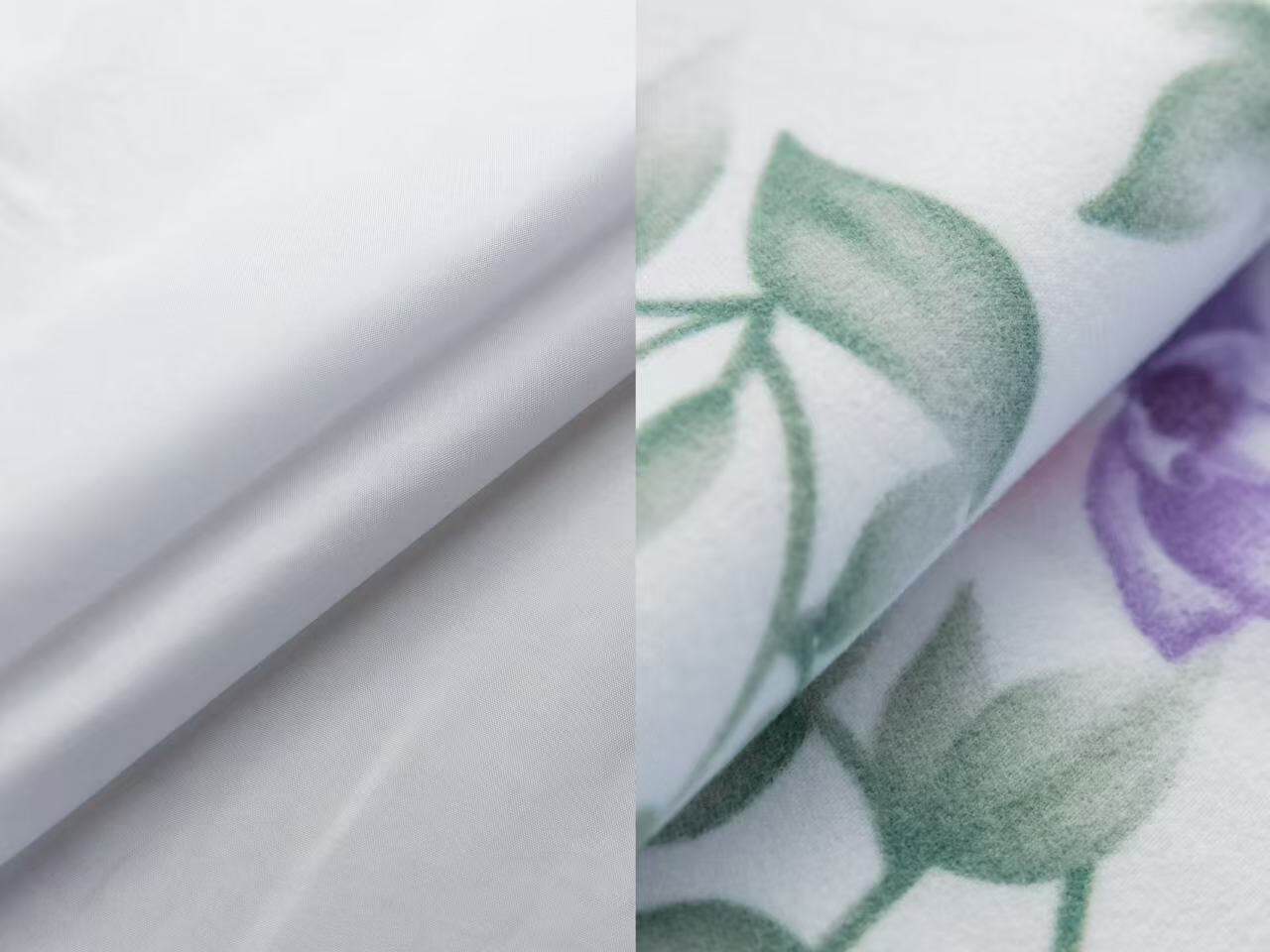
So, what does polyester look like? There isn't one fixed answer. Depending on the yarn, weave, weight and finishing, polyester can look smooth or brushed, matte or shiny, opaque or slightly see-through. That range is exactly why appearance and touch alone cannot reliably confirm that a fabric is polyester: the same fiber can be processed into very different surfaces, and other fibers can be finished to imitate some of those same surfaces. For buyers, the practical starting point is a supplier's composition declaration and specification sheet, with visual inspection used as a preliminary check rather than final proof.
Quick Identification Summary
A visual check can describe the surface, but it cannot confirm fiber composition. Keep preliminary observations separate from purchasing evidence.
Possible Clue (Not Proof)
- Smooth or slightly shiny surface
- Sheen that shifts under light
- Smooth, raised or brushed surface
- Open or dense construction
- Wrinkle recovery under light handling
Reliable Confirmation
- Supplier composition declaration
- Match against an approved reference sample
- Construction spec: GSM, weave, denier, width
- Professional lab fiber identification
Why Polyester Does Not Have One Fixed Appearance
Polyester doesn't have a single fixed appearance because the fiber itself is only the starting point. Filament fineness and filament count set how fine or bulky the yarn feels. Yarn texturing affects stretch and loft. Weave determines whether the surface sits flat, textured or patterned. Fabric density and GSM influence how much light passes through and how substantial the fabric feels in hand. Brushing lifts fiber to the surface and softens the handle, while heat setting and finishing lock in the final texture, shine level and stability. Change any one of these variables, and the same base fiber can end up looking and feeling like a different fabric.
This is also why two rolls from two different suppliers, both declared as 100% polyester, can look nothing alike on a light table. The fiber content line on a spec sheet confirms composition; it doesn't predict appearance on its own.
What Polyester May Look and Feel Like
Polyester bedding fabric can be matte or shiny, smooth or brushed, opaque or slightly see-through, plain-dyed or printed, and pressed with a surface pattern or woven with one built in. None of these is more "correctly polyester" than another; they are different construction choices applied to the same base fiber.
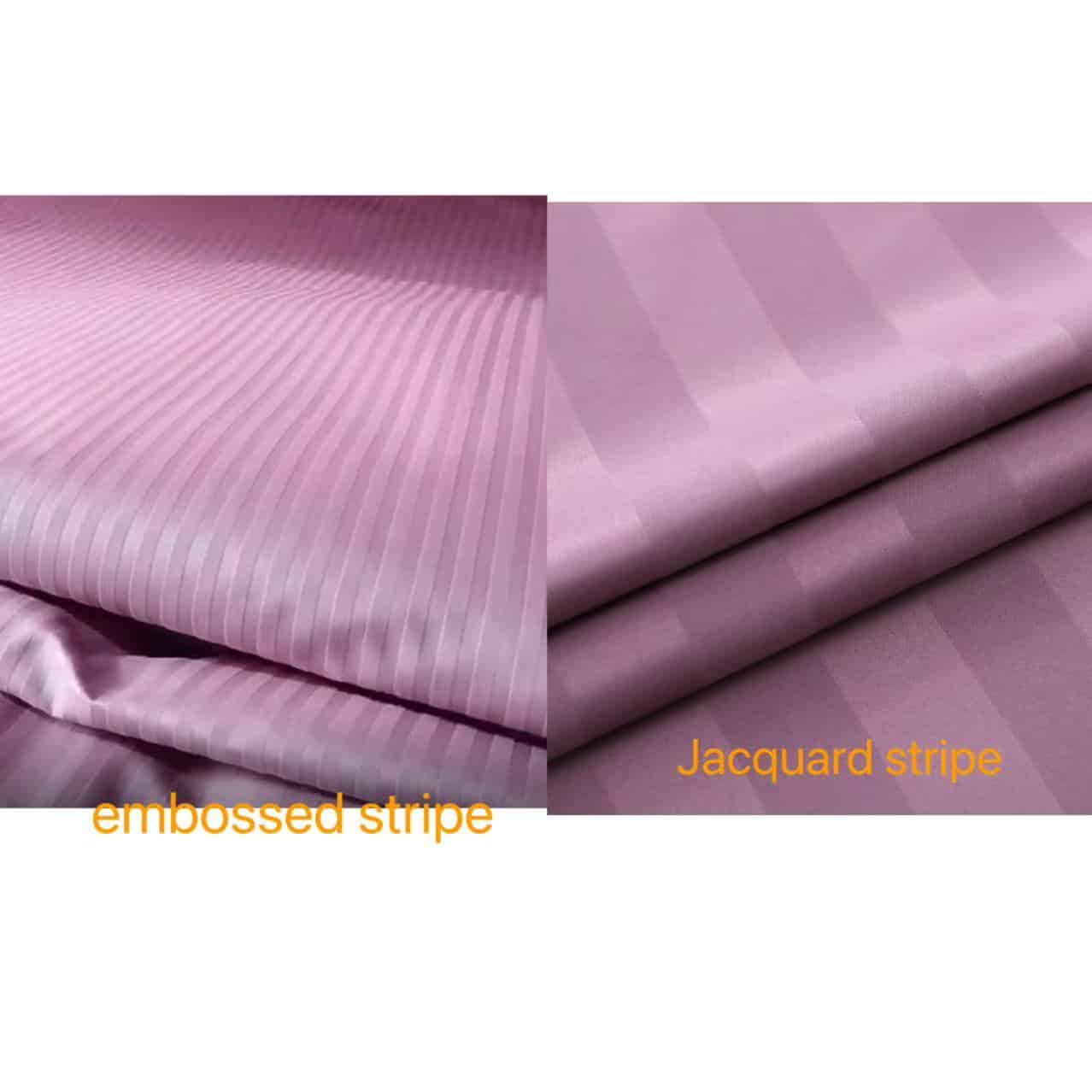
Dyed microfiber can look smooth or lean toward a cotton-like matte finish, depending on brushing and finishing. Printed microfiber's appearance depends on the base fabric, print route, color depth and finishing. Peach skin fabric normally has a fine brushed, matte surface, so it looks different from a smoother woven microfiber even when both are 100% polyester. Embossed microfiber's pattern clarity depends on base-fabric stability, brushing level, embossing temperature and finishing; an overly fluffy surface can blur the pressed pattern. Jacquard microfiber works differently: its design is woven into the fabric structure rather than printed or pressed onto the surface.
Perfectextile's printed microfiber is commonly developed at approximately 65–135 GSM and 220–280 cm. Peach skin fabric is approximately 80–125 GSM and 220–280 cm. Jacquard microfiber is approximately 90–125 GSM with 240, 250 or 260 cm widths. These ranges show how widely 100% polyester surfaces can vary; the exact GSM, tolerance and usable width still need to be confirmed for each order.
Is Polyester Always Shiny?
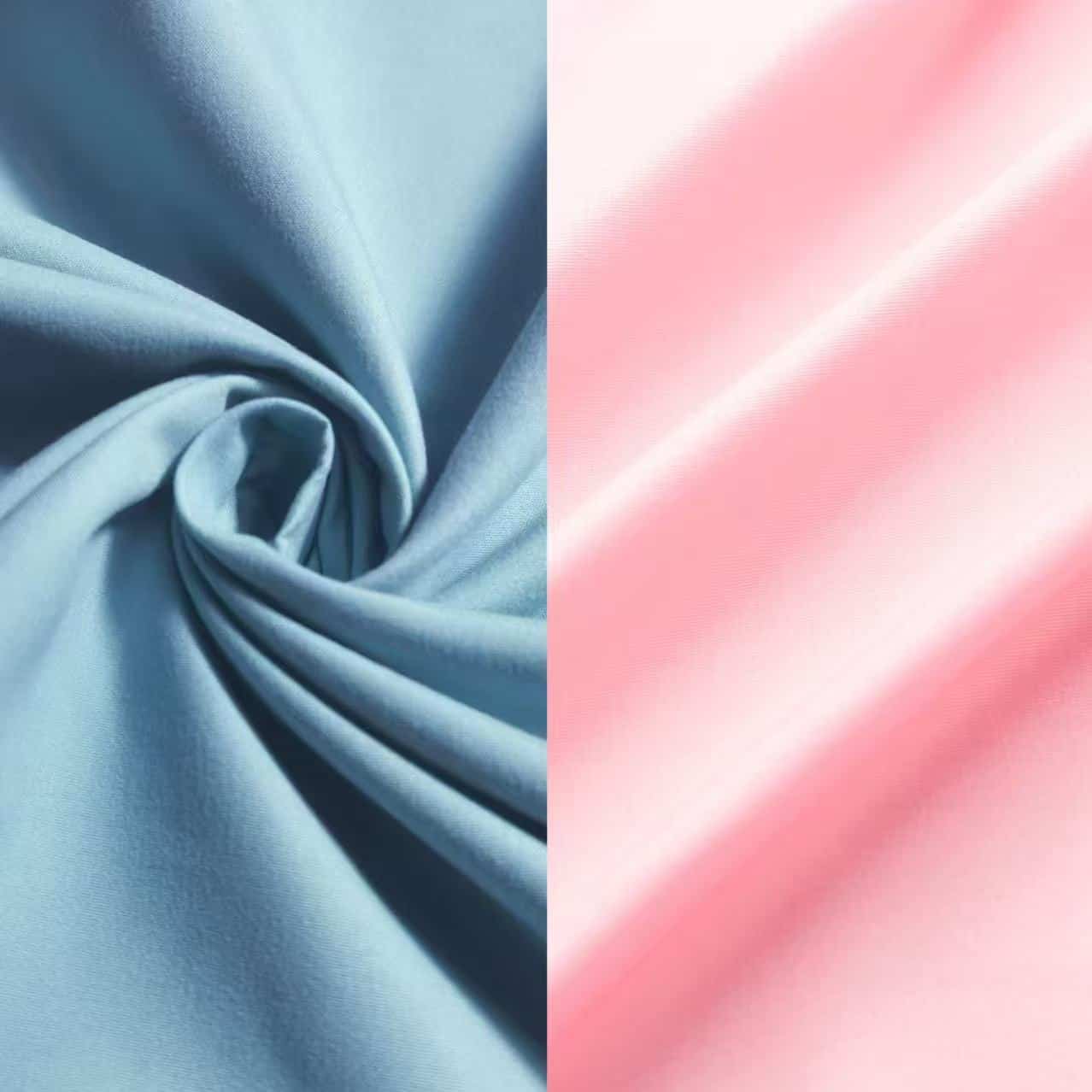
No. Shine in polyester fabric is affected by filament characteristics, weave and finishing, not by the word "polyester" alone. A satin weave exposes longer yarn floats, and a smooth surface can reflect more light. Brushing or a matte finish scatters that reflection and produces a duller-looking surface. Buyers should compare sheen under the same lighting because different light sources can change the visual result.
Is Polyester See-Through?
It depends on GSM, yarn, weave density, color and finishing, not on composition alone. A lightweight, open construction in a pale color may show more light transmission. A denser or higher-GSM construction may be more opaque, but neither GSM nor color confirms opacity by itself. White polyester is not automatically transparent or opaque, so buyers should evaluate the finished sample over a controlled background and define the intended use.
Can Buyers Identify Polyester by Touching It?
Touch can describe smoothness, surface raising, stiffness and drape, but it has real limits as a composition test. A soft, warm handle may come from brushing or a peach-skin finish rather than from the fiber type. A well-brushed polyester can feel cotton-like, while a smooth, tightly woven polyester can feel closer to a lining fabric. Touch is useful for comparing a roll with an approved reference, but it is not a substitute for composition documentation.
Identification Methods Ranked by Reliability
| Method | What It Can Show | تحديد | Recommended Use |
|---|---|---|---|
| Supplier composition declaration | Declared fiber content and construction | Depends on supplier accuracy and documentation | Primary reference for sourcing decisions |
| Compare against approved reference sample | Whether current fabric matches an agreed standard | Only useful if a reference sample was approved and kept | Sample-to-bulk comparison during inspection |
| Construction data review | GSM, weave, denier and width consistency | Does not by itself prove fiber composition | Confirming an order matches the agreed spec |
| Visual and touch inspection | A quick, preliminary impression | Can be misled by finishing, blends or brushing | Fast first screening, not final proof |
| Professional lab fiber identification | Verified composition data | Requires sending a sample out; adds time and cost | Formal verification when composition must be certified |
Why Water, Wrinkle, Sound and Flame Tests Can Mislead
Water beading, wrinkle recovery, a rustling sound and burn behavior are sometimes suggested as home identification tests, but each can be shaped by finishing, blends or construction rather than fiber alone. A water-repellent finish can be applied to non-polyester fabric, and a heavily processed polyester sample can absorb differently than an untreated one. Wrinkle recovery changes with weave and finishing as much as with fiber type, and sound depends heavily on fabric density and construction. A tightly woven, unbrushed polyester can rustle noticeably, while a brushed microfiber of the same fiber content is almost silent when handled.
A burn test is sometimes mentioned as a fiber check, but it destroys the sample, involves open flame and fumes, and blended or finished fabrics can produce unclear results. At best it is a preliminary indicator, not formal composition proof, and it should only be carried out by trained personnel under controlled conditions, not as a casual check on a sourcing floor or at home.
What a Bedding Fabric Buyer Should Confirm Before Sampling
Appearance can guide a first impression, but the specification is what actually gets approved. Before requesting a sample, it's worth having these points confirmed in writing.
- Fiber composition
- Yarn or filament specification
- GSM and tolerance
- Usable width
- نسج
- Fabric density
- Brushing side and level
- Surface reference
- Dyeing or printing route
- Color and design
- Opacity requirement
- Shrinkage requirement
- Pilling requirement
- ثبات اللون
- Rubbing fastness
- Sample-to-bulk tolerance
- Roll length
- Packing method
How Perfectextile's Polyester Microfiber Surfaces Are Developed
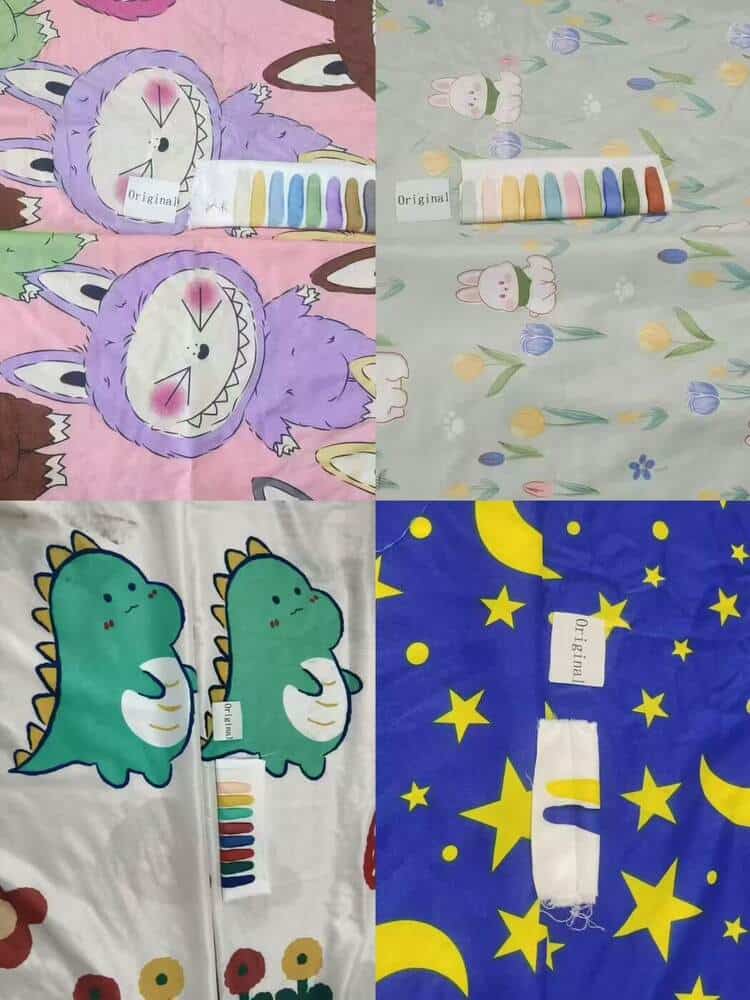
Perfectextile's production sequence for polyester microfiber runs from yarn stage through to packing, and appearance shifts at several points along the way.
At weaving, filament fineness and weave density set the base structure and starting hand feel. Brushing or preparation can shift a plain woven surface toward a softer, more matte finish, or leave it closer to its original state depending on the target product. Dyeing or printing then adds color and, depending on the route used, can change surface reflectance and opacity slightly. None of these stages changes the fiber itself; they change how that fiber is presented in the finished fabric.
See related pages: Quality Control.
When Visual Inspection Is Enough—and When It Is Not
Visual inspection is enough for preliminary sorting: separating obviously mismatched fabric, doing a quick check against an approved reference sample, or screening incoming rolls before a deeper review. It is not enough when a customer requires certified composition, when a specification dispute needs resolving, or when a new supplier's declaration hasn't yet been checked against actual production. In those situations, construction data and, where required, professional lab identification carry more weight than how a fabric looks or feels on the table. The practical rule of thumb: the higher the cost of being wrong, the further down this list a buyer should go before signing off.
أسئلة متكررة
What does polyester fabric look like?
It varies. Depending on yarn, weave, GSM and finishing, polyester can look smooth or brushed, matte or shiny, and opaque or slightly see-through. There is no single appearance that applies to all polyester fabric, which is why a supplier's specification matters more than a visual impression.
How can you identify polyester fabric without a tag?
Start with what's available: a supplier specification or purchase order, then compare the fabric against an approved reference sample if one exists. Visual and touch checks can support a preliminary judgment, but without a tag or declaration, formal confirmation typically requires professional fiber identification.
Is polyester always shiny?
No. Shine comes from filament shape, weave and finishing rather than the fiber itself. Satin weaves and smooth finishes tend to reflect more light, while brushed or matte-finished polyester scatters light and looks duller.
Is polyester see-through?
It can be, depending on GSM, weave density and color, but it isn't automatically transparent or automatically opaque. A lightweight, open-weave, pale-colored polyester fabric is more likely to show some see-through quality than a denser, higher-GSM construction.
What does polyester feel like to touch?
It depends on the finish. Polyester can feel crisp and cool, soft and warm after brushing, or close to other fibers depending on processing. Touch is a useful first impression but can be misled by finishing, so it shouldn't be treated as final proof of composition.
Can a burn test confirm polyester?
Not reliably on its own. A burn test damages the sample, involves flame and fumes, and blended or finished fabrics can produce unclear results. It is a preliminary method at best, and should only be performed by trained personnel under controlled conditions rather than as a standalone identification method.
Confirm Your Polyester Fabric Specification
Send us the product you're sourcing, target GSM, usable width, weave, brushing requirement, color or print, any testing requirement, and estimated quantity. We can help match a construction to your specification and prepare a reference sample.
 Arabic
 English
 Spanish
 French
 Italian
 Portuguese
 Vietnamese
