

When you want the best solid color bedding fabric, choose cotton, linen, or bamboo. These natural fibers let air flow and keep you cool at night. They pull moisture away from your skin, which helps you stay dry and comfortable. You also get protection against allergens because these fabrics fight bacteria and dust mites. Their strong fibers hold color well, so your bedding stays bright and fresh.
Puntos Clave
Choose natural fabrics like cotton, linen, or bamboo for breathable and comfortable bedding.
Bamboo is eco-friendly and hypoallergenic, making it ideal for sensitive skin.
Linen offers excellent moisture-wicking properties and gets softer with each wash.
Cotton is durable and easy to care for, perfect for everyday use.
Consider your climate and personal comfort when selecting bedding fabric.
Top Solid Color Bedding Fabric Choices
Choosing the right solid color bedding fabric can make a big difference in your sleep comfort and the look of your bedroom. Each fabric has its own strengths. You can use the tabla siguiente to compare the main qualities of each option:
Tejido | Transpirabilidad | Suavidad | Durabilidad | Hipoalergénico | Secado rápido | Cuidado |
|---|---|---|---|---|---|---|
Algodón | Alto | Suave | Alto | Sí | Moderado | Fácil |
Lino | Alto | Crisp | Alto | Sí | Alto | Moderado |
Bambú | Alto | Suave | Moderado | Sí | Alto | Fácil |
Seda | Moderado | Very Soft | Moderado | Sí | Alto | Delicate |
Microfibra | Moderado | Very Soft | Alto | No | Bajo | Fácil |
Blends | Varía | Varía | Varía | Varía | Varía | Varía |
Algodón
You will find cotton as the most popular solid color bedding fabric. Cotton feels soft and lets your skin breathe. It is easy to wash and holds up well over time. You can choose from different types of cotton, each with its own feel and benefits:
Característica | Percal | Satén |
|---|---|---|
Tejer | One-over-one-under | Three-over-one-under |
Sentir | Crisp, smooth | Silky, soft |
Peso | Lighter, more breathable | Heavier, retains heat |
Durabilidad | Durable, resistant to pilling | Less durable, can pill |
Wrinkle | Wrinkles easily | Naturally wrinkle-resistant |
Best for | Hot sleepers, year-round use | Cold sleepers, luxurious feel |
Percal gives you a crisp, cool touch. It works well if you get hot at night.
Satén feels silky and smooth. It keeps you warmer and looks shiny.
Egyptian cotton is famous for its long fibers. It feels extra soft and lasts a long time.
Cotton bedding keeps its color well, so your solid color bedding fabric stays bright after many washes.
Lino
Linen stands out for its cooling power and crisp texture. You will notice that linen bedding feels cool and fresh, even in hot weather. Linen’s hollow fibers help air move freely and wick away moisture. This means you stay dry and comfortable all night. Linen can absorb up to 20% of its weight in moisture without feeling damp. You will also find that linen bedding lasts for years and gets softer with each wash. If you want a solid color bedding fabric that feels natural and keeps you cool, linen is a smart choice.
Consejo: Linen works best in warm or humid climates because it helps regulate your body temperature.
Bambú
Bamboo bedding gives you a soft, smooth feel. It is gentle on your skin and resists dust mites and allergens. Bamboo fabric wicks moisture away quickly, so you stay dry and comfortable. You will also help the environment when you choose bamboo. Bamboo grows fast, uses little water, and does not need pesticides. It is biodegradable and helps absorb carbon dioxide from the air. If you want an eco-friendly solid color bedding fabric, bamboo is a great option.
Bamboo bedding is easy to care for and keeps its color well.
It feels cool and silky, perfect for sensitive skin.
Seda
Silk bedding feels very soft and smooth. You will notice that silk helps your skin and hair stay healthy. It absorbs less moisture than cotton, so your skin stays hydrated. The smooth surface reduces friction, which means fewer sleep lines and less hair breakage. Silk also resists dust mites and allergens. It helps keep your body temperature steady, so you sleep better. Silk bedding is delicate and needs gentle care, but it adds a touch of luxury to your room.
Beneficio | Descripción |
|---|---|
Moisture Retention | Silk absorbs less moisture than cotton, helping to retain skin hydration and enhance the efficacy of skincare products. |
Reduced Friction | The smooth surface of silk minimizes friction, reducing sleep creases and preventing hair breakage. |
Propiedades hipoalergénicas | Silk is resistant to dust mites and allergens, which can help reduce acne lesions and irritation. |
Thermoregulation | Silk helps maintain a stable body temperature, contributing to better sleep quality. |
Microfibra
Microfiber bedding is made from fine synthetic fibers. It feels very soft and smooth, almost like velvet. Microfiber is strong and does not pill easily. It is also wrinkle-resistant, so your bedding looks neat without ironing. Microfiber is affordable and easy to wash. However, it does not breathe as well as natural fibers. It can trap heat and moisture, which may feel uncomfortable in warm weather. Microfiber is not biodegradable and can harm the environment.
Advantages of Microfiber Bedding | Disadvantages of Microfiber Bedding |
|---|---|
Softness: Luxurious and velvety feel, promoting comfort. | Breathability: Synthetic material traps heat, leading to discomfort. |
Durability: Retains quality and does not pill easily. | Moisture Absorption: Retains moisture, making it uncomfortable in warm conditions. |
Wrinkle-resistant: Maintains a neat appearance without ironing. | Environmental Impact: Not biodegradable and has a negative environmental footprint. |
Affordability: Generally cheaper than natural fibers like cotton. | Prone to stains and can hold odors. |
Blends
Blended fabrics combine the best features of natural and synthetic fibers. For example, cotton-polyester blends give you comfort and strength. Linen-silk blends feel smooth and last longer. Blends resist wrinkles and are easy to care for. They also keep their color well, making them a good choice for solid color bedding fabric.
Fiber Combination | Natural Fiber Quality | Synthetic Fiber Quality | Resulting Characteristics |
|---|---|---|---|
Cotton + Polyester | Absorbency | Strength | Enhanced comfort, reduced wrinkling |
Wool + Nylon | Calor | Durabilidad | Improved resilience and versatility |
Linen + Silk | Transpirabilidad | Suavidad | Luxurious feel with durability |
Blends give you a balance of comfort, durability, and easy care.
They work well if you want bedding that looks good and lasts.
You can now see how each solid color bedding fabric offers unique benefits. Choose the one that fits your needs for comfort, care, and style.
Fabric Comparison
Comfort & Breathability
You want your bedding to feel soft and keep you cool at night. Cotton, linen, and bamboo all let air move through the fabric. This helps your body stay at a comfortable temperature. Sábanas de bambú, especially those made from 100% bamboo, stand out for breathability and temperature control. They wick away moisture quickly, so you do not feel sweaty. If you sleep hot, bamboo is a smart choice. Linen also feels cool and crisp. It works well in warm weather and absorbs moisture fast. Cotton gives you a soft touch and good airflow. Microfiber feels soft but does not breathe as well as natural fibers. Silk feels smooth and gentle on your skin, but it does not let air pass as easily as cotton or linen.
Tip: If you want the best comfort and breathability, choose pure bamboo, linen, or cotton for your solid color bedding fabric.
Durability & Longevity
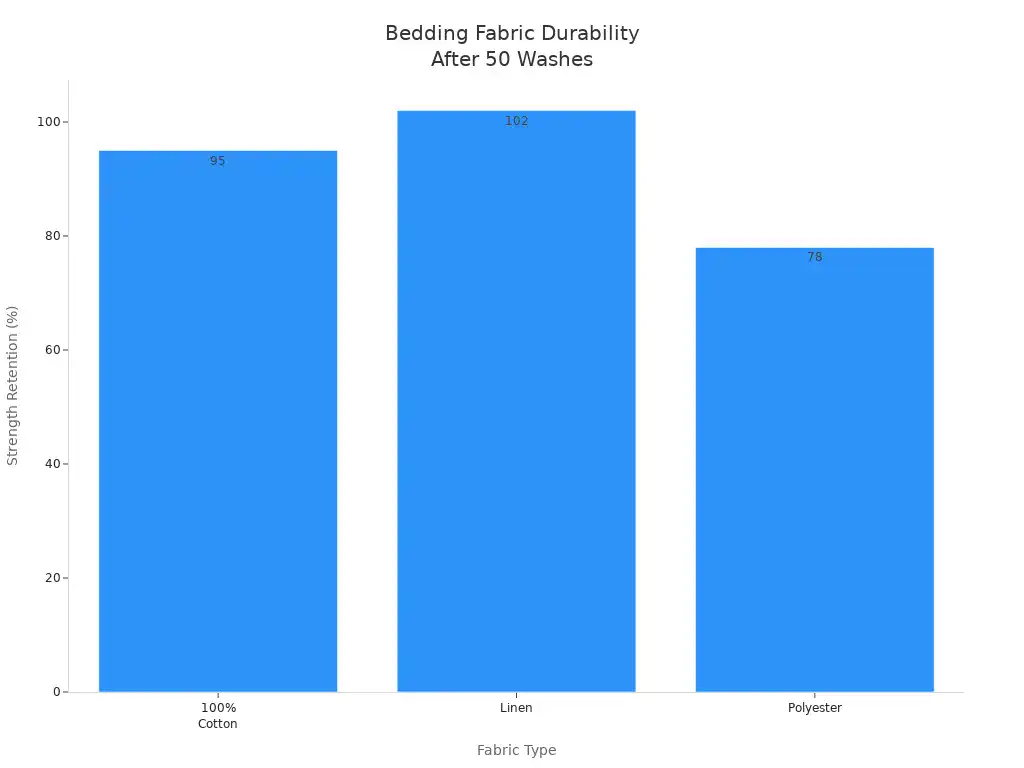
You want bedding that lasts for years. Linen and cotton both show strong results in durability tests. Linen gets even stronger after washing because its fibers align better. Cotton keeps its shape but may shrink a little. Microfiber resists pilling and stays smooth, but it can lose strength over time. Silk feels delicate and needs gentle care, so it may not last as long as other fabrics. Blended fabrics can offer a mix of strength and softness, depending on the blend.
Here is a table that shows how different fabrics perform in durability tests:
Tejido | Pilling Grade after 10,000 Rubs | Longevity (Years of Daily Use) |
|---|---|---|
100% Cotton | ~2.5–3.0 | ~2–3 |
100% Linen | ~3.5–4.0 | ~3–4 |
Linen also has natural antimicrobial properties. You do not need to wash it in hot water as often. Cotton and linen both reduce bacteria and allergens, making them good choices for sensitive skin.
Linen fibers become softer and more absorbent after washing.
Cotton may shrink, but linen keeps its shape.
Linen’s natural antimicrobial properties help keep your bedding fresh.
Retención de color
You want your bedding to keep its color after many washes. Bamboo fabric stands out for color retention and softness. After 20 washes, bamboo keeps 91% of its softness. Linen keeps 88%, and hemp keeps 85%. Bamboo also scores high for colorfastness, which means your bedding stays bright and fresh.
Tejido | Colorfastness to Washing (Grade) | Softness Retention After 20 Washes (%) |
|---|---|---|
Bambú | 4–5 | 91 |
Lino | 4 | 88 |
Hemp | 4 | 85 |
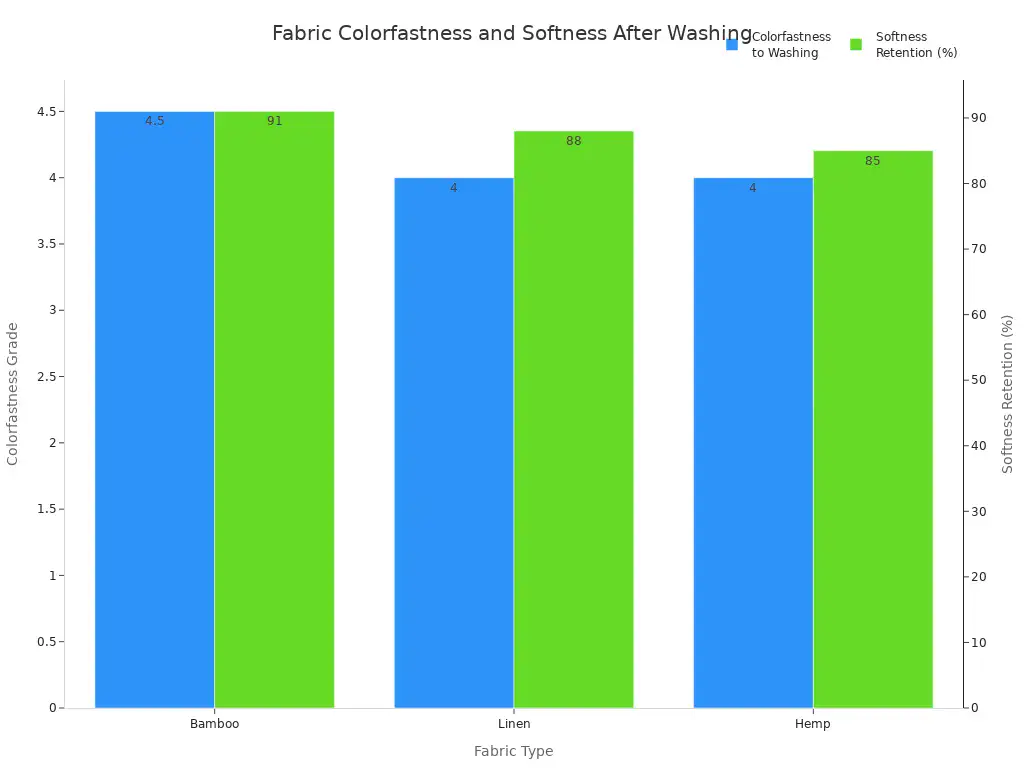
Bamboo keeps its color and softness better than linen and hemp. Cotton also holds color well, especially if you wash it in cool water. Microfiber and blends can keep colors bright, but they may not feel as soft after many washes.
Note: If you want your solid color bedding fabric to look new for a long time, bamboo is a top choice.
Mantenimiento
You want bedding that is easy to care for. Cotton is simple to clean. You can wash it in hot or warm water. Linen is strong but wrinkles easily and needs special care. Bamboo feels delicate and should be washed on a gentle cycle. Silk needs the most care. You should wash it with cold water and mild detergent. Microfiber is low-maintenance and dries quickly, but it can trap heat and moisture. Blended fabrics are usually easy to clean, but you should always check the care label.
Cotton: Easy to clean; machine washable.
Silk: Needs gentle care; use cold water and mild soap.
Linen: Durable but wrinkles; may need ironing.
Bamboo: Wash on gentle cycle; avoid harsh detergents.
Microfiber: Low-maintenance; dries fast.
Blends: Usually easy to care for; follow instructions.
Tip: If you want bedding that is easy to wash and care for, choose cotton, microfiber, or blends.
Pros, Cons & Best Use Cases
Cotton: Everyday Use
You will find cotton bedding comfortable, breathable, and durable. Many people choose cotton for daily use because it feels soft and lasts a long time. Consumer surveys show that cotton’s natural fibers help you sleep well. The US bedding market values cotton for its softness and strength. You can also find organic cotton, which supports eco-friendly choices. Ongoing improvements in cotton technology make it even better for your bed.
Consejo: Choose cotton if you want reliable, easy-to-care-for bedding for everyday comfort.
Linen: Cooling & Durability
Linen bedding keeps you cool and dry, especially in hot weather. You will notice that linen absorbs moisture quickly and dries fast. Linen’s durability improves with age, so your sheets get softer over time. The table below shows how linen compares to other fabrics in heat and moisture control:
Tejido | Heat Conduction | Absorción de humedad | Durabilidad |
|---|---|---|---|
Lino | Excelente | Alto | Improves with age |
Lana | Bueno | Bueno | Muy duradero |
Seda | Moderado | Moderado | Menos duradero |
Nota: Linen works best for hot climates and for people who want bedding that lasts.
Bamboo: Eco-Friendly & Hypoallergenic
Bamboo bedding feels soft and gentle on your skin. You can trust bamboo sheets if you have allergies or sensitive skin. Certifications like OEKO-TEX® and GOTS show that bamboo bedding is safe and eco-friendly. Bamboo grows quickly and uses less water, making it a smart choice for the environment.
OEKO-TEX®: Free from harmful substances
GOTS: Meets high environmental standards
USDA Organic: Supports organic farming
Silk: Luxury Feel
Silk bedding gives you a smooth, cool touch. You will enjoy silk if you want a luxury feel and care about your skin and hair. Silk helps keep your body temperature steady and wicks away moisture. The table below highlights silk’s benefits:
Factorizar | Beneficio |
|---|---|
Transpirabilidad | Keeps you cool and comfortable |
Textura | Reduces friction on skin and hair |
Hipoalergénico | Bueno para pieles sensibles |
Silk works best for those who want a touch of luxury and have sensitive skin.
Microfiber: Easy Care
Microfiber bedding is soft, wrinkle-resistant, and easy to wash. You will find it ideal if you want bedding that resists stains and dries quickly. Microfiber works well in homes with kids or pets.
Stain-resistant and easy to clean
Wrinkle-resistant, no ironing needed
Característica | Microfibra | Algodón |
|---|---|---|
Ease of Care | Muy fácil | Needs more care |
Resistencia a las manchas | Alto | Moderado |
Blends: Balanced Qualities
Blended fabrics combine the strengths of different fibers. You get comfort, durability, and easy care. Poly-cotton blends work well for everyday bedding. Bamboo blends suit sensitive skin and eco-friendly needs.
Tipo de tela | Propiedades | Mejores casos de uso |
|---|---|---|
Poly-cotton | Durable, easy care, moisture-wick | Everyday bedding |
Bamboo blends | Soft, eco-friendly | Sensitive skin, bedding |
Blends are a smart choice if you want balanced qualities in your bedding.
Choosing Your Solid Color Bedding Fabric
Climate & Season
You should match your bedding fabric to your local climate and the season. If your home stays warm, choose breathable fabrics like cotton, linen, or bamboo. These materials help you stay cool and dry. For cooler homes, you might prefer heavier fabrics like flannel or sateen cotton. Your personal comfort matters, too. Some people sleep hot, while others feel cold at night.
Factorizar | Descripción |
|---|---|
Clima | Is your home naturally warm or cool? |
Personal preference | Do you sleep hot or cold? |
Aesthetic | Crisp and fresh vs. warm and cuddly |
Care requirements | Some fabrics require more attention (e.g., linen, bamboo) |
Consejo: Dark colors absorb more heat. Choose lighter shades if you live in a hot area.
Alergias y Sensibilidades
If you have allergies or sensitive skin, you need to pick gentle, hypoallergenic fabrics. High-quality cotton sateen feels smooth and reduces friction. Silk sheets are also a great choice because they resist dust mites and wick away moisture. Linen and cotton blankets feel soft and become gentler with each wash. Wool can work if you choose fine merino or cashmere, but avoid coarse wool.
High-quality cotton sateen: Smooth and gentle
Silk: Hypoallergenic and moisture-wicking
Linen: Breathable and softens over time
Fine merino or cashmere wool: Soft and less likely to irritate
Lifestyle & Care Preferences
Your daily routine affects your bedding choice. If you want easy care, cotton and bamboo are simple to wash and dry. Linen needs a bit more attention but lasts a long time. Silk feels luxurious but requires delicate care. Polyester blends offer durability and easy cleaning, but they may not breathe as well.
Tipo de tela | Transpirabilidad | Durabilidad | Suavidad | Care Ease |
|---|---|---|---|---|
Algodón | Alto | Moderado | Alto | Fácil |
Lino | Alto | Moderado | Alto | Moderado |
Poliéster | Bajo | Alto | Moderado | Fácil |
Seda | Moderado | Bajo | Muy Alto | Difficult |
Bambú | Alto | Moderado | Alto | Fácil |
Choose a fabric that matches your lifestyle and the time you want to spend on laundry.
Appearance & Color Longevity
You want your bedding to look good and keep its color. Cotton and linen hold color well, especially with proper care. Silk and satin give rich, vibrant colors but need gentle washing. Polyester resists fading and keeps colors bright. Always follow care instructions to keep your bedding looking fresh.
Tejido | Color Retention Quality | Care Instructions |
|---|---|---|
Algodón | Retains color well | Wash with care |
Satén | Maintains color, delicate | Gentle cycle, air dry |
Seda | Rich colors, delicate | Hand wash or dry clean |
Poliéster | Excellent retention | Regular washing |
Lino | Good with care | Cold washes recommended |
Checklist for Choosing Bedding Fabric:
Pick calming colors like blue, gray, or green for relaxation.
Choose light colors for hot climates.
Look for eco-friendly options like organic cotton or bamboo.
Check thread count for durability and breathability.
Make sure the fabric fits your care routine.
You have many great choices for solid color bedding. Natural fabrics like cotton, linen, and bamboo give you breathability and comfort. Soft materials such as Egyptian cotton last a long time. Hypoallergenic options like organic cotton and silk help reduce irritation. When you pick bedding, look for high-quality sheets that stay soft, strong, and colorful after many washes. For the best results, choose calming colors, check thread count, and consider eco-friendly fabrics.
Preguntas frecuentes
What is the best fabric for solid color bedding if I have allergies?
You should choose bamboo, silk, or high-quality cotton. These fabrics resist dust mites and allergens. They help you sleep better and keep your skin comfortable.
How do I keep my solid color bedding fabric looking bright?
Wash your bedding in cold water. Use gentle detergent. Dry on low heat or air dry. This helps the color stay vibrant and prevents fading.
Can I use fabric softener on linen or bamboo sheets?
Avoid using fabric softener on linen or bamboo. It can coat the fibers and reduce softness. Instead, add a cup of white vinegar to the rinse cycle for natural softness.
Which solid color bedding fabric is best for hot sleepers?
You should pick linen, bamboo, or percale cotton. These fabrics let air flow and wick away moisture. They keep you cool and dry at night.
How often should I wash my bedding?
Wash your bedding once a week. This keeps it clean and fresh. Regular washing removes sweat, oils, and dust mites.
Ver también
Comparación de Impresión en Panel y Digital para Ropa de Cama de Poliéster en 2025
Choosing Between Microfiber And 100% Polyester Sheets For Comfort
Selección del mejor método de impresión para tus textiles del hogar
 Spanish
 English
 Arabic
 French
 Italian
 Portuguese
 Vietnamese