
When you shop for new sheets, you’ll find lots of options: cotton, linen, silk, polyester, bamboo, Tencel, microfiber, flannel, and satin. Each one feels different and works best for certain needs. Your choice of fabric can change how cool or cozy you feel at night. Take a look at esta tabla to see how some fabrics affect sleep quality:
Tipo de tela | Impact on Sleep Quality | Hallazgos clave |
|---|---|---|
Lino | Promotes better sleep | Shorter W%, N1%, fewer awakenings compared to cotton |
Lana | Faster sleep onset | Higher moisture buffering helps with thermal regulation |
Algodón | Standard comfort | Less effective in moisture transfer compared to wool |
Think about your climate, allergies, and how you like your bed sheet fabric design. The right pick makes a big difference in your sleep.
Puntos Clave
Choose cotton sheets for a soft, breathable, and hypoallergenic option that suits most climates.
Opt for linen sheets if you want to stay cool and dry at night, especially in warmer weather.
Silk sheets offer luxury and comfort, but require delicate care and come at a higher price.
Consider sábanas de poliéster for an affordable, low-maintenance choice, but be cautious if you have sensitive skin.
Explore bamboo and Tencel sheets for eco-friendly options that provide softness and moisture-wicking benefits.
Popular Bed Sheet Fabrics
Algodón
You probably see cotton sheets everywhere. They’re the most popular choice worldwide, and for good reason. Cotton feels soft and breathable, so you stay comfortable all night. If you have sensitive skin, cotton’s hypoallergenic nature helps you avoid irritation. You’ll find luxury options like Egyptian or Pima cotton, which feel extra smooth and last longer.
Here’s a quick look at how cotton compares to linen and microfiber:
Característica | Algodón | Lino | Microfibra |
|---|---|---|---|
Transpirabilidad | Excellent, regulates temperature | Good, but less effective | Poor, traps heat |
Suavidad | Soft from the start | Rough initially, softens over time | Soft, but synthetic feel |
Durabilidad | Highly durable, withstands washing | Durable, but creases easily | Durable, resistant to wrinkles |
Mantenimiento | Fácil de cuidar | Requiere más cuidado | Fácil de mantener |
Hipoalergénico | Resists allergens | N/A | Can irritate skin |
Impacto ambiental | Biodegradable, sustainable | Biodegradable | Non-biodegradable |
If you want a classic bed sheet fabric design that’s easy to care for and works in any climate, cotton is a safe bet.
Most popular bed sheet fabrics based on global sales:
Cotton: Breathable, hypoallergenic, and luxurious.
Polyester: Affordable and easy to maintain.
Linen blends: Moisture-wicking and eco-friendly.
Lino
Linen sheets feel cool and crisp, especially when you first use them. Over time, they soften and become even more comfortable. Linen’s loose weave lets air flow easily, so you won’t overheat. If you sweat at night, linen’s hollow fibers wick away moisture and help you stay dry.
Linen and bamboo both wick moisture well, thanks to their hollow fibers.
Linen’s loose weave boosts breathability and helps regulate body temperature.
Linen is also a top pick for eco-conscious shoppers. It uses less water and fewer pesticides than other fabrics. Take a look at how linen stacks up environmentally:
Aspecto | Impact |
|---|---|
Uso del agua | |
Uso de pesticidas | Flax cultivation uses fewer pesticides, benefiting biodiversity. |
Uso de químicos | Risks to waterways and soil health from pesticide use. |
Carbon Footprint | Manufacturing contributes to carbon emissions, but sustainable practices exist. |
Sostenibilidad | Linen is more durable and eco-friendly than many other natural fabrics. |
If you want a bed sheet fabric design that feels casual yet luxurious, linen is a great choice.
Seda
Silk sheets feel smooth and luxurious. You’ll notice their shiny look and soft touch right away. Silk naturally adjusts to your body temperature, keeping you cool in summer and warm in winter. If you have allergies or sensitive skin, silk resists dust mites, mold, and other allergens.
Silk adapts to your body temperature, so you stay comfortable year-round.
Silk is hypoallergenic and resists dust mites, mold, and fungus.
Silk wicks moisture, keeping your skin dry and comfortable.
Silk sheets cost more than most other fabrics. The price reflects the labor-intensive process and the benefits for your skin and sleep quality.
Tipo de tela | Rango de precios |
|---|---|
Silk Sheets | $300 to $1,000 |
Premium Cotton | $100 to $400 |
Lino | £275 to over £1,125 |
If you want a bed sheet fabric design that feels truly luxurious, silk is hard to beat.
Poliéster
Polyester sheets are popular because they’re affordable and easy to care for. You can wash them often, and they resist wrinkles and fading. Polyester blends with cotton to create sheets that feel softer but stay durable.
Característica | Polyester Sheets | Sábanas de algodón |
|---|---|---|
Durabilidad | Highly durable, resistant to tearing and fading | Moderately durable, can wear down over time |
Wrinkle-Resistance | Excellent, minimizes wrinkles and creases | Moderate, requires more ironing and steaming |
Esperanza de vida | Typically longer-lasting, can be used for years | Shorter lifespan, may need replacement sooner |
Some people with sensitive skin may notice irritation, redness, or itching from polyester sheets. If you have allergies, you might prefer cotton, linen, or silk instead.
Bamboo-Derived Rayon
Bamboo sheets feel incredibly soft and smooth. They’re often softer and more breathable than cotton or microfiber. If you have sensitive skin, bamboo sheets feel gentle and cool. Bamboo’s hollow fibers wick moisture and help regulate temperature, so you stay comfortable in any season.
Bamboo is grown without pesticides or insecticides.
Usa mucha menos agua que el algodón.
Bamboo sheets are OEKO-TEX and FSC certified, so you know they’re safe and eco-friendly.
Bamboo-derived rayon sheets offer a modern bed sheet fabric design that’s both sustainable and comfortable.
Tencel
Tencel sheets come from eucalyptus trees. They feel silky and cool, and they wick moisture away from your skin. Tencel’s moisture management keeps bacteria away, so your sheets stay fresh and odor-free.
Tencel is highly breathable and wicks moisture well.
The production process is eco-friendly, with over 99% of solvents recovered.
Eucalyptus trees need no irrigation or pesticides, making Tencel a sustainable choice.
Tencel sheets cost about the same as other mid-range eco-friendly options. You get a soft, cool bed sheet fabric design without breaking the bank.
Microfibra
Microfiber sheets feel soft and cozy. They’re made from fine synthetic fibers, which makes them durable and resistant to wrinkles. Microfiber sheets are easy to clean and dry quickly. They’re also hypoallergenic, so they work well if you have allergies.
Disadvantages of Microfiber Bed Sheets | |
|---|---|
Soft to the touch | Can be hot during the summer months |
Absorbe la humedad | Not the best for hot sleepers |
Easy to clean at home | Attracts lint if not dried properly |
Quick to dry | Can be irritating for people with sensitive skin |
Wrinkle and shrink resistant | N/A |
Color doesn’t fade | N/A |
Stain-resistant | N/A |
Duradero | N/A |
Cozy during winter | N/A |
Affordable price | N/A |
Microfiber’s fine weave blocks dust mites and allergens, making it a good choice for allergy sufferers. Brooklyn Bedding’s brushed microfiber sheets are especially soft and hypoallergenic.
Franela
Flannel sheets excel at delivering warmth thanks to their brushed, fuzzy construction and natural insulating materials like cotton or wool. These elements work together to trap your body heat, creating a snug and comfortable sleep environment that is perfect for colder seasons.
Flannel sheets are best suited for cooler weather due to their heat-retaining properties. While they can be used year-round, many find them too warm for summer months.
Flannel sheets are a type of bedding made from a soft, woven fabric that is typically brushed on one (or both sides) to create a fluffy, warm texture. The brushing process raises fine fibers from the loosely spun yarns to enhance the fabric’s insulating properties and provide a cozy, velvety feel.
Most people swap to flannel sheets as soon as the weather gets cold, usually in late fall or early winter. However, if you tend to run cold at night, you may enjoy using flannel sheets year-round.
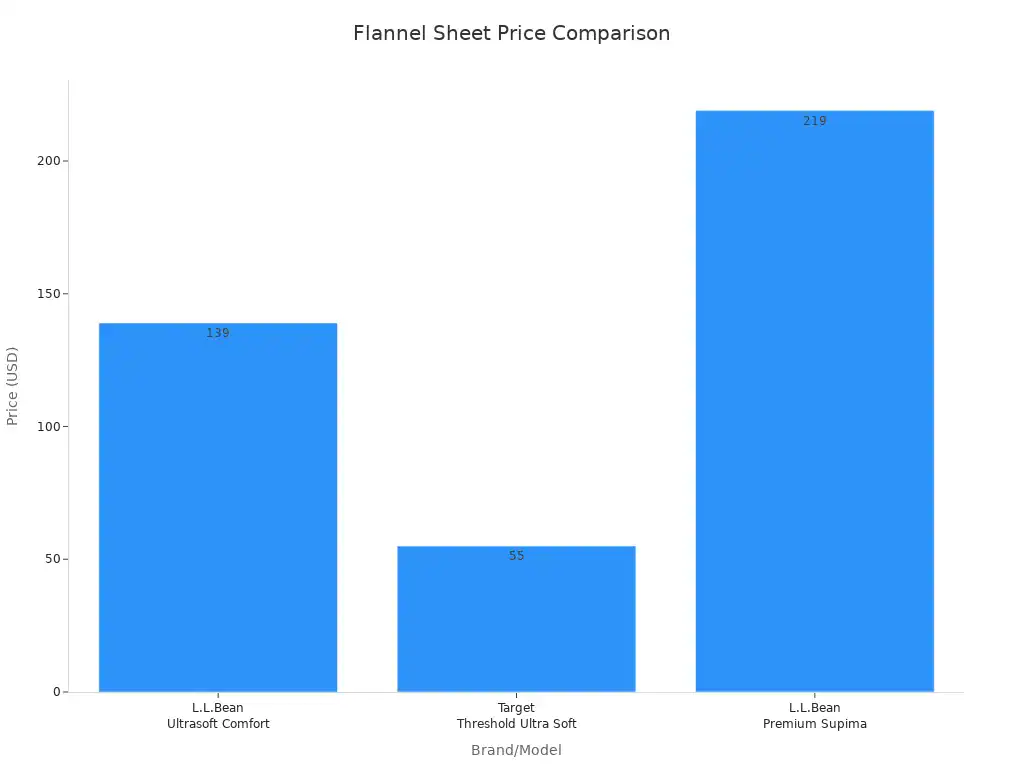
Here’s a look at flannel sheet prices compared to other warm bedding options:
Brand/Model | Price (Queen) | Descripción |
|---|---|---|
L.L.Bean Ultrasoft Comfort | $139 | High-quality, soft, warm, and durable over seasons. |
Target Threshold Ultra Soft | $55 | Impressive warmth and softness, but loses texture after washes. |
L.L.Bean Premium Supima | $219 | Softest flannel sheets, higher price but consistent quality. |
Brushed Cotton Brands (Riley, Parachute, Pottery Barn) | Varía | Thinner than flannel, luxurious and soft, but may not provide the same warmth. |
Satén
Satin sheets stand out for their smooth, low-friction texture. You’ll notice their shiny, lustrous surface, which adds a touch of luxury to your bedroom. Satin’s silky feel helps reduce friction on your skin and hair, making it a favorite for those who want both comfort and style.
Smooth, low-friction texture
Shiny, lustrous surface
Satin sheets are easier to care for than silk. Most are machine-washable and dryer-safe, so you don’t have to worry about delicate handling. Satin sheets last longer and keep their shine with regular use.
Característica | Satin Sheets | Silk Sheets |
|---|---|---|
Requisitos de cuidado | Easier to care for, often machine-washable and dryer-safe | Require delicate handling, hand-wash or gentle cycle, air-dry |
Longevidad | Generally more durable | Long-lasting with proper care, but requires more attention |
If you want a bed sheet fabric design that looks elegant and feels smooth, satin is a great option.
Bed Sheet Fabric Design & Weaves
When you pick out new sheets, you might notice that not all fabrics feel the same. The way a sheet is woven changes its texture, look, and even how it performs at night. Let’s break down the most common weaves you’ll see in bed sheet fabric design.
Percale Weave
Percale sheets use a simple, one-over-one-under weave. This makes them crisp, cool, and lightweight. If you like sheets that feel fresh and smooth, percale is a great choice. These sheets work well if you get hot at night or live in a warm place. Percale also holds up well after many washes, so you get long-lasting comfort.
Sateen Weave
Sateen sheets have a one-under, three- or four-over weave. This gives them a silky, smooth surface and a slight sheen. Sateen feels softer and warmer than percale. If you want a touch of luxury in your bed sheet fabric design, sateen is a good pick. These sheets drape nicely and resist wrinkles, making your bed look neat with less effort.
Satin Weave
Satin weave creates a glossy, slippery finish. You’ll notice how shiny and smooth these sheets feel. Satin sheets glide over your skin and hair, which can help reduce tangles and frizz. If you want your bedding to look elegant and feel extra soft, satin is a fun option.
Tip: When choosing a weave, think about your comfort and style. Do you want crisp and cool, or soft and shiny? Your choice of weave can change your whole sleep experience.
You can also express your personality through bed sheet fabric design. Many people love geometric patterns for a modern look, while floral designs never go out of style. Eclectic and animal prints let you show off your unique taste. Today, shoppers also care about eco-friendly materials, trusted certifications, and sheets that help regulate temperature.
Fabric Features
Transpirabilidad
You want sheets that help you stay cool and comfortable. Breathability matters most if you get hot at night or live in a warm place. Natural fabrics work best for airflow and moisture control. Here are some top picks for breathable sheets:
Cotton feels soft and lets air move easily. You’ll find it in brands like Brooklinen and Pure Parima.
Linen keeps you cool and wicks away sweat. DAPU makes linen sheets that breathe well.
Bamboo sheets from Wooflinen offer great moisture-wicking and airflow.
Cotton and linen stand out for breathability. These fabrics help you sleep better, especially in hot weather.
Durabilidad
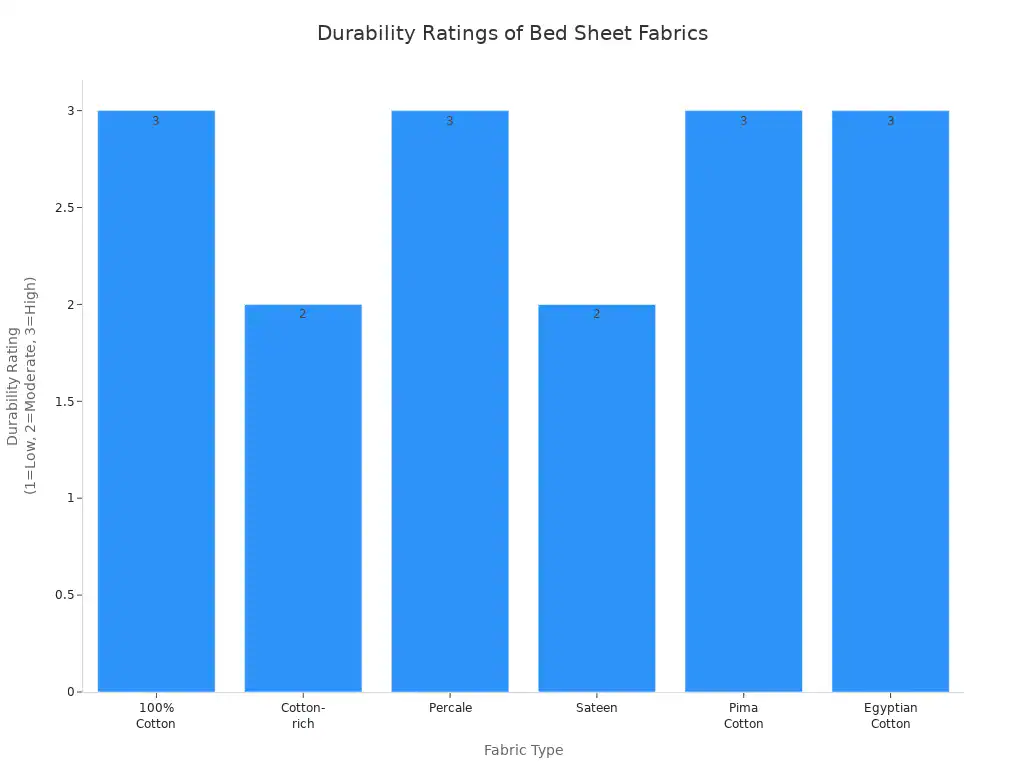
Durable sheets last longer and look good after many washes. You want sheets that hold up to daily use. Take a look at how different fabrics compare:
Tipo de tela | Durability Rating | Notes |
|---|---|---|
100% Cotton | Alto | Breathable and less likely to pill; performs well under washing. |
Cotton-rich | Moderado | Less than 100% cotton; may not perform as well as 100% cotton in terms of durability. |
Percal | Alto | Crisp feel; strong and shrinks very little after washing. |
Satén | Moderado | Smoother and glossier; may not be as durable as percale. |
Pima Cotton | Alto | Soft and strong; performs well in durability tests despite lower thread count. |
Algodón egipcio | Alto | Known for long fibers; typically softer and stronger than regular cotton. |
Cuidado y mantenimiento
You want sheets that are easy to clean and keep fresh. Each fabric needs a different routine. Here’s a quick guide:
Tipo de tela | Care Instructions |
|---|---|
Algodón | Durable, breathable, can withstand higher washing and drying temperatures. |
Lino | Strong, absorbent, gets softer with each wash, but can wrinkle easily; gentle drying recommended. |
Seda | Luxurious, soft, very delicate; requires cool water washing and air drying. |
Sintético | Easy to care for, but may pill over time; sensitive to high heat. |
Tip: Change and wash your sheets every week. If you sweat a lot, wash them twice a week. Regular washing removes sweat, oils, and bacteria.
Try these steps for longer-lasting sheets:
Use minimal spin or tumble settings.
Avoid mixing fabrics or overloading the machine.
Air dry in a shaded spot with good airflow.
Costo
Sheet prices vary by fabric and brand. Cotton and polyester sheets cost less and offer good value. Linen and silk sheets cost more, but they feel luxurious and last longer. Bamboo and Tencel sheets fall in the middle. You can find quality sheets at every price point, so pick what fits your budget and comfort needs.
Comparing Fabrics
Pros & Cons
Choosing the right sheets can feel tricky, so let’s break it down. Here’s a quick table to help you see the strengths and weaknesses of popular bed sheet fabrics. This way, you can spot what matters most for your sleep.
Bed Sheet Material | Ventajas | Míralo |
|---|---|---|
Upland Cotton | Inexpensive, soft, easy to find | Pills easily, short fibers |
Algodón egipcio | Strong, soft, breathable | Expensive, many fakes |
Pima Cotton | Soft, strong, grown in the US | Pricey, often blended |
Supima® Cotton | Keeps color, hypoallergenic, comfy | Very expensive |
MicroCotton® | Super absorbent | Hard to find, costly |
Franela | Warm, budget-friendly | Heavy, not for summer |
Seda | Soft, hypoallergenic, luxurious | Very expensive, delicate care |
Tencel® | Absorbs moisture well | Not fully hypoallergenic |
Bambú | Silky, durable, breathable | Chemicals used in processing |
Lino | Strong, gets softer, eco-friendly | Stiff at first, wrinkles easily |
Poliéster | Cheap, durable, resists stains | Not cooling, traps heat |
Tip: Think about what matters most to you—comfort, price, or easy care. This table can help you match your needs to the right fabric.
Best Choices
You want your bed to feel just right, so here are some quick tips for picking the best sheets for your lifestyle:
If you get hot at night, try linen. It breathes well and wicks away sweat, so you stay cool.
For allergies, linen is a smart pick. Its natural fibers help keep dust mites and mold away.
Want a touch of luxury? Silk feels soft and looks elegant, but it needs gentle care.
Shopping on a budget? Polyester and upland cotton offer comfort without a big price tag.
If you love a cozy winter bed sheet fabric design, flannel keeps you warm and snug.
Every fabric has its own feel and look. Try different options to find the bed sheet fabric design that fits your sleep style and makes your bedroom feel like home.
Picking the right bed sheet fabric can change how well you sleep. Linen sheets help you fall asleep faster and feel cooler in warm weather. Some fabrics, like bamboo and cotton, wick away moisture and keep allergens away. You should think about your climate, comfort, and style before you buy. Try different fabrics to see what feels best for you. Your perfect sheet is out there—just waiting to help you sleep better every night!
Suavidad y confort
Allergen control
Preguntas frecuentes
What is the best fabric for hot sleepers?
If you get hot at night, linen and bamboo sheets work best. They let air flow and wick away sweat. You stay cool and dry, even in summer.
How often should you wash your bed sheets?
You should wash your sheets once a week. If you sweat a lot or have allergies, try washing them twice a week. Clean sheets help you sleep better.
Are bamboo sheets really eco-friendly?
Bamboo sheets use less water and fewer chemicals than cotton. Look for OEKO-TEX or FSC labels to make sure your sheets are safe and eco-friendly.
Do higher thread counts mean better sheets?
Not always! A high thread count can feel soft, but the type of fabric and weave matter more. You want sheets that feel good and last long, not just a big number.
Can you use flannel sheets in summer?
You can use flannel sheets in summer, but they feel warm and cozy. Most people switch to lighter fabrics like cotton or linen when it gets hot.
Ver también
Choosing Between Microfiber And Polyester Bedding Sheets
Comparación de la impresión en panel y la impresión digital para ropa de cama de poliéster
 Spanish
 English
 Arabic
 French
 Italian
 Portuguese
 Vietnamese