

When you look for the best bedding, you want to make sure every step meets high standards. Focus on quality at each stage. In the textile industry, vertical integration helps control quality and keeps your products consistent. Use real-world checks and compare mills to recognized benchmarks. You can follow the steps in How to Evaluate a Vertically-Integrated Dyeing & Finishing Mill for Bedding to make smart choices and demand excellence.
Puntos Clave
Understand vertical integration. It ensures better quality and consistency in bedding by controlling all production steps.
Check for quality assurance systems. Strong systems help maintain high standards and product consistency, even after changes.
Assess the mill’s scale and resources. Larger mills often have advanced equipment and can meet bigger orders while maintaining quality.
Look for sustainability certifications. Certifications like GOTS and OEKO-TEX® 100 show a mill’s commitment to eco-friendly practices.
Request samples before ordering. Testing samples helps you evaluate the quality of fabrics and ensures they meet your needs.
How to Evaluate a Vertically-Integrated Dyeing & Finishing Mill for Bedding
When you want to know how to evaluate a vertically-integrated dyeing & finishing mill for bedding, you should start by understanding vertical integration. This approach means the mill controls many steps in the production process. You see better quality and more consistent products when a company manages everything from raw materials to finished mattress fabrics. Vertical integration helps the mill use shared resources and keep strict quality standards. You get more innovation and better control over production.
Confirm Vertical Integration
You need to check if the mill is truly vertically integrated. Look for signs that the company owns or controls several stages of production. For example, some companies buy retailers or suppliers to manage both manufacturing and distribution. This control helps them reach more customers and improve profits. You can use the table below to spot key indicators:
Indicator | Descripción |
|---|---|
Acquisition | The company acquires retailers or suppliers to expand control. |
Control | The company manages manufacturing and distribution channels. |
Impact on Business | Vertical integration boosts customer reach and profitability. |
You should also ask about their quality assurance systems. Mills that merge or expand must keep high standards. If they do not, you may see problems with product consistency. You want a mill that keeps strict quality checks even after changes in ownership or structure.
Vertical integration can improve quality control and spark new ideas.
Some companies keep high standards after merging, but others struggle with bigger production demands.
Good mills use strong quality assurance systems to keep products consistent.
Tempur Sealy’s merger with Mattress Firm shows how vertical integration can make supply chains more efficient. The company combines manufacturing, supply, and retail to streamline production. This move can help you get products faster and with better quality, but it may also reduce competition in the market.
Assess Scale and Resources
When you learn how to evaluate a vertically-integrated dyeing & finishing mill for bedding, you must look at the mill’s scale and resources. Bigger mills often have more advanced equipment and can handle larger orders. You want to know if the mill can meet your production needs and keep quality high.
You can use these metrics to judge scale and resources:
Metric | Propósito | Example |
|---|---|---|
Dye Uptake | DU = (80 / 100) × 100 = 80% | |
Liquor Ratio | Shows liquid to fabric weight ratio | LR = 500 / 50 = 10:1 |
Chemical Consumption | Calculates chemicals needed for dyeing or finishing | CC = 50 × 2 × 10 = 1000 g |
Finishing Agent Application | Amount of finishing agent applied | FAA = 50 × (80 / 100) × 30 = 1200 g |
Color Difference (ΔE) | Measures color difference between samples | ΔE = √(2² + 3² + 4²) ≈ 5.39 |
Fixation Efficiency | Shows how well dye sticks to fabric | FE = (70 / 80) × 100 = 87.5% |
You should ask the mill about their production capacity. Find out how much they can produce each month and how quickly they can deliver. Mills with strong resources can handle big orders and keep lead times short.
Industry benchmarks help you compare mills. The textile industry uses best practices from groups like NRDC and Carbon Trust. These reports show you what top mills do to save energy and improve efficiency. You can use the table below to see some important sources:
Fuente | Descripción |
|---|---|
Carbon Trust’s report | Guide for dyeing and finishing in the textile industry |
Hasanbeigi report | Lists energy-saving measures and technologies |
CIPEC report | Shares best practices for Canadian textile wet-processing |
Energy Conservation Center of Japan | Focuses on energy-efficient technologies for textile production |
You should ask mills if they follow these best practices. Mills that use these standards often have better production efficiency and lower costs. You get better products and faster service.
When you follow these steps, you learn how to evaluate a vertically-integrated dyeing & finishing mill for bedding the easy way. You check for vertical integration, look at scale and resources, and compare mills to industry benchmarks. You make smart choices and get high-quality mattress fabrics for your bedding needs.
Dyeing & Finishing Capabilities

Dyeing Processes & Color Consistency
You want bedding that looks vibrant and stays true to its color. Modern bedding mills use high-temperature, high-pressure jet dyeing machines. These machines help dyes go deep into the fabric, giving you even color across large batches. Advanced chemical agents, like special penetrating agents, also help the dye spread evenly. This means your mattress fabrics will have fewer color differences and better quality.
Colorfastness is important for bedding. Mills test how well colors last after washing. They use international standards such as ISO 105 C06 and AATCC 61. You may see tests like the Grey Change Scale, Grey Stain Scale, and spectrophotometer analysis. These tests check if the color stays the same and does not stain other items.
Método de prueba | Descripción |
|---|---|
Grey Change Scale | Compares fabric color before and after washing or light exposure |
Grey Stain Scale | Checks for staining on other materials after washing |
Spectrophotometer | Measures color changes with precise data |
Finishing Techniques & Softness
Softness matters for comfort. Mills use several finishing techniques to make bedding soft and pleasant. Brushing gives fabric a warm, soft feel. Flocking adds short fibers to the surface, making it feel like velvet. Softening agents improve the hand feel, so your bedding feels gentle against your skin.
To make sure these finishes last, mills test for durability. They use tests like the Martindale method to check abrasion resistance. Other tests measure pilling, tear strength, and dimensional stability after washing. These tests help you get a sustainable product that stays comfortable over time.
Sustainability & Certifications
Sustainability is a top priority in the textile industry. Many mills now use waterless dyeing methods, such as supercritical CO₂, to save water and reduce pollution. Some mills use microbial pigments from natural sources for eco-friendly colors. AI and IoT help monitor dyeing in real time, improving both quality and sustainability.
You should look for certifications that prove a mill’s commitment to sustainable practices. Common certifications include GOTS, OEKO-TEX® 100, GRS, and CE Marking.
Certificación | Descripción |
|---|---|
GOTS | Certifies organic fiber content and covers the full production chain |
OEKO-TEX® 100 | Tests for harmful substances in textiles |
GRS | Promotes recycled content and social compliance |
CE Marking | Ensures health and safety standards in the EEA |
Life cycle assessments (LCA) help mills measure their environmental impact. LCA tracks energy, water, and raw material use. This helps mills improve their sustainability programs and offer you more sustainable bedding choices.
Quality Control & Compliance
Quality Assurance Systems
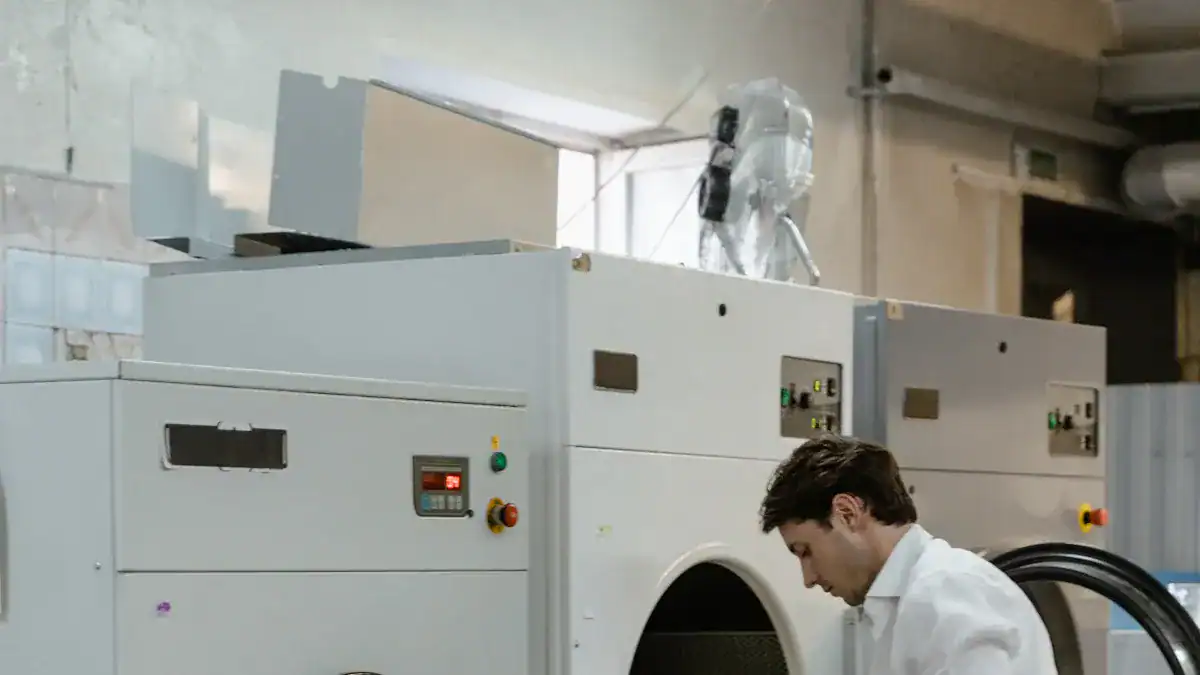
You want bedding that meets high standards at every step. Mills in the textile industry use strong quality assurance systems to keep products consistent. These systems check mattress fabrics for colorfastness, shrinkage, strength, and durability. You see regular inspections during and after production. These checks help catch defects early and keep quality high.
Mills test fabric properties like colorfastness and durability.
They inspect products during and after production to find any problems.
Quality control covers many stages. You can look at the tabla siguiente to see how mills monitor and document each step in production:
Inspection Stage | Descripción |
|---|---|
Sewing Process Inspection | Checks stitch count, seam strength, and accessory installation. |
Filling Process Inspection | Makes sure fillings are even in comforters and pillows. |
Final Product Inspection | Uses visual checks, measures dimensions, and tests function for overall quality. |
Laboratory Testing | Tests for colorfastness, flame retardancy, and durability to meet standards. |
Packaging Inspection | Verifies packaging quality, integrity, and correct labeling. |
Tip: Ask mills for their inspection records. You can see how they track quality through each stage of production.
Compliance Standards & Certifications
You need to know if a mill follows global compliance standards. Buyers expect ethical production practices. Mills must follow labor laws, prevent child labor, and provide safe working conditions. You should look for environmental certifications like GOTS for organic cotton bedding or FSC for wood inserts.
Common compliance standards in the textile industry include:
Compliance Standard | Descripción |
|---|---|
CPSC Certification | Required for children’s bedding and apparel. |
OEKO-TEX Standard 100 | Certifies textiles as free from harmful substances. |
ISO and ASTM Standards | Ensures international quality benchmarks. |
Chemical Testing | Checks for banned substances like lead and phthalates. |
Colorfastness and Durability | Verifies resistance to washing, light, and wear. |
Physical and Performance Testing | Measures shrinkage, tensile strength, and pilling. |
You can also look for social compliance audits like Sedex or ICS. These audits show that mills care about fair wages and safe workplaces. Certifications such as GOTS and FSC prove that mills use sustainable materials in production.
Sedex or ICS audits check social compliance.
GOTS certifies organic cotton bedding.
FSC certifies wood inserts for mattress fabrics.
You make better choices when you check for these standards and certifications. You get bedding that meets safety, ethical, and environmental requirements.
Production Capacity & Communication
Capacity & Lead Times
You need to know if a mill can handle your bedding orders. Production capacity tells you how much fabric a mill can make in a set time. Ask about their monthly or weekly output. Mills with high capacity can fill large orders and keep up with demand. You should also check their lead times. Lead time is the number of days from order to delivery. Short lead times mean you get your bedding faster.
Some mills use advanced machines to speed up production. These machines help keep the quality high, even when making large batches. You can ask for a schedule of their production process. This helps you see if they can meet your deadlines. Mills in the textile industry often share their average lead times and order sizes. This information helps you compare different suppliers.
Tip: Always ask for a clear timeline before you place an order. This helps you plan your bedding launches and avoid delays.
Communication & Support
Good communication keeps your bedding project on track. You want a mill that answers questions quickly and gives updates during production. Many mills now use digital tools to improve transparency. For example, they use batch numbers and QR codes to track each step. This lets you follow your order from start to finish.
Mills also log data in real time. If a problem happens, they can fix it right away. Some mills use supplier scorecards. These scorecards show how well each supplier performs every month. You can see if the mill meets your quality standards. Digital trace logs help with audits. They make it easy to check compliance and reduce audit time.
Method | How It Helps You |
|---|---|
Digital Identifiers | Track your bedding from fiber to finished product |
Real-time Data Logging | Spot and fix production issues fast |
Supplier Scorecards | See monthly performance and quality trends |
Digital Trace Logs | Speed up compliance checks and audits |
You should look for mills that offer strong customer support. A good support team answers your questions and solves problems fast. This support helps you get high-quality bedding and smooth production every time.
Samples & References
Requesting Samples
You should always ask for samples before you place a large order. Samples help you see the true quality of bedding fabrics. You can check the color, softness, and finish. This step lets you compare different mills in the textile industry. When you get a sample, test it for colorfastness and softness. Wash the sample to see if it keeps its look and feel. You can also check if the sample matches your production needs.
Ask the mill for a sample that comes from their regular production line. This gives you a real view of what you will get in bulk. If possible, request samples from different batches. This helps you see if the mill keeps quality steady over time.
Tip: Keep notes on each sample. Write down how the fabric feels, looks, and performs after washing.
Checking References
You need to check references to make sure the mill can meet your production and quality needs. Good references show that the mill has a strong record. Use these steps to guide your review:
Ask about the type and quality of raw materials, dyes, and chemicals used in production.
Find out how the mill sets machine parameters and washing steps.
Check if the water used in production is soft and pure.
Make sure employees have the right training and skills.
Review the mill’s dyeing capacity and how they plan production activities.
Confirm that package sizes match the dyeing machine’s capacity.
Ask how the mill prepares dye recipes for each order.
See if they choose the right dyes, chemicals, and auxiliaries for your needs.
Learn about the order of dyeing operations.
Check the quality of chemicals the mill buys.
Ask about production norms and how much chemicals, water, and steam they use.
Review the acceptance criteria for fastness, shade variation, and physical properties of the final product.
A reliable mill will answer your questions and provide proof of their production standards. You can use this information to decide if the mill fits your needs.
You can simplify your bedding mill evaluation by following clear steps. When you use industry benchmarks, you make smarter sourcing choices and improve your planning. Understanding minimum order quantities helps you reduce waste and boost efficiency. The table below shows how a streamlined process benefits your production:
Beneficio | Descripción |
|---|---|
Lower Total Cost of Ownership (TCO) | Streamlined processes lead to reduced operational costs, including lower scrap rates and fewer warranty issues. |
Higher Overall Equipment Effectiveness (OEE) | OEE measures the efficiency of production lines, identifying hidden losses that can be addressed for better profitability. |
Quick Return on Investment (ROI) | Payback typically occurs in under 18 months, with many customers experiencing benefits sooner due to redeployed labor and reduced stoppages. |
Increased Throughput | Small changes, such as reducing downtime, can significantly increase production output, leading to substantial financial gains. |
Prepare a checklist and reach out to mills for an initial evaluation. This approach helps you achieve reliable production and confident sourcing decisions.
Preguntas frecuentes
What does vertical integration mean for bedding mills?
Vertical integration means the mill controls every step from raw material to finished bedding. You get better quality and more consistent products because the mill manages all processes in one place.
How can you check a mill’s sustainability practices?
You should look for certifications like GOTS or OEKO-TEX® 100. Ask the mill about water-saving dyeing methods and recycled materials. These steps show the mill cares about the environment.
Why is colorfastness important for bedding?
Colorfastness keeps bedding looking new after washing. You want fabrics that do not fade or stain other items. Mills test colorfastness using international standards to make sure your bedding lasts longer.
What should you ask when requesting samples?
Ask for samples from regular production batches. Test the fabric for softness, color, and durability. You can wash the sample to see if it keeps its quality. Keep notes on each sample for easy comparison.
How do you know if a mill meets compliance standards?
You should check for certifications like OEKO-TEX® 100 and CPSC. Ask about social audits such as Sedex. These show the mill follows safety, ethical, and environmental rules.
Ver también
Comparación de la impresión en panel y la impresión digital para ropa de cama de poliéster
 Spanish
 English
 Arabic
 French
 Italian
 Portuguese
 Vietnamese
