

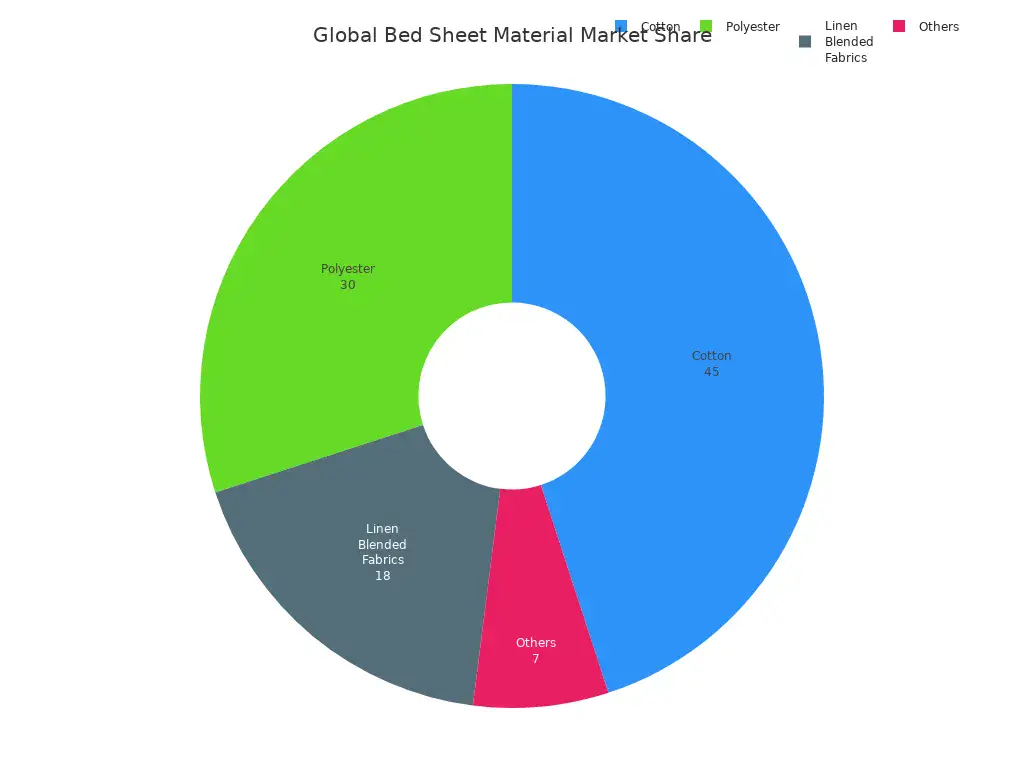
If you want sheets that last, cost less, and look bright wash after wash, you might check out polyester bed sheets. You see them everywhere—about 30% of all sheets sold use polyester, while cotton leads with 45%.
Type de matériau | Market Share Percentage |
|---|---|
Coton | 45% |
Polyester | 30% |
Linen Blended Fabrics | 18% |
Others | 7% |
People often pick polyester sheets for a few simple reasons:
Durabilité
Ease of care
Demand for vibrant, easy-to-maintain fabrics
You probably care about comfort and price, so let’s explore what makes polyester sheets different from cotton and other options.
Points clés à retenir
Polyester bed sheets are affordable and durable, making them a great choice for budget-conscious shoppers.
These sheets resist wrinkles and dry quickly, saving you time on laundry and ironing.
Polyester retains vibrant colors even after multiple washes, keeping your bedding looking fresh.
Consider the heat retention of polyester; it may not be ideal for hot sleepers or warm climates.
If you have sensitive skin, explore natural fiber options to avoid potential irritation from polyester.
What Are Polyester Bed Sheets?
Material and Composition
You might wonder what makes up polyester bed sheets. Polyester is a man-made material. It comes from petroleum-based chemicals. The main ingredient is called polyethylene terephthalate, or PET for short. Manufacturers create PET by mixing purified terephthalic acid with ethylene glycol. This process forms strong, flexible fibers.
Here’s a quick look at how these sheets are made:
Polyester starts as tiny plastic pellets.
Factories melt the pellets and spin them into long threads.
Workers weave or knit these threads into fabric.
The fabric gets dyed and finished to feel soft and smooth.
Finally, the fabric is cut and sewn into sheets.
Sometimes, companies blend polyester with other fibers like cotton. This can make the sheets softer and help them breathe better.
Astuce : Pure polyester sheets feel different from blends. If you want a softer touch, look for a cotton-polyester mix.
Usages courants
You see polyester bed sheets in many homes. They are popular because they last a long time and are easy to wash. These sheets resist wrinkles and keep their shape, even after many washes. That’s why busy families love them.
People often use polyester sheets in:
Guest rooms, where you want something that looks nice but doesn’t need much care.
Kids’ rooms, since the sheets can handle spills and lots of washing.
Rental properties, because they stay bright and neat for a long time.
If you want sheets that are simple to care for and hold up well, polyester bed sheets might be a good choice for your home.
Advantages of Polyester Bed Sheets
Durabilité et longévité
You want sheets that last, right? Polyester bed sheets stand out for their toughness. They resist wear and tear better than cotton. You can wash them over and over, and they keep their shape. Unlike cotton, polyester does not shrink in the wash. If you use your sheets every night, you’ll notice they hold up much longer.
Voici un aperçu rapide de how long different fabrics last:
Tissu | Espérance de vie moyenne | Rétention de la résistance après les cycles de lavage | Durée de vie dans les environnements à forte utilisation |
|---|---|---|---|
Polyester | 5–7 ans | ≥90% après 50 cycles | 5–7 ans |
Coton | 2–4 ans | 70–80% après 20–30 cycles | 2–4 ans |
You can see that polyester bed sheets give you more years of use, especially if you have a busy household.
Résistance aux plis et entretien facile
Do you hate ironing sheets? Polyester makes life easier. These sheets resist wrinkles, so your bed looks neat with less effort. You can pull them straight from the dryer and put them on your bed. No need to spend time smoothing out creases.
If you want to keep your sheets wrinkle-free, try these tips:
Don’t overload the washing machine. Give your sheets space to move.
Use cold or warm water. This helps prevent wrinkles.
Choose a gentle cycle. Less agitation means fewer creases.
Remove sheets promptly from the dryer.
Use low heat settings.
Toss in dryer balls to keep sheets separated.
Air dry on a clothesline or rack.
Fold sheets neatly after drying.
Store sheets in bags to keep them organized.
Avoid tight storage spaces.
These steps help your polyester bed sheets stay smooth and fresh.
Quick Drying and Low Maintenance
You probably want sheets that dry fast. Polyester dries much quicker than cotton. If you need to wash sheets in the morning and use them at night, polyester is a smart choice. You don’t have to wait long for them to be ready. They also need less special care. You can wash them with regular laundry and they still look good.
Abordabilité
Saving money matters. Polyester bed sheets cost less than cotton or linen sheets. You can find them in most stores at prices that fit your budget. Here’s a simple comparison:
Fonctionnalité | Cotton Bedsheets | Polyester Bedsheets |
|---|---|---|
Coût | Generally more expensive | More economical, accessible to many |
Why are they so affordable? There’s high demand for easy-care bedding. New technology makes production cheaper and better. Companies compete to offer low prices. You get good quality without spending a lot.
Facteur | Description |
|---|---|
Consumer Demand | People want bedding that’s easy to care for. |
Technological Advancements | New machines and methods make polyester cheaper and better. |
Prix compétitifs | Polyester costs less than natural fibers like cotton or silk. |
You also see more recycled polyester options, which can be even more affordable.
Lightweight and Soft Feel
You’ll notice that polyester bed sheets feel light and smooth. Many people say they have a silky touch. You can move them easily when making the bed. They don’t feel heavy or stiff. If you like sheets that glide over your skin, polyester is a good pick.
Polyester sheets are lightweight and have a silky feel.
They are soft and smooth to the touch.
They are less breathable, which means they can trap heat. If you get hot at night, you might want to think about this.
Color and Fade Resistance
Do you love bright colors on your bed? Polyester locks in color better than cotton. You can wash these sheets many times and they still look vibrant. Cotton tends to fade after repeated washing, but polyester keeps its color.
Polyester retains its color after many washes.
Cotton fades over time, especially with frequent laundering.
Polyester shrinks less than cotton, so colors stay true.
If you want sheets that look new for years, polyester bed sheets are a smart choice.
Astuce : Polyester bed sheets work well for busy families, guest rooms, and anyone who wants bedding that’s easy to care for and stays looking good.
Disadvantages of Polyester Bed Sheets

Breathability and Heat Retention
You might notice that polyester bed sheets feel warmer than cotton or linen. Polyester traps more heat because of its thermal insulation properties. If you sleep hot or live in a warm climate, this can make your nights uncomfortable. Laboratory tests show that polyester holds onto heat more than natural fibers. Even though new manufacturing methods try to improve breathability, polyester still keeps you warmer than cotton or wool.
Matériau | Heat Retention Properties |
|---|---|
Polyester | Retains more heat than natural fibers |
Coton | Less heat retention than polyester |
Laine | Least heat retention among the three |
Polyester sheets generally trap heat more than natural fibers.
Modern manufacturing has improved breathability, but heat retention remains higher than cotton or wool.
Laboratory tests confirm polyester’s thermal insulation properties.
If you often wake up feeling hot or sweaty, you may want to think twice before choosing polyester for your bed.
Moisture Absorption and Sweating
Polyester does not absorb moisture well. When you sweat at night, the fabric tends to hold the moisture against your skin instead of wicking it away. This can leave you feeling sticky or damp. Cotton, on the other hand, absorbs sweat and helps you stay dry. If you live in a humid area or sweat a lot while sleeping, polyester bed sheets might not keep you comfortable.
Remarque : Hot sleepers and people in warm climates often complain about waking up sweaty when using polyester sheets.
Comfort Over Time and Pilling
At first, polyester sheets can feel soft and smooth. Over time, though, you might notice changes. The fabric can start to pill, which means small balls of fiber form on the surface. Pilling makes the sheets feel rougher and less comfortable. Many users also mention static electricity, especially in dry weather. This can make the sheets cling to your skin or even give you a little shock.
Static electricity is common with polyester, especially in dry conditions.
Pilling and roughness can develop after repeated washing.
Some people find polyester less breathable, which adds to discomfort.
If you want sheets that stay soft and smooth for years, you may want to look at other options.
Skin Sensitivity
Some people have sensitive skin that reacts to synthetic fabrics. Polyester can cause irritation or itchiness for certain sleepers. If you have allergies or skin conditions, you might notice redness or discomfort after sleeping on polyester sheets. Natural fibers like cotton or bamboo are usually gentler on the skin.
Astuce : If you have sensitive skin, try using a pillowcase or sheet made from natural fibers to see if you notice a difference.
Impact environnemental
Polyester bed sheets have a bigger impact on the environment than natural fiber sheets. Making polyester uses a lot of energy and creates pollution. Factories release carbon dioxide and other greenhouse gases during production. Washing polyester also releases tiny plastic fibers, called microplastics, into the water. These microplastics can end up in rivers and oceans, harming wildlife.
Description | |
|---|---|
Émissions de CO2 | Polyester production emits approximately 27.2 kg of CO2 equivalent per kilogram of woven fabric. |
Water Pollution | Wastewater from textile production often flows untreated into local waterways, causing ecological harm. |
Microplastic Release | Washing polyester garments releases microplastics, contributing to ocean pollution. |
Non-biodegradability | Polyester persists in the environment for centuries, affecting landfills and waterways. |
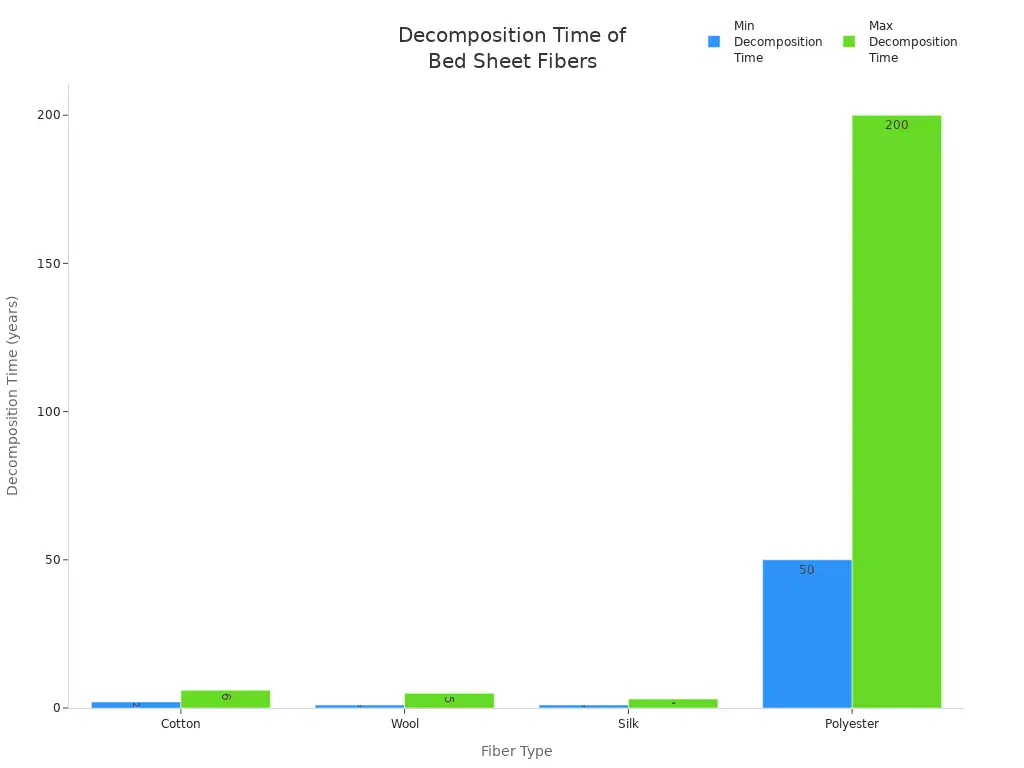
Polyester also takes a very long time to break down. Unlike cotton or wool, which decompose in a few months or years, polyester can last for decades or even centuries in landfills.
Fiber | Estimated Decomposition Time | Primary Outcome |
|---|---|---|
Coton | 2–6 months (soil) | Organic matter |
Laine | 1–5 years | Organic matter |
Soie | 1–3 ans | Organic matter |
Polyester | 50–200+ years | Microplastic fragments |
Polyester does not decompose significantly within a human or multi-generational timescale.
Natural fibers like cotton and wool typically biodegrade within months to a few years.
The breakdown of polyester mainly results in microplastics, not true biodegradation.
If you care about sustainability, you may want to consider these facts before buying polyester bed sheets.
Who Might Notice These Drawbacks Most?
Hot sleepers and people in warm climates may feel too warm or sweaty.
Those with sensitive skin could experience irritation or discomfort.
Eco-conscious shoppers may worry about the long-term impact on the planet.
Anyone who dislikes static or roughness might prefer natural fibers.
Choosing the right sheets depends on your needs and values. Think about what matters most to you before making a decision.
Polyester Bed Sheets vs. Other Materials
Polyester contre Coton
You probably see cotton sheets everywhere. They feel soft and let your skin breathe. If you get hot at night, cotton helps you stay cool because it pulls moisture away from your body. Polyester bed sheets, on the other hand, can trap heat and feel less breathable. You might notice they feel smoother but not as cozy as cotton.
Let’s look at how these two stack up:
Fonctionnalité | Polyester | Coton |
|---|---|---|
Confort | Less breathable, may trap heat | Soft, breathable, moisture-wicking |
Durabilité | Lasts 2-5 years | |
Coût | $40 – $100+ (medium-high) |
Cotton sheets cost more up front, but they last longer and feel better for most people. If you want to save money, polyester is a good choice. If you want comfort and cool sleep, cotton wins.
Polyester vs. Microfiber
Microfiber sheets feel extra soft. The fibers are even finer than silk. You might like how gentle they feel on your skin. Microfiber also keeps dust mites away, which helps if you have allergies. Polyester sheets are tougher and cheaper, but they don’t feel as smooth.
Here’s a quick comparison:
Matériau | Care Requirements | User Satisfaction Factors |
|---|---|---|
Polyester | Handles machine washing and drying well, but high heat can damage fibers. | Costs less, but may need replacing sooner. |
Microfibre | Needs gentle cycles and mild detergents, plus low heat drying. | Feels softer, lasts longer with proper care, blocks allergens. |
Microfiber feels softer than polyester.
Microfiber needs gentle care to last.
Polyester is easier to wash but may wear out faster.
Polyester Blends
You might see sheets labeled as “polyester blend.” These mix polyester with cotton or other fibers. Blended sheets try to give you the best of both worlds. You get the easy care and low price of polyester, plus the softness and breathability of cotton.
Tip: If you want sheets that feel softer and stay cool, look for a cotton-polyester blend. You’ll spend less time ironing and more time enjoying your bed.
Blends work well for busy families. They last longer than pure cotton and feel better than pure polyester. You get a good balance of comfort, durability, and cost.
Who Should Choose Polyester Bed Sheets?
Best Use Cases
You might wonder if polyester bed sheets are right for you. These sheets work best for people who want easy care and long-lasting bedding. If you do not want to spend much time on laundry or ironing, you will like how simple these sheets are to maintain. Many families and busy households choose them because they hold up well to frequent washing.
Here are some situations where polyester bed sheets shine:
You want bedding that needs little care and always looks neat.
You sleep in an air-conditioned room and do not worry about overheating.
You need sheets for a guest room or rental property.
You want something durable for a child’s room.
You are shopping on a budget and want sheets that last.
Astuce : If you have a busy lifestyle or need sheets that can handle lots of use, polyester bed sheets are a smart pick.
When to Consider Alternatives
Sometimes, you may need something different. If you often wake up hot or sweaty, you might want to look for sheets made from natural fibers. Cotton, linen, and bamboo help your skin breathe and keep you cool at night. These fabrics pull moisture away from your body, so you stay dry and comfortable.
You should also think about other options if you care about the environment or have sensitive skin. Natural fabrics break down faster and use fewer chemicals. They are less likely to cause itching or irritation.
Consider choosing alternatives if:
You want sheets that help regulate body temperature and wick away sweat.
You sleep hot or live in a warm climate.
You prefer eco-friendly bedding that breaks down over time.
You have sensitive skin and want to avoid irritation.
You want to support a more sustainable lifestyle.
Remarque : Cooling sheets made from linen or bamboo can help you sleep better by keeping you dry and comfortable all night.
You’ve seen the good and the bad about polyester bed sheets. They last long, cost less, and stay bright. You might feel too warm or notice roughness over time. If you want to pick the best sheets for you, check these things:
Fiber content
Thread count (200–400 works well)
Weave and construction
Try cotton or blends if you want cooler sleep or care about the planet. Think about what matters most before you buy.
FAQ
Are polyester bed sheets safe for sensitive skin?
You might notice irritation if you have sensitive skin. Polyester can cause itchiness for some people. If you want to avoid discomfort, try cotton or bamboo sheets.
Tip: Always check for hypoallergenic labels when shopping.
Do polyester sheets shrink after washing?
Polyester sheets rarely shrink. You can wash them in warm or cold water. They keep their size and shape much better than cotton sheets.
Wash in cold or warm water
Tumble dry on low heat
Can you use polyester sheets year-round?
You can use polyester sheets any time. They feel warm in winter. You might get hot in summer because they trap heat. If you sleep hot, switch to cotton or linen during warmer months.
How do you keep polyester sheets soft?
You can keep polyester sheets soft by washing them gently. Avoid high heat and harsh detergents.
Étape | What to Do |
|---|---|
Wash | Use gentle cycle |
Dry | Tumble dry low |
Detergent | Use mild soap |
Voir aussi
Choisir entre des draps en microfibre et en polyester pour le confort
Comparaison de l'impression par panneau et de l'impression numérique pour les tissus de literie
Choisir la meilleure méthode d'impression pour les textiles d'ameublement
 French
 English
 Arabic
 Spanish
 Italian
 Portuguese
 Vietnamese