
Polyester Fabric vs Cotton for Bedding Buyers
A sourcing comparison for purchasing managers, bedding manufacturers, importers and wholesalers preparing to sample and approve bulk fabric.
There is no single winner in the polyester fabric vs cotton comparison. Both are fiber categories, and the finished performance of either one depends on yarn or filament specification, GSM, weave and finishing rather than the fiber name alone. Polyester fabric, particularly polyester microfiber, generally absorbs less moisture and dries faster under comparable constructions. Cotton is commonly selected when a program requires natural-fiber positioning, greater moisture absorption or a cotton-specific hand feel, though shrinkage usually needs closer control. Before sampling, compare both options against a complete specification rather than assuming one fiber is automatically better for every bedding application.
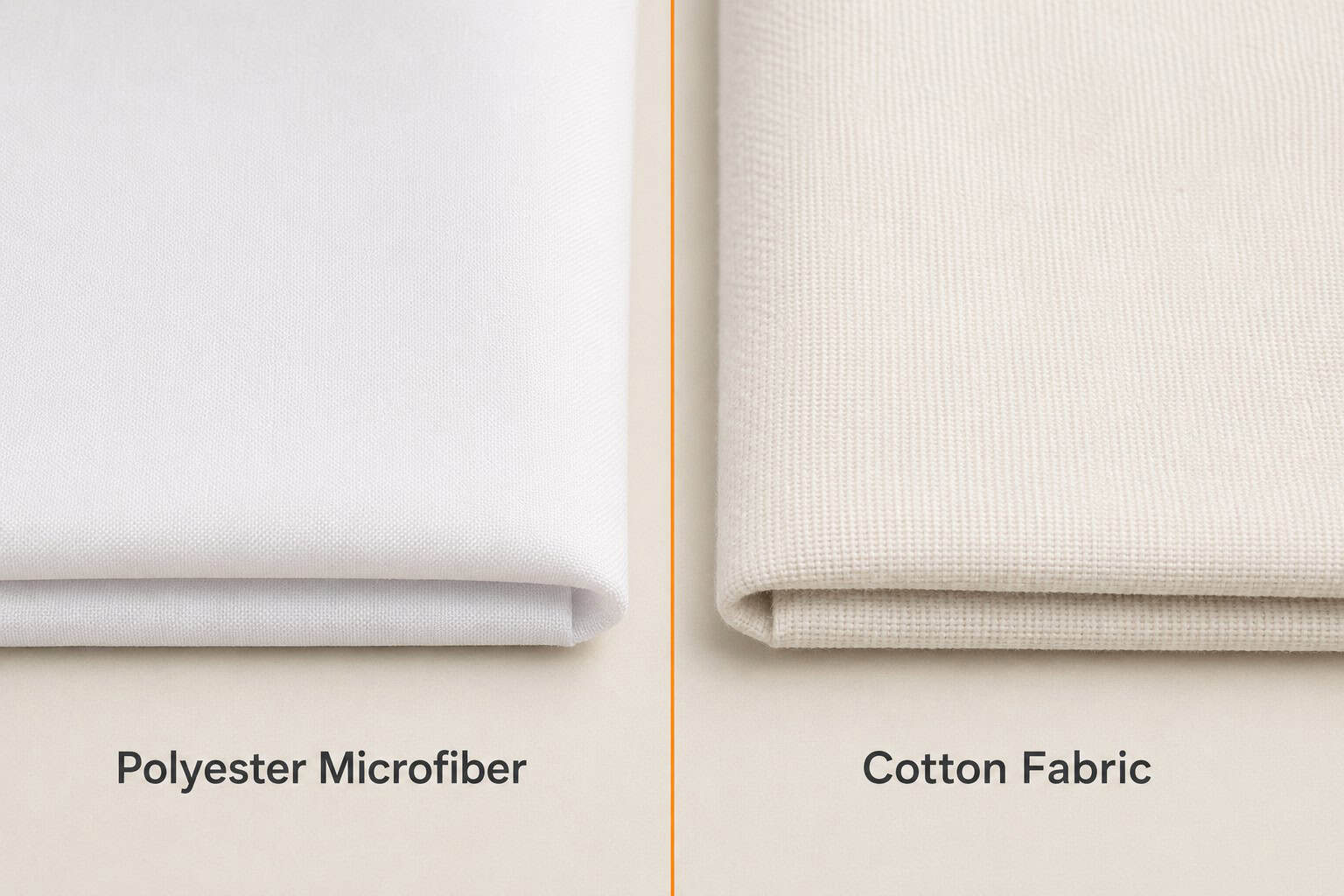
What Polyester Fabric and Cotton Fabric Mean in a Specification
Polyester fabric can be woven or knitted from filament or staple yarn. In Perfectextile's bedding applications, polyester microfiber uses fine-filament yarn in a woven construction that may be brushed and finished to reach the required surface. Finer filaments alone do not guarantee softness or durability; weave density, brushing level and finishing control still determine the result. This polyester material generally absorbs less moisture than cotton, although the drying speed and feel of a specific polyester cloth also depend on GSM and construction.
Cotton fabric is woven from natural cellulose fiber. Cotton's moisture absorption, hand feel and shrinkage behavior vary with staple length, yarn count, weave and any finishing treatment applied after weaving. A specification sheet for either fiber should always separate raw fiber composition from finished-fabric behavior, since two rolls with the same composition can still perform differently once brushing, dyeing or printing is applied.
Polyester Fabric vs Cotton Comparison Table
| Attribute | Polyester Fabric | Cotton | Buyer Confirmation Needed |
|---|---|---|---|
| Fiber source | Synthetic filament or staple yarn | Natural cellulose fiber | Composition percentage on the spec sheet |
| Moisture handling | Generally absorbs less moisture; behavior still depends on weave and finishing | Generally absorbs more moisture; drying time depends on GSM and weave | Intended climate and end use |
| Drying speed | Typically faster under comparable construction | Typically slower; varies with density | Confirm against actual finished sample, not raw fiber alone |
| Hand feel | Depends on filament fineness, brushing level and finishing route | Depends on staple length, yarn count and finishing | Approved physical reference sample |
| Breathability | Depends on GSM, weave openness, brushing and construction | Depends on the same construction variables | Confirm GSM and weave before assuming performance |
| Shrinkage risk | Can still shrink under unsuitable heat or poor finishing control | Commonly requires closer shrinkage control | Defined shrinkage tolerance in the spec sheet |
| Pilling risk | Depends on yarn, surface fiber, brushing and washing conditions | Depends on the same variables plus fiber staple length | Pilling requirement stated before sampling |
| Wrinkle recovery | Generally recovers well; varies by finishing | Generally needs finishing treatment for wrinkle recovery | Care instructions for the intended market |
| Dyeing and printing | Process depends on the required color, design and fastness; disperse printing includes fixation and washing | Different dyeing chemistry; not offered by Perfectextile | Confirm fiber composition before choosing a printing route |
| Care | Generally easy-care; confirm against washing instructions | Generally needs more attention to washing temperature | Target market washing habits |
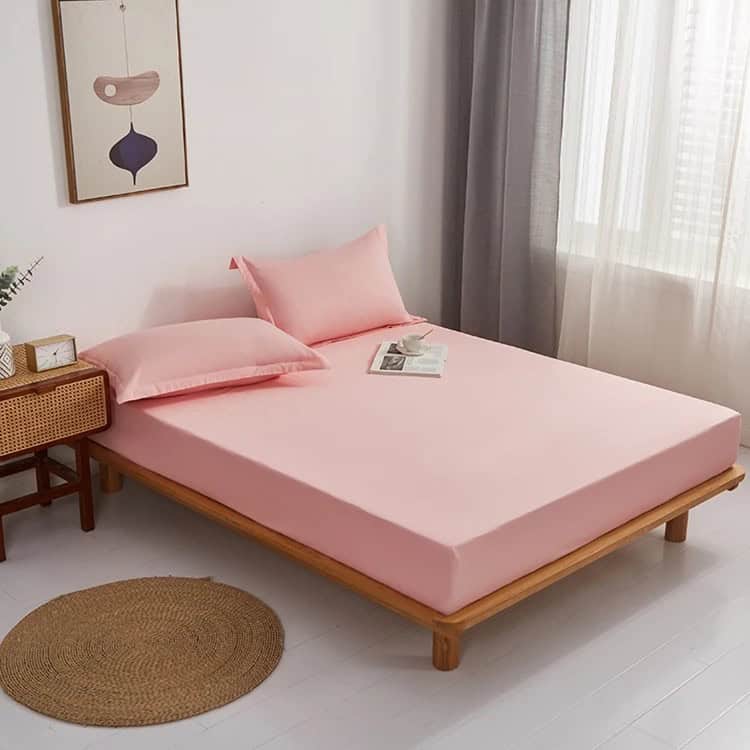
| Typical bedding applications | Bed sheets, duvet covers, pillowcases, comforter shells | Bed sheets, pillowcases, comforter shells | Intended bedding product |
| Main buyer confirmation | GSM, usable width, brushing side, hand-feel reference | Shrinkage tolerance, staple quality, finishing | Full specification sheet before sample request |
Why GSM, Weave and Finishing Can Matter More Than Composition
Two rolls of 100% polyester fabric can behave differently on a cutting table if one is a lower-density plain weave and the other is a brushed, denser construction. GSM affects weight, opacity and cost. Weave and density affect drape, airflow and dimensional stability. Brushing changes the surface, but excessive brushing can increase pilling or surface instability. Finishing can also change shrinkage behavior and hand feel without changing the fiber composition.
Perfectextile's printed microfiber fabric is commonly developed at approximately 65–135 GSM and 220–280 cm, while peach skin fabric is commonly developed at approximately 80–125 GSM and 220–280 cm. These ranges are starting points, not an order specification. Buyers still need to state target GSM, tolerance and usable width before sampling.
This is why a buyer comparing polyester fabric vs cotton should request both a fiber composition statement and a finished-fabric data sheet. Fiber composition alone cannot predict how a fabric will perform once it reaches bulk production, because brushing level, dye or print route and packing method all shift the outcome even when composition stays fixed.
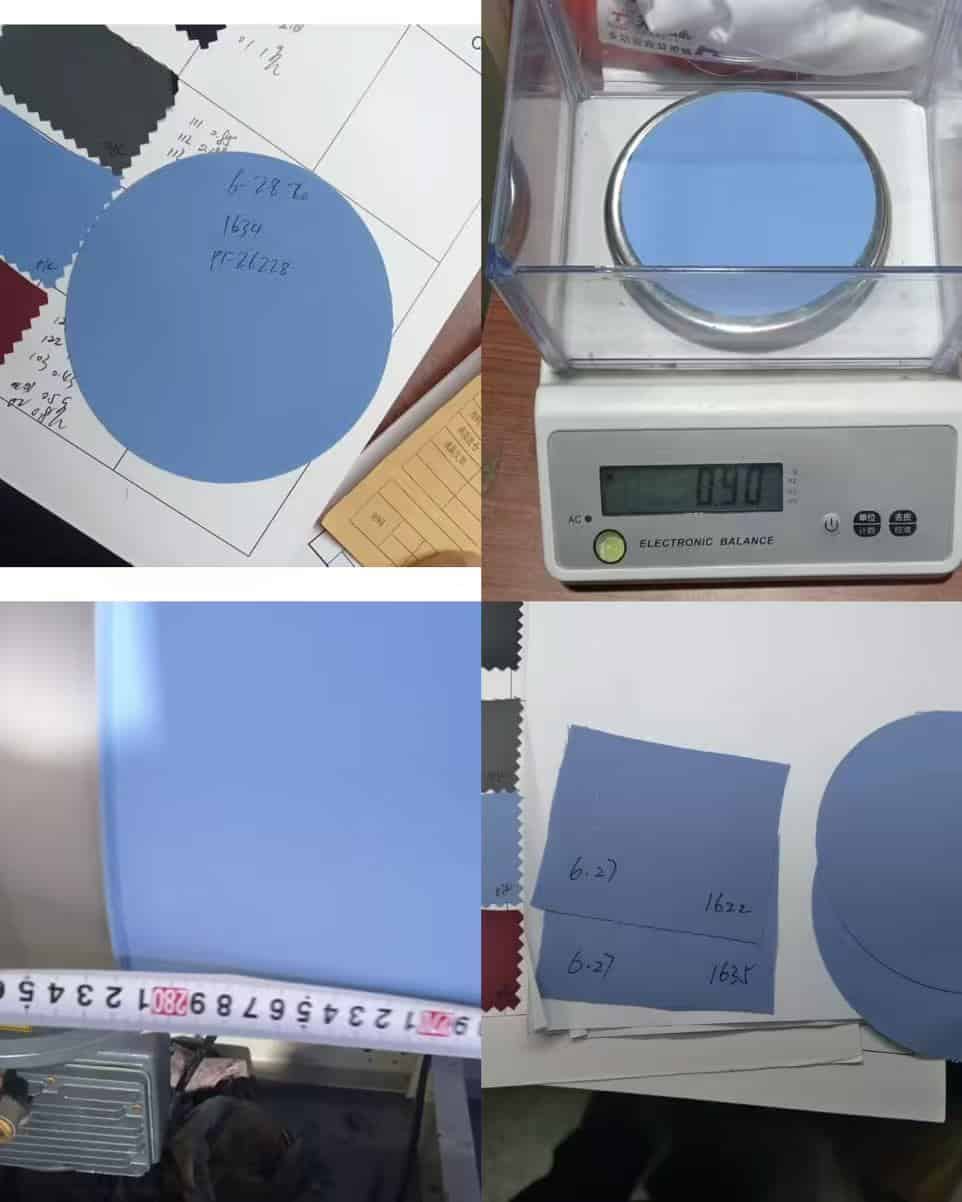
Polyester Microfiber vs Cotton for Bedding Applications
Bed Sheets
Performance requirement: Smooth or brushed hand feel and controlled dimensional change after washing.
Polyester microfiber advantage: Brushed surface options and generally faster drying, useful for easy-care programs.
Cotton advantage: Natural-fiber positioning and a cotton-specific hand feel some markets request by name.
Confirm before sampling: GSM, brushing side, shrinkage tolerance.
Duvet Covers
Performance requirement: Colorfastness for printed designs, dimensional stability after repeated washing.
Polyester microfiber advantage: Disperse printing with fixation generally supports darker, higher-colorfastness designs.
Cotton advantage: Preferred where a natural-fiber label claim is required for the target market.
Confirm before sampling: Print route, rubbing fastness requirement, roll length.
Pillowcases
Performance requirement: Consistent hand feel across the same production batch.
Polyester microfiber consideration: A brushed surface can be developed against an approved hand-feel reference, but brushing level and sample-to-bulk tolerance must be defined.
Cotton advantage: Greater moisture absorption where that property is part of the product specification. Absorption should not be treated as the same measure as breathability.
Confirm before sampling: Hand-feel reference sample, usable width.
Comforter Shells
Performance requirement: Fill-retention weave density and shrinkage stability during quilting.
Polyester microfiber consideration: Density, usable width and seam performance can be specified for a shell that will undergo subsequent filling or quilting.
Cotton advantage: Chosen for programs prioritizing natural-fiber shell content.
Confirm before sampling: Weave density, testing requirement, packing method.
Choosing for Different Markets and Price Positions
For hot or humid markets, buyers often compare lower moisture absorption, drying speed, GSM and weave openness. A lighter polyester microfiber construction may suit an easy-care program, but a dense or heavily brushed version may feel warmer. Cooler markets may accept heavier or more brushed constructions in either fiber when the required hand feel and wash performance have been approved.
Cost-sensitive programs need to weigh unit price against cutting yield and complaint risk. A lower price with an incomplete specification can create width, shrinkage or colorfastness problems that cost more in rework than the original saving. Programs built around a natural-fiber claim generally use cotton. Printed polyester bedding may use pigment, nano, disperse or digital routes depending on the design and fastness target; the approved print, rather than the process name alone, should be used for bulk comparison.
Dyeing and Printing Differences
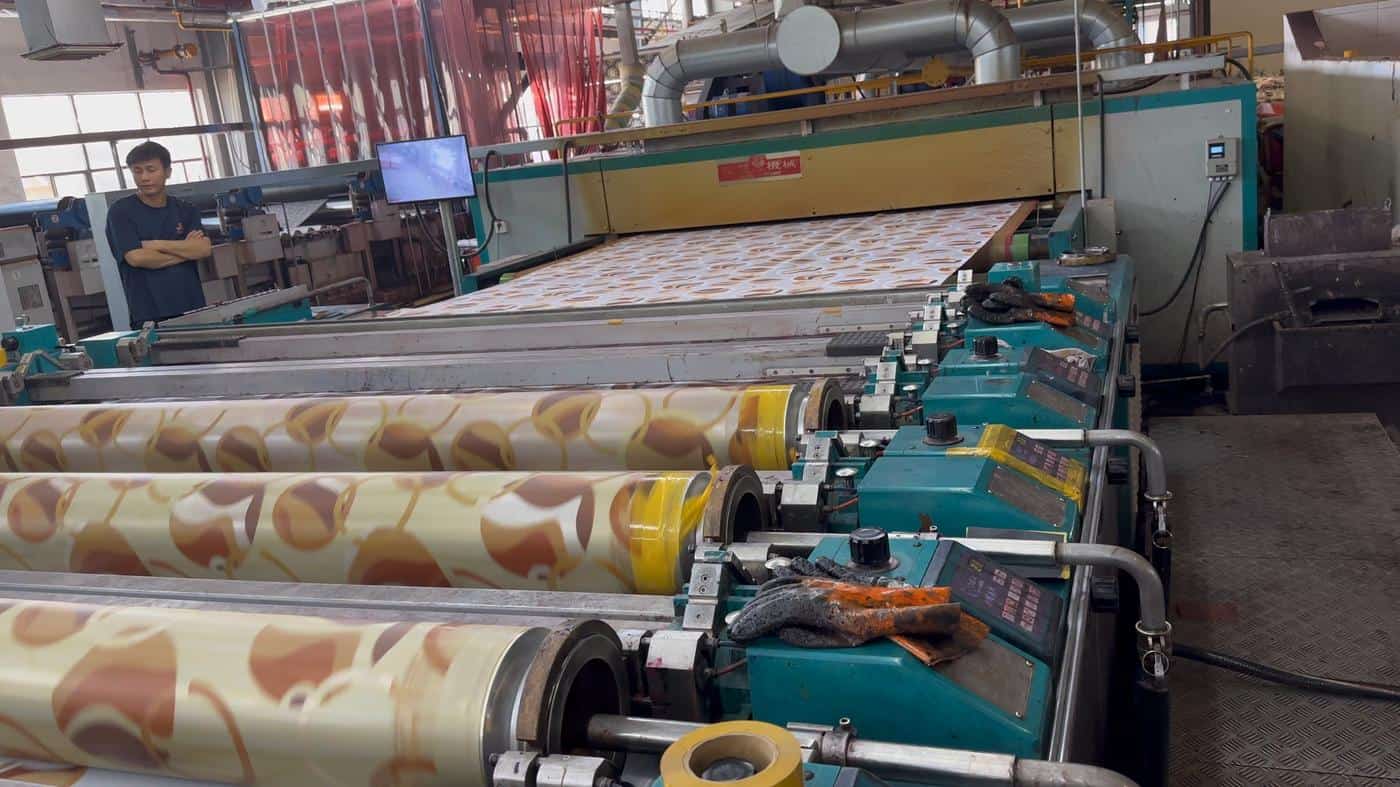
Cotton and polyester require different dyeing and printing chemistry because the fibers accept color differently. For polyester microfiber, Perfectextile's confirmed printing options include pigment, nano, disperse and digital printing. Pigment printing is normally considered for lighter, cost-sensitive designs. Nano printing adds high-temperature treatment to the pigment route. Disperse printing includes fixation and washing to remove floating color and is the safer option for darker designs or higher colorfastness requirements. Digital printing offers design flexibility and no printing MOQ, subject to the selected base fabric and production arrangement. Cotton uses different dyeing chemistry and is outside Perfectextile's confirmed production scope for this article.
The route should be selected by design, color depth, hand-feel target, fastness requirement and order arrangement. Testing must use the finished print because the base fabric result does not confirm the performance of the printed surface. No process should be approved from its name alone.
Common Sourcing Mistakes
- Choosing a fabric only by fiber composition without reviewing GSM, weave or finishing.
- Treating polyester's lower moisture absorption as proof that the finished fabric is waterproof. Water resistance depends on construction and any relevant finish.
- Assuming cotton never pills, when pilling risk depends on yarn and finishing, not fiber alone.
- Comparing nominal width instead of usable width, which affects actual cutting yield.
- Approving a hand feel from a description instead of a physical reference sample.
- Leaving shrinkage and pilling requirements undefined before bulk production starts.
- Testing the base fabric instead of the finished, printed or dyed cloth.
- Changing GSM or brushing level after the sample has already been approved.
- Ignoring packing method and roll-length requirements during specification review.
What Buyers Must Confirm Before Sampling
- Fiber composition
- Yarn or filament specification
- GSM and tolerance
- Usable width
- Weave
- Fabric density
- Brushing side
- Hand-feel reference sample
- Dyeing or printing route
- Color and design
- Shrinkage requirement
- Pilling requirement
- Colorfastness requirement
- Rubbing fastness requirement
- Roll length
- Packing method
- Inspection requirement
- Bulk tolerance
- Intended bedding product
- Target market

How Perfectextile Handles Polyester Microfiber Orders
For polyester microfiber programs, Perfectextile follows a fixed production sequence from raw material through to packing:
Perfectextile's confirmed production scope for this article is polyester microfiber fabric. Buyers should approve a complete specification sheet and retain an approved reference sample so bulk fabric can be compared with a defined standard rather than a verbal description.
Which Fabric Should a Bedding Buyer Choose?
Choose polyester microfiber when the program prioritizes quick drying, a controlled easy-care finish, printed designs or a specific brushed surface, provided the submitted sample passes the buyer's required tests. Choose cotton when natural-fiber positioning, moisture absorption or a cotton-specific hand feel is a program requirement, while accounting for closer shrinkage control, drying time and care instructions. A blend should only be considered once composition ratio, expected performance and production feasibility are confirmed in writing, since Perfectextile's current confirmed capability covers polyester microfiber production rather than cotton or blended fiber processing.
Frequently Asked Questions
Is polyester fabric better than cotton for bedding production?
Neither fiber is automatically better. Polyester microfiber generally dries faster under comparable construction and supports several printing routes. Cotton is commonly chosen for natural-fiber positioning and moisture absorption. The decision still depends on GSM, weave, finishing and the required test results.
Which shrinks more, polyester or cotton?
Cotton commonly requires closer shrinkage control, but polyester can still shrink if exposed to unsuitable heat or if construction and finishing are not well controlled. Neither fiber should be assumed shrink-proof without a stated tolerance on the specification sheet.
Is polyester microfiber breathable enough for bed sheets?
Breathability depends on GSM, weave openness, brushing and finished construction rather than the fiber name alone. A lighter GSM, more open weave polyester microfiber construction can perform differently from a dense, heavily brushed one, so buyers should review the finished fabric data rather than assume a fixed breathability level.
Can cotton and polyester use the same printing method?
No. Cotton and polyester require different dyeing and printing chemistry because their fiber structures accept color differently. Polyester microfiber generally uses disperse printing with fixation and washing, which is a separate process from cotton dyeing routes.
Which specifications should be compared before requesting samples?
At minimum, fiber composition, GSM and tolerance, usable width, weave, brushing side, hand-feel reference, dyeing or printing route, shrinkage and pilling requirements, colorfastness, rubbing fastness, roll length, packing method and bulk tolerance should all be defined before a sample is requested.
Comparing Polyester Fabric vs Cotton for Your Program?
If your bedding program is considering polyester microfiber, send Perfectextile the target GSM, usable width, weave, brushing level, color or print, testing requirements and estimated quantity for specification review and sampling discussion.
Start a Specification ReviewRelated reading: Bedding Fabric Manufacturer Overview | Bedding Fabric Applications | Manufacturing | Quality Control | OEM Fabric Service
 English
 Arabic
 Spanish
 French
 Italian
 Portuguese
 Vietnamese