

You want better sleep, but the best sheet type depends on your needs. If you get hot at night, cotton might feel cooler. If you like silky softness, polyester microfiber sheets could be your pick. Skin sensitivity, how you wash your sheets, and your comfort preferences all matter. Take a look at some key factors experts say can affect sleep quality:
Factor | Description |
|---|---|
Fibre Types | Different fibers change comfort and temperature. |
Material Properties | Weight and thermal resistance impact how sheets feel on your skin. |
Ambient Conditions | Room temperature interacts with sheet material and affects sleep. |
Key Takeaways
Choose cotton sheets for breathability and comfort, especially if you sleep hot. They help regulate temperature and wick away moisture.
Opt for polyester microfiber sheets if you prefer instant softness and easy care. They dry quickly and resist wrinkles, making them low-maintenance.
Consider your skin sensitivity. Cotton sheets are gentler and less likely to cause irritation, while microfiber may trigger allergies for some.
Think about durability and cost. Cotton sheets can last longer with proper care, while microfiber sheets are more affordable but may need replacing sooner.
Evaluate environmental impact. Cotton is biodegradable and natural, while polyester microfiber can contribute to landfill waste and microplastic pollution.
Key Differences
Polyester Microfiber Sheets vs Cotton
When you shop for new sheets, you probably notice two main choices: polyester microfiber sheets and cotton sheets. Each type has its own strengths and weaknesses. Let’s break down what sets them apart so you can pick the best option for your sleep style.
Quick Tip: If you want sheets that feel cool and crisp, cotton might be your best bet. If you prefer silky softness and easy care, polyester microfiber sheets could be the winner.
Material Composition
Material Type | Source | |
|---|---|---|
Cotton | Natural fiber | Harvested from cotton plants, varies in quality based on staple length. |
Polyester Microfiber | Synthetic material | Made from finely woven synthetic fibers, generally more affordable and durable than traditional polyester sheets. |
Cotton comes straight from nature. You get a soft, breathable fabric that absorbs moisture and feels gentle on your skin. Polyester microfiber sheets use man-made fibers. These sheets are strong, resist wrinkles, and cost less. They don’t absorb moisture, so they dry quickly but may not feel as fresh.
Breathability & Heat Retention
Polyester Microfiber Sheets | Cotton Sheets | |
|---|---|---|
Breathability | Less breathable, tends to trap body heat | More breathable, helps regulate temperature |
Heat Retention | Retains heat, less suitable for hot sleepers | Better at dissipating heat, suitable for warm sleepers |
Moisture Wicking | Quick-drying, moisture-wicking properties | Takes longer to dry, less effective at wicking moisture |
Comfort | Silky and smooth feel | Crisp and soft feel |
Allergic Reactions | More likely to cause reactions due to synthetic fibers | Less likely to cause reactions, natural material |
Durability | Durable, but quality varies | High-quality cotton is durable, softens over time |
If you get hot at night, cotton sheets help you stay cool. They let air flow and wick away sweat. Polyester microfiber sheets trap heat, which can make you feel warmer. These sheets dry fast, so you won’t wake up in a damp bed, but they might not be the best choice if you sweat a lot.
Comfort & Feel
Cotton sheets feel crisp and fresh. They get softer every time you wash them. Many people with sensitive skin choose cotton because it’s gentle.
Polyester microfiber sheets feel smooth and silky. You might like them if you want instant softness. Some people say these sheets feel slippery, which can be nice in cold weather.
Care & Maintenance
You can toss polyester microfiber sheets in the wash and they come out almost wrinkle-free. They dry quickly and don’t need much ironing.
Cotton sheets need a bit more care. They can wrinkle and take longer to dry, but they last a long time if you treat them well.
User Preferences by Climate
People in warmer places often pick cotton sheets for their breathability. In cooler climates, polyester microfiber sheets are popular because they keep you warm and are easy to care for. In Asia-Pacific, cotton sheets are becoming more popular as incomes rise and people want softer, natural bedding.
Common Praises & Complaints
Praise/Complaint | Description |
|---|---|
Praise | Sheets are described as ‘superior softness‘ and ‘incredibly soft’ by many reviewers. |
Praise | Reviewers appreciate the durability and longevity, with some using them for over 2 years. |
Praise | Many find the sheets cooling and breathable, especially in summer. |
Complaint | Some users feel the sheets are too thin and stifling. |
Complaint | A few reviewers mention issues with pilling after a couple of washes. |
Complaint | Some find the fabric feels ‘cheap’ and experience sweaty nights. |
Complaint | A minority report that the fitted sheet does not stay on well. |
You might love the softness of polyester microfiber sheets, but some people say they feel too thin or make them sweat. Cotton sheets get praise for their breathability and comfort, but they can wrinkle and sometimes pill after many washes.
Note: Your choice depends on what matters most to you—cool comfort, easy care, or silky softness.
Polyester Microfiber Sheets vs Cotton: At a Glance
Cotton: Natural, breathable, absorbs moisture, softens over time, needs more care.
Polyester Microfiber Sheets: Synthetic, traps heat, dries fast, resists wrinkles, affordable, easy to maintain.
If you want sheets that help you sleep cool and feel fresh, cotton is a classic choice. If you want sheets that are soft right away and easy to wash, polyester microfiber sheets might suit you better.
Comfort

Softness
When you touch your sheets, you want them to feel nice against your skin. Cotton sheets start out crisp, but they get softer every time you wash them. Many people love how cotton sheets feel after a few months. They become cozy and gentle, almost like your favorite old T-shirt.
Polyester microfiber sheets feel silky and smooth right away. You might notice they glide under your hands. Some people like this instant softness, especially if you want sheets that feel soft from the start. These sheets do not need many washes to feel comfortable. If you prefer a slick, smooth texture, you may enjoy polyester microfiber sheets.
Tip: If you want sheets that get softer over time, cotton is a great choice. If you want sheets that feel soft right out of the package, try polyester microfiber sheets.
Sensitive Skin
If you have sensitive skin, you need sheets that will not cause irritation. Cotton sheets are breathable and soft, so they work well for most people. They let air flow and help keep your skin cool. Cotton also gets softer with each wash, which makes it even better for sensitive skin.
Polyester microfiber sheets manage moisture well. They help keep sweat away from your skin, which can reduce irritation. These sheets also repel dust mites, so they may help if you have allergies. However, some people find that synthetic fibers can cause irritation or feel uncomfortable.
Here is a quick look at how both materials work for sensitive skin:
Material | Benefits for Sensitive Skin | Drawbacks for Sensitive Skin |
|---|---|---|
Microfiber | Moisture management, repels dust mites | Synthetic fibers may cause irritation |
Cotton | Breathable, softens with each wash | Can trap moisture, may lead to irritants |
Cotton sheets are more breathable and provide a cooler sleep environment.
Microfiber sheets are soft and smooth, but may bunch easily and are less ideal for sensitive skin.
If you have allergies or want to avoid dust mites, polyester microfiber sheets might help. If you want a natural, gentle feel, cotton sheets are usually the safer bet.
Breathability
Hot Sleepers
If you often wake up feeling hot and sweaty, you need sheets that let your skin breathe. Cotton sheets do a great job here. They allow air to move through the fabric, so you stay cooler at night. Many people who sleep hot say cotton sheets help them feel fresh and comfortable. You might notice that cotton sheets feel crisp and light, even on warm nights.
Polyester microfiber sheets feel soft and smooth, but they do not let as much air pass through. These sheets can trap heat close to your body. If you live in a warm place or you get hot while you sleep, you may find yourself tossing and turning with polyester microfiber sheets. Cotton sheets usually work better for hot sleepers because they help your body release heat.
Tip: If you want to stay cool at night, choose cotton sheets for better airflow.
Moisture Control
Sweat can make you uncomfortable and disturb your sleep. The way your sheets handle moisture matters a lot. Here is how cotton and polyester microfiber sheets compare:
Cotton sheets soak up moisture well. They pull sweat away from your skin and help you feel dry. This makes them a good choice if you sweat at night.
Polyester microfiber sheets have water-repelling qualities. You often see this material in sportswear and towels. These sheets dry quickly and do not hold onto water. However, they do not wick moisture away from your skin as well as cotton does.
You might think that quick-drying sheets always feel better, but that is not always true. Cotton sheets absorb more moisture, so you do not wake up feeling damp. Polyester microfiber sheets dry fast, but they can leave sweat on your skin, which may feel sticky.
Note: For the best moisture control, cotton sheets usually win. They keep you dry and comfortable, even if you sweat during the night.
Temperature Regulation
Warmth
Do you love feeling warm and cozy when you sleep? Polyester microfiber sheets might be your best friend. These sheets trap your body heat and keep it close. You will notice that the bed feels warmer, especially in cooler weather. Microfiber does not absorb much moisture, so it can hold onto heat and sweat. This can make you feel toasty, but sometimes it gets too warm if you are sensitive to heat.
Microfiber sheets trap body heat and moisture. You might overheat if you get hot at night.
Cotton sheets let air move through the fabric. This helps you stay comfortable and not too hot.
Microfiber can feel clammy if you sweat a lot, while cotton wicks sweat away and keeps you dry.
If you often feel cold at night, microfiber sheets can help you stay warm. They work well in winter or in air-conditioned rooms. Cotton sheets, on the other hand, do not trap as much heat. They feel lighter and cooler, which is great if you do not like to feel too warm.
Cooling
If you wake up sweaty or toss and turn because you feel hot, you need sheets that help you cool down. Cotton sheets do a great job here. The natural fibers let air flow and wick sweat away from your skin. You will feel fresh and dry, even if you sweat during the night.
Here is a quick look at how each fabric helps with temperature:
Fabric Type | Absorbency | Breathability | Ideal For |
|---|---|---|---|
Polyester Microfiber | Low (not very absorbent) | Relies on air movement for cooling | Hot sleepers (due to airflow) |
Cotton | High (more absorbent) | Wicks sweat away from skin | Cold sleepers (slower drying) |
Cotton sheets are perfect for hot sleepers. They keep you cool and help your body release heat. Microfiber sheets rely on air movement for cooling, but they do not absorb sweat well. If you want to stay cool and dry, cotton is usually the better choice.
Tip: If you sleep hot, pick cotton sheets for a cooler, fresher night. If you want extra warmth, try microfiber sheets.
Durability
Polyester Microfiber Sheets: Durability
When you buy new sheets, you want them to last. Polyester microfiber sheets stand out for their strength. These sheets use tightly woven synthetic fibers, so they resist tearing and hold up well after many washes. You can toss them in the washing machine often, and they rarely lose their shape or color. If you have kids or pets, you might like how tough these sheets are.
Here’s what you can expect from polyester microfiber sheets:
Microfiber sheets with a flat weave handle frequent washing. You won’t see much pilling or fraying.
The fabric dries quickly, so you don’t have to worry about shrinking.
These sheets keep their smooth feel, even after months of use.
Take a look at the average lifespan for different sheet types:
Sheet Type | Average Lifespan |
|---|---|
Polyester | 5-7 years |
Microfiber | 2-3 years |
Cotton | 3-5 years |
Polyester microfiber sheets usually last about two to three years. If you choose regular polyester, you might get up to seven years. That’s pretty good for busy households.
Cotton Sheets: Durability
Cotton sheets are a classic choice. You might notice they feel softer every time you wash them. High thread count cotton sheets last longer and get cozier with age. If you pick lower thread count cotton, you may see pilling or thinning sooner.
Here’s what makes cotton sheets durable:
High thread count cotton sheets become softer and stronger with each wash.
Lower thread count cotton may pill and need replacing more often.
Cotton sheets can last up to six years, which is longer than most microfiber sheets.
If you want sheets that stand the test of time, cotton is a wise investment. You’ll enjoy comfort and durability, especially if you care for them properly.
Tip: Wash your sheets gently and avoid harsh detergents. You’ll help them last longer and stay comfortable.
Ease of Care
Washing
You want sheets that are easy to clean. Polyester microfiber sheets and cotton sheets have different care needs. Microfiber sheets need a gentle touch. You should wash them in cold water, below 85°F. Hot water can damage the fibers. Use only liquid detergent. Powder detergents can leave residue. Dry these sheets on low heat or let them air dry. High heat can melt the fibers. Microfiber sheets do not need ironing. If you spill something, clean it right away. Stains can become permanent fast.
Cotton sheets give you more flexibility. You can wash them in cold or warm water, up to 104°F. Use a mild, bleach-free detergent. Avoid fabric softeners. Cotton sheets can handle a tumble dry on medium heat or you can line dry them. You can iron cotton sheets on medium-high heat if you want them crisp. Cotton sheets are less likely to hold onto stains, but it still helps to treat spills quickly.
Here’s a quick look at the care requirements:
Care Requirement | Cotton Sheets | Microfiber Sheets |
|---|---|---|
Washing | Cold or warm water (up to 104°F) | Cold water only (below 85°F) |
Detergent | Mild, bleach-free | Liquid only, no powder |
Drying | Medium heat or line dry | Low heat or air dry |
Ironing | Medium-high heat safe | Not recommended |
Stain treatment | Pre-treat stains | Address spills immediately |
Tip: Microfiber sheets are quick to wash and dry, but you need to be careful with heat. Cotton sheets take a bit more time, but they are forgiving if you make a mistake.
Wrinkle Resistance
No one likes wrinkled sheets. Polyester microfiber sheets make your life easier here. They come out of the dryer looking smooth. You rarely need to iron them. Even if you leave them in the dryer a little too long, they still look neat.
Cotton sheets are different. They wrinkle easily, especially after washing and drying. If you want that crisp hotel look, you will need to iron them or fold them right away. Some people like the natural, relaxed look of wrinkled cotton. Others find it messy.
Here’s how they compare:
Sheet Type | |
|---|---|
Polyester Microfiber | Highly wrinkle-resistant |
Cotton | Prone to wrinkling |
If you want sheets that always look tidy with little effort, microfiber is the way to go. Cotton sheets need more attention, but some people love their classic feel.
Skin Health
Allergies
You want sheets that help you sleep well and keep your skin happy. If you have allergies, the type of sheet you choose matters a lot. Cotton sheets usually work better for people with sensitive skin and allergies. The natural fibers let your skin breathe and rarely cause reactions. You might notice that cotton feels gentle and does not trap dust or chemicals.
Polyester microfiber sheets can be tricky if you have allergies. These sheets use synthetic fibers and sometimes contain chemicals from the manufacturing process. Some people react to these chemicals and get itchy skin or stuffy noses. Dermatologists found that people who sleep on microfiber sheets often have higher levels of phthalates in their bodies. Phthalates are chemicals that can cause allergic reactions.
Here’s a quick look at how each sheet type affects allergies:
Sheet Type | Allergy Risk | Why? |
|---|---|---|
Cotton | Low | Natural fiber, fewer chemicals |
Microfiber | Higher | Synthetic, may contain chemicals |
Microfiber sheets can trigger allergies and skin irritation.
Cotton sheets are safer for sensitive skin and allergy-prone sleepers.
Some studies show higher chemical exposure with microfiber bedding.
🛏️ If you wake up sneezing or itching, try switching to cotton sheets. You may notice a big difference in how you feel.
Irritation
Your skin touches your sheets all night. If you have sensitive skin, you need bedding that feels soft and does not cause problems. Cotton sheets get softer every time you wash them. They rarely irritate your skin and feel cool and smooth.
Microfiber sheets feel silky, but they can sometimes cause irritation. The synthetic fibers may rub against your skin and make you feel itchy. Chemicals used in production can also bother your skin. If you notice redness or discomfort, your sheets might be the reason.
Cotton sheets are gentle and rarely cause irritation.
Microfiber sheets may lead to itchy or irritated skin, especially for sensitive sleepers.
Tip: Wash your sheets often and use gentle detergent. Clean sheets help keep your skin healthy and comfortable.
Cost
Price
When you shop for new sheets, price often comes first. Polyester microfiber sheets usually cost less than cotton sheets. You can find a set of microfiber sheets for a fraction of the price of cotton. This makes microfiber a popular choice if you want to save money or need to buy several sets at once.
Cotton sheets have a higher upfront cost. You might pay more for a set, especially if you choose high-quality cotton like Egyptian or Pima. The price can feel steep, but many people see it as an investment in comfort.
Tip: If you want to refresh your bedding on a budget, microfiber sheets give you more options for less money.
Value
Price is only part of the story. You also want to know if your sheets will last and feel good over time. Let’s look at how microfiber and cotton sheets compare for long-term value:
Feature | Microfiber Sheets | Cotton Sheets |
|---|---|---|
Initial Cost | Lower | Higher |
Lifespan | 3 to 5 years | |
Durability | Resists wear and tear | Lasts years with gentle care |
Maintenance | Easy, stain resistant | Needs special care |
Comfort | Less breathable | More breathable and comfortable |
Long-Term Savings | Fewer replacements needed | Good value with proper care |
Microfiber sheets last about two to four years. They resist stains and don’t need much care. You can wash them often without worrying about damage. This means you might save money on replacements.
Cotton sheets can last three to five years or more if you treat them gently. They need a bit more care, but many people say the comfort is worth it. Over time, cotton sheets can become softer and cozier, adding to their value.
Microfiber sheets work well if you want low cost and easy care.
Cotton sheets cost more, but they offer comfort and can last longer with the right care.
Think about what matters most to you: saving money now, or enjoying comfort and value for years to come.
Environmental Impact
Sustainability
When you think about the planet, your choice of sheets matters. Cotton and polyester microfiber sheets each have their own impact on the environment.
Cotton comes from plants, so it sounds natural and safe. But growing cotton uses a lot of water—about 1,300 liters for just one kilogram of fiber. That’s like running your shower for hours! Cotton farming also creates a lot of waste. Almost half of the cotton plant turns into waste, and even after making the sheets, a third of the material gets lost. If you pick recycled cotton, you help save water and reduce pollution from farm chemicals.
Polyester microfiber sheets use much less water to make—only about 70 liters per kilogram. They also need less water and energy when you wash them. But polyester comes from oil, which is not a renewable resource. Making polyester uses more energy and creates more carbon dioxide than cotton. Take a look at this chart to see how water, energy, and CO₂ stack up:
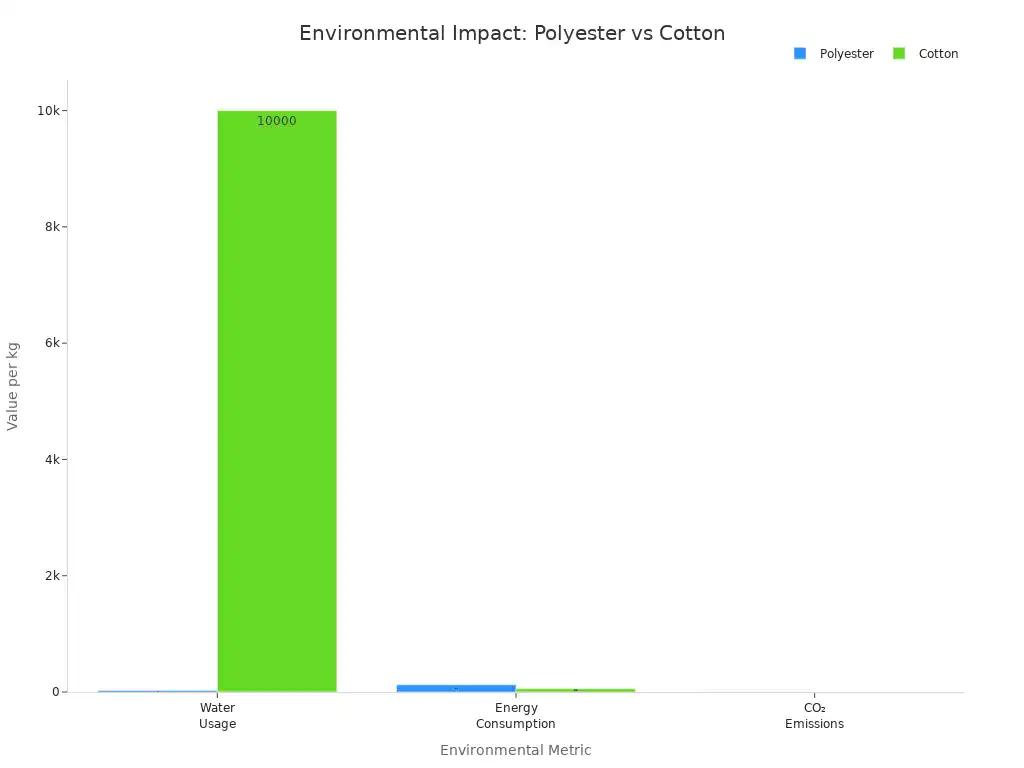
Polyester sheets also release tiny plastic fibers, called microplastics, every time you wash them. These microplastics end up in rivers and oceans, where fish and other animals can eat them.
🌱 If you want to lower your water use, polyester microfiber sheets win. If you care about using natural materials, cotton is the better choice.
Biodegradability
You might wonder what happens to your sheets when you throw them away. Cotton sheets break down much faster than polyester. Cotton is biodegradable, so it can decompose in soil, water, or even a landfill. Polyester microfiber, on the other hand, can take anywhere from 20 to 200 years to break down. That means polyester sheets stick around for a long time, adding to landfill waste.
Cotton sheets decompose quickly and safely.
Polyester microfiber sheets can last for centuries in landfills.
Washing polyester sheets releases millions of microplastic fibers each year, which can harm wildlife and even end up in your food.
If you want sheets that are kinder to the earth after you’re done with them, cotton is the clear winner.
Choosing the right sheets depends on what you need for a good night’s sleep. If you sleep hot or have sensitive skin, cotton sheets with hypoallergenic features work best. Microfiber feels soft and warm, so it’s great if you get cold or want easy care. Here are some tips to help you decide:
Pick cotton for breathability and comfort.
Choose microfiber for warmth and simple washing.
Think about your budget, skin needs, and how much care you want to give your sheets.
You know your sleep style best—let your needs guide your choice!
FAQ
Are polyester microfiber sheets safe for sensitive skin?
You might find polyester microfiber sheets soft, but they can irritate sensitive skin. If you have allergies or skin issues, cotton sheets usually feel gentler and cause fewer problems.
Do cotton sheets shrink after washing?
Cotton sheets can shrink a little after the first wash. To avoid this, wash them in cold or warm water and dry on low heat. Always check the care label for best results.
Which sheets are better for hot sleepers?
If you get hot at night, cotton sheets help you stay cool. They let air flow and absorb sweat. Polyester microfiber sheets trap heat, so you might feel warmer.
How often should I wash my sheets?
You should wash your sheets once a week. This keeps them fresh and removes sweat, oils, and dust. Clean sheets help you sleep better and keep your skin healthy.
See Also
Choosing Between Microfiber And Polyester Sheets For Comfort
Comparing Panel And Digital Printing For Bedding Fabrics 2025
 English
 Arabic
 Spanish
 French
 Italian
 Portuguese
 Vietnamese