
You can choose from many types of bed sheet fabric, such as organic cotton, Egyptian cotton, bamboo rayon, microfiber, and polyester. People often pick organic cotton for its softness and breathability. Microfiber and polyester stand out because they are affordable and dry quickly. Your choice affects comfort, durability, and care. Cotton, linen, and bamboo last longer and feel gentle on your skin. Many people look for sheets that are easy to clean and help with allergies. Think about your local climate, how you sleep, and how much time you want to spend on laundry when you pick your sheets.
Key Takeaways
Choose organic cotton for softness and breathability. It resists allergens and lasts long.
Consider bamboo sheets for their moisture-wicking properties. They keep you cool and are eco-friendly.
Select linen for durability and comfort in hot weather. It softens with each wash but requires gentle care.
Opt for microfiber or polyester for affordability and easy maintenance. They dry quickly but may trap heat.
Match your sheet choice to your climate and comfort needs. Breathable fabrics work well in heat, while warmer options suit colder weather.
Types of Bed Sheet Fabric
When you shop for new sheets, you will see many types of bed sheet fabric. Each one has unique qualities that affect how your bed feels, how long your sheets last, and how easy they are to care for. The table below gives you a quick look at the main types of bed sheet fabric and their key features:
Fabric Type | Breathability | Softness | Durability | Maintenance | Hypoallergenic | Environmental Impact |
|---|---|---|---|---|---|---|
Cotton | Excellent, regulates temperature | Soft from the start | Highly durable, withstands washing | Easy to care for | Resists allergens | Biodegradable, sustainable |
Linen | Good, but less effective | Rough initially, softens over time | Durable, but creases easily | Requires more care | N/A | Biodegradable |
Microfiber | Poor, traps heat | Soft, but synthetic feel | Durable, resistant to wrinkles | Easy to maintain | Can irritate skin | Non-biodegradable |
Silk | Excellent, adjusts to body temperature | Smooth and luxurious | N/A | N/A | Hypoallergenic | N/A |
Polyester | N/A | N/A | Highly durable, resistant to tearing and fading | Easy to maintain | N/A | N/A |
Bamboo | N/A | Incredibly soft and smooth | N/A | N/A | N/A | N/A |
Tencel™ | N/A | Silky and cool | N/A | N/A | N/A | N/A |
Flannel | N/A | N/A | N/A | N/A | N/A | N/A |
You can also see how popular each fabric is by looking at the market share chart below:
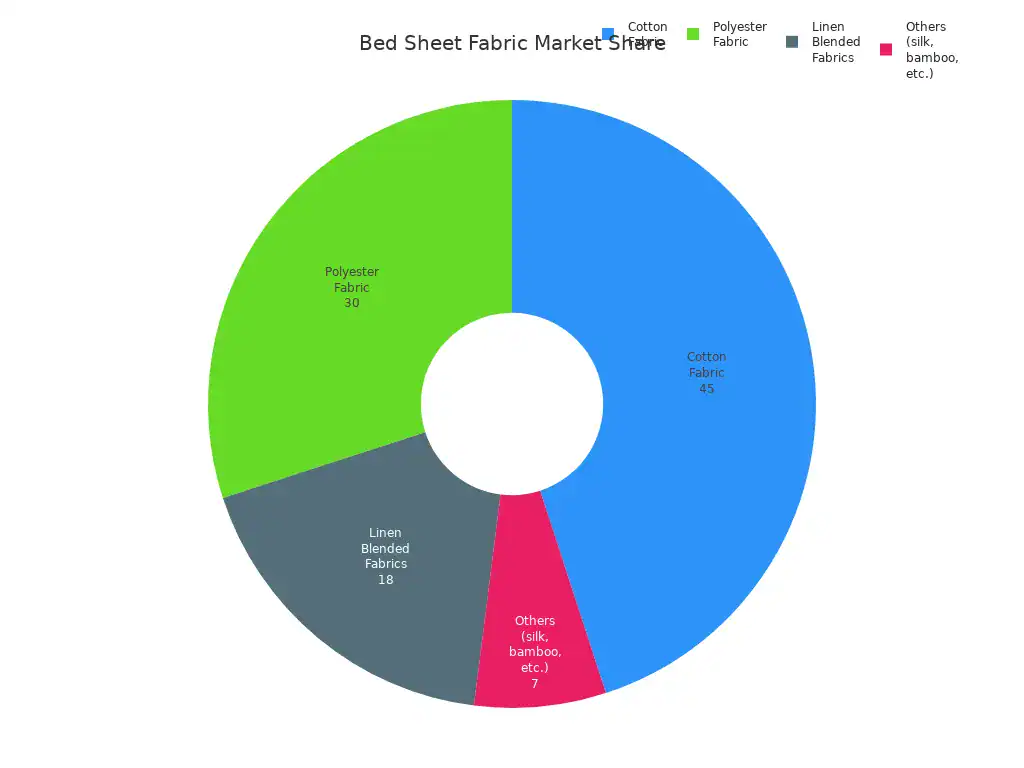
Tip: Cotton and polyester make up most of the market, but exploring other types of bed sheet fabric can help you find the best fit for your needs.
Cotton
Cotton is the most common choice among all types of bed sheet fabric. You will notice its softness right away. Cotton sheets breathe well and help regulate your body temperature, so you stay comfortable in both warm and cool weather. They are easy to wash and last a long time. Cotton also resists allergens, making it a good pick if you have sensitive skin or allergies. However, cotton can wrinkle and shrink if you use hot water or high heat in the dryer.
Bamboo
Bamboo sheets feel incredibly soft and smooth. They stand out for their moisture-wicking ability, which means they pull sweat away from your skin and help it evaporate quickly. This keeps you cool and dry at night. Bamboo grows fast and uses less water than cotton, so it is a more eco-friendly choice. If you want a sustainable option that feels gentle and keeps you cool, bamboo is a great pick among the types of bed sheet fabric.
Linen
Linen sheets come from flax plants. They feel rough at first, but they get softer with each wash. Linen is strong and lasts a long time, even with heavy use. It breathes well and keeps you cool in summer, but it can wrinkle easily. Linen needs gentle washing and drying, so you should follow care instructions closely. If you want sheets that last for years and you do not mind a bit of extra care, linen is a smart choice.
Polyester
Polyester sheets are made from synthetic fibers. They are affordable and very durable. Polyester resists wrinkles, shrinking, and fading, so you can wash them often without worry. However, polyester does not breathe well and can trap heat, which might make you feel sweaty in warm weather. Some types of polyester have moisture-wicking features, but most do not absorb moisture well.
Microfiber
Microfiber is another synthetic option. These sheets feel soft and smooth, almost like velvet. Microfiber resists wrinkles and stains, and it dries quickly. You will find them easy to clean and lightweight. However, microfiber does not allow much air to pass through, so it can trap heat and moisture. This may cause discomfort if you sleep hot. Microfiber is not biodegradable, so it is less eco-friendly than natural fabrics.
Silk
Silk sheets feel smooth and luxurious. They adjust to your body temperature, keeping you cool in summer and warm in winter. Silk is naturally hypoallergenic and resists dust mites and allergens. Sleeping on silk can help your skin and hair stay healthy by reducing friction and irritation. Silk sheets need gentle care and can be expensive, but they offer a unique sleeping experience.
Flannel
Flannel sheets are perfect for cold weather. The fabric has a napped texture that traps heat and keeps you warm all night. Flannel is breathable, so it lets moisture escape while still holding in warmth. You will love flannel if you want cozy bedding for winter or live in a chilly climate.
Tencel™
Tencel™ sheets come from wood pulp, usually eucalyptus. They feel silky and cool to the touch. Tencel™ stands out for its eco-friendly production, using a closed-loop process that recycles water and solvents. These sheets wick moisture away from your skin, helping you stay dry and comfortable. Tencel™ is a great choice if you want a soft, sustainable, and cool fabric.
Satin
Satin sheets have a shiny, smooth surface that looks and feels luxurious. Satin is gentle on your skin and hair, helping to prevent irritation and breakage. The fabric is hypoallergenic and cooling, which makes it a good option for people with allergies or for hot summer nights. Satin does not absorb moisture, so it helps keep your skin hydrated and your hair smooth.
Note: Each of these types of bed sheet fabric offers different benefits. Think about what matters most to you—softness, breathability, durability, or sustainability—when you choose your next set of sheets.
Cotton Weaves and Subtypes
Cotton sheets come in many weaves and subtypes. Each weave changes how your sheets feel, how long they last, and how easy they are to care for. You can choose from crisp percale, silky sateen, or luxurious Egyptian and Pima cotton. The right weave helps you sleep better and keeps your bedding looking fresh.
Percale
Percale sheets use a simple, tight weave. You will notice a crisp, smooth texture with a matte finish. Percale feels cool and breathable, making it a good choice for warm climates or if you sleep hot. These sheets resist pilling and last a long time. You may see more wrinkles with percale, but the durability makes up for it.
Texture Description | Durability | |
|---|---|---|
Percale | Crisp, smooth, matte finish, breathable | Durable, resists pilling, long-lasting |
Twill | Diagonal rib pattern, soft | Strong, wrinkle-resistant |
Plain Weave | Simple, affordable, versatile | Generally durable |
Poplin | Lightweight, tightly packed texture | Durable, structured |
Fleece | Softly textured, warm | Less durable |
Tip: Choose percale if you want sheets that feel cool and crisp all night.
Sateen
Sateen sheets wrap you in a silky-smooth embrace. The weave creates a buttery texture that glides across your skin. Sateen feels warmer and heavier than percale. You will see a slight sheen that adds elegance to your bedding. Sateen resists wrinkles better than percale and drapes well over your body.
Sateen | Percale | |
|---|---|---|
Feel | Luxurious, silky | Crisp, airy |
Texture | Soft, buttery | Matte, cool |
Sheen | Slight sheen | No sheen |
Warmth | Denser, warmer | Lighter, cooler |
Drape | Cozy, drapes well | Stiffer, less drape |
Wrinkle Resistance | Resists wrinkles | Prone to wrinkles |
Sateen provides a luxurious feel with a silky, smooth texture.
It has a slight sheen that adds elegance to bedding.
Sateen sheets are denser and warmer, ideal for cooler climates.
They drape well over the body, offering a cozy feeling.
Sateen sheets resist wrinkles better than percale.
Egyptian Cotton
Egyptian cotton stands out for its extra-long fibers. You will feel exceptional softness and a silky texture every time you touch these sheets. The longer fibers make Egyptian cotton strong and resistant to wear. You get a luxurious sleeping experience and sheets that last for years.
Egyptian cotton features extra-long fibers that contribute to its exceptional softness and silky texture, enhancing your sleeping experience. The longer fibers also produce a fabric that is luxuriously soft and strong, which is a significant advantage over other cotton types.
Pima Cotton
Pima cotton also uses extra-long staple fibers. You will notice unmatched softness and superior strength. Pima cotton resists pilling and fading, so your sheets stay vibrant and smooth after many washes.
Unmatched softness due to long, fine fibers.
Superior strength and durability from extra-long staple fibers.
Resistance to pilling and fading, preserving the look and feel over time.
Less likely to tear, shrink, fray, or pill compared to regular cotton.
Silky Pima cotton fibers hold color longer through multiple washings.
Pima cotton maintains its quality and appearance over time, making it a worthwhile investment for your bedding.
Comparing Bed Sheet Fabrics
Benefits and Drawbacks
You will find that each fabric offers unique advantages and disadvantages. The table below highlights the main benefits and drawbacks for popular cotton types:
Type of Cotton | Benefits | Drawbacks |
|---|---|---|
Short-staple cotton | More affordable | Less soft and durable |
Long-staple cotton | Softer, stronger, less likely to pill | Higher cost |
Extra-long-staple cotton | Superior softness and durability | May be mixed with lower quality cotton |
Other types of bed sheet fabric, like bamboo, linen, polyester, and microfiber, also have their own strengths. For example, bamboo feels soft and cool but may cost more. Polyester resists wrinkles but can trap heat. Linen lasts a long time but wrinkles easily.
Tip: Percale sheets feel crisp and cool, while sateen sheets feel smooth and luxurious.
Climate and Comfort
You should match your sheets to your climate and comfort needs. Cotton and linen breathe well and help you stay cool in hot weather. Flannel and sateen keep you warmer in winter. Bamboo and Tencel™ wick moisture away, which helps if you sweat at night.
Thermal effusivity affects how cool or warm sheets feel.
Materials like linen and cotton help you stay in your comfort zone by letting air flow.
Satin and silk feel cool to the touch, which is nice for summer.
Durability and Care
Durability matters if you want your sheets to last. Here is a quick look at average lifespans:
Fabric Type | Average Lifespan |
|---|---|
Cotton | 3 to 5 years |
Polyester | 2 to 3 years |
Linen | 5 years or more |
Bamboo | 3 to 4 years |
Cotton sheets handle hot water, which kills germs. Microfiber needs cooler water and gentle cycles. Linen and silk require extra care, like cold water and gentle washing. Always wash sheets separately to avoid lint and tangling.
Eco-Friendly Options
If you want to make an eco-friendly choice, look for organic cotton, linen, hemp, lyocell, or sheets made from recycled materials. Organic cotton uses less water and energy. Linen comes from flax and needs fewer chemicals. Lyocell, like Tencel™, uses a closed-loop process that protects the environment.
Certification | Description | Key Features |
|---|---|---|
GOTS | Global Organic Textile Standard | Organic fibers, social and ecological criteria |
OEKO-TEX 100 | Textile safety standard | Tests for toxic chemicals, global standard |
Look for these certifications to make sure your sheets are safe for you and the planet.
You can use this guide to compare the types of bed sheet fabric and choose what fits your needs best.
Understanding bed sheet fabrics helps you create a comfortable and healthy sleep space. You should match your sheets to your climate and lifestyle. For example, choose percale or linen for hot weather, or flannel for warmth in winter.
Pick soft textures if you want extra comfort.
Select hypoallergenic fabrics like bamboo or silk if you have allergies.
Choose low-maintenance options such as cotton or microfiber for busy routines.
The right fabric can improve your sleep by keeping you cool, cozy, and comfortable every night.
FAQ
What is the best fabric for hot sleepers?
You should choose cotton, bamboo, or linen sheets. These fabrics breathe well and help you stay cool at night. Bamboo and linen wick moisture away, which keeps you dry and comfortable.
How often should you wash your bed sheets?
You should wash your sheets every one to two weeks. If you sweat a lot or have allergies, wash them more often. Clean sheets help you sleep better and keep your skin healthy.
Are microfiber sheets safe for sensitive skin?
Microfiber sheets can irritate sensitive skin. You should pick natural fabrics like cotton or bamboo if you have allergies or skin issues. These fabrics resist allergens and feel gentle.
Do eco-friendly sheets last as long as regular sheets?
Eco-friendly sheets like organic cotton, linen, and Tencel™ last as long as regular sheets. You get durability and comfort while helping the environment. Always follow care instructions to extend their lifespan.
See Also
Comparing Panel And Digital Printing For Polyester Bedding In 2025
Choosing Between Microfiber And Pure Polyester Sheets For You
 English
 Arabic
 Spanish
 French
 Italian
 Portuguese
 Vietnamese