

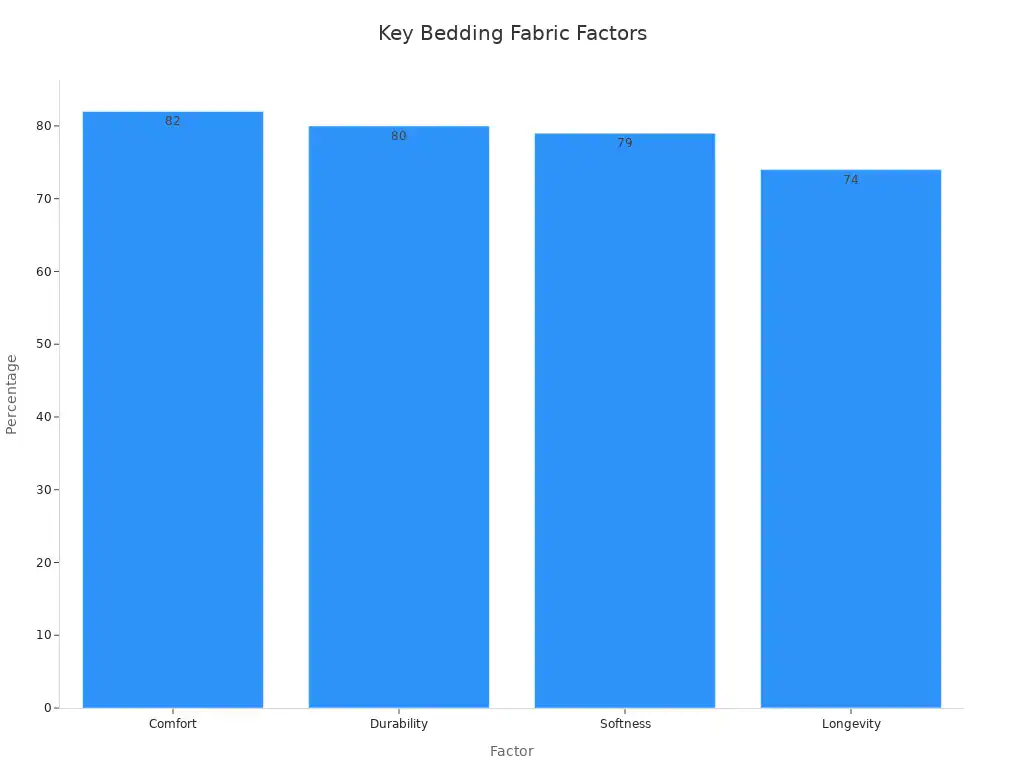
Looking for the perfect bedding? You want comfort, durability, print quality, style, easy care, and eco-friendliness. Most people agree—comfort and durability matter most when picking sheets.
Factor | Percentage |
|---|---|
Comfort | 82% |
Durability | 80% |
Softness | 79% |
Longevity | 74% |
Digital printed bedding fabric can totally change your bedroom’s vibe. You get endless design choices, bright colors, and amazing detail. Always check the material, thread count, and care instructions. The right choice helps you sleep better and gives your room a fresh new look.
Key Takeaways
Comfort and durability are the top priorities when choosing bedding. Look for materials like cotton or bamboo for a soft, breathable feel.
Digital printing offers vibrant colors and detailed designs. This method allows for customization without extra costs, making your bedding unique.
Consider the care requirements of your bedding. Use gentle detergents and wash in cold water to keep colors bright and fabric soft.
Choose fabrics based on your climate. Linen is great for hot weather, while cotton and blends provide warmth in colder climates.
Look for eco-friendly options. Bedding with certifications like OEKO-TEX ensures safe materials and supports sustainability.
Digital Printed Bedding Fabric Basics
What Is Digital Printing
You might wonder how digital printed bedding fabric gets its amazing look. Digital printing uses inkjet technology to put designs right onto the fabric. This method skips the old steps of using plates or screens. You get sharp details and bright colors every time.
Tip: Digital printing works well for both small and large orders. You can even get custom designs without extra cost or waste.
Let’s compare digital printing to traditional methods:
Aspect | Digital Fabric Printing | Traditional Fabric Printing |
|---|---|---|
Printing Process | Inkjet prints designs directly | Uses plates or screens |
Design Complexity | Handles detailed, flexible designs | Struggles with tiny details |
Color Range | Wide, vibrant color choices | Limited by number of screens |
Production Volume | Good for any order size | Best for big batches |
Fabric Compatibility | Works on cotton, silk, and more | Some fabrics don’t work well |
Environmental Impact | Less waste, more eco-friendly | More waste from screens and plates |
Fabric Types
You have lots of choices when it comes to digital printed bedding fabric. Cotton leads the market, making up over half of bedding sales. Polyester is also popular and growing fast. Other options include bamboo, linen, and blends. Each fabric feels different and has its own benefits.
Cotton: Soft, breathable, and classic.
Polyester: Durable and easy to care for.
Bamboo: Eco-friendly and cool to the touch.
Linen: Natural and airy.
Blends: Mixes the best features of each fabric.
Unique Features
Digital printing brings special perks to your bedding. You can order exactly what you need, which cuts down on waste and saves money. Patterns can be any length, so you get unique designs without repeats. Digital control means no overlaps or fuzzy lines. Plus, this process uses less water and energy, making it better for the planet.
If you want bedding that stands out and feels good, digital printed bedding fabric gives you endless options for style and comfort.
Material Comparison
Choosing the right material for your digital printed bedding fabric makes a big difference in how your bed feels and lasts. Let’s break down the most popular options so you can pick what works best for you.
Cotton
Cotton is a classic choice for bedding. You’ll love how soft and breathable it feels. Cotton sheets let air flow, so you stay cool at night. They work well for all seasons. If you want the best comfort, look for a thread count between 200 and 400. This range gives you a smooth, durable sheet that isn’t too heavy or stiff.
Cotton is strong and holds up to daily use. You might need to give it a little extra care, like washing in cool water and avoiding harsh detergents. Cotton can wrinkle, but many people think the comfort is worth it.
Tip: If you want a natural feel and great breathability, cotton is a top pick.
Fabric | Comfort Level | Breathability | Care Requirements | Durability Rating | Notes |
|---|---|---|---|---|---|
Cotton | High | Excellent | Special treatment needed | Strong | Good for daily use |
Polyester
Polyester bedding is all about easy care. You can toss it in the wash, and it comes out looking good. Polyester resists wrinkles, so your bed always looks neat. It’s also very durable and stands up to lots of washes.
Polyester feels smooth, but it doesn’t breathe as well as cotton or linen. If you get hot at night, you might notice it holds in heat. On the plus side, polyester wicks away moisture, so you stay dry even if you sweat.
Fabric | Comfort Level | Breathability | Care Requirements | Durability Rating | Notes |
|---|---|---|---|---|---|
Polyester | Moderate | Low | Easy care | Very strong | Wrinkle-resistant |
Polyester bedding fabric keeps its shape and color after many washes. You don’t have to worry about ironing or fading.
Bamboo
Bamboo bedding feels soft and smooth, almost like silk. It’s gentle on your skin and perfect if you have allergies or sensitive skin. Bamboo sheets let air move and wick away sweat, so you stay cool and dry.
Bamboo is also a great eco-friendly choice. It grows fast, doesn’t need pesticides, and uses less water than cotton. Bamboo bedding is easy to care for and holds up well over time.
Fabric | Comfort Level | Breathability | Care Requirements | Durability Rating | Notes |
|---|---|---|---|---|---|
Bamboo | High | Excellent | Easy care | Strong | Eco-friendly |
Bamboo fabric is fully biodegradable and helps the planet by using less water and energy.
Linen
Linen bedding feels cool and crisp. It’s one of the best choices if you want to stay comfortable in hot weather. Linen wicks away moisture up to 20% faster than cotton and allows up to 40% more airflow. You’ll notice it keeps you dry and helps with night sweats.
Linen is strong and lasts for years. It gets softer every time you wash it. The only downside? Linen wrinkles easily, but many people love the relaxed look.
Fabric | Comfort Level | Breathability | Care Requirements | Durability Rating | Notes |
|---|---|---|---|---|---|
Linen | High | Excellent | Wrinkles easily | Strong | Cool and smooth |
Linen resists bacteria, which is great if you have allergies.
The loose weave lets heat escape, so you stay cool.
Blends
Blended fabrics mix the best parts of different materials. You might find cotton-polyester blends or bamboo-cotton blends. These sheets often feel soft and last a long time. Blends are easy to care for and resist wrinkles better than pure cotton or linen.
Fabric | Comfort Level | Breathability | Care Requirements | Durability Rating | Notes |
|---|---|---|---|---|---|
Blends | Moderate-High | Moderate | Easy care | Strong | Combines best features |
Blended bedding gives you a balance of comfort, durability, and easy care. It’s a smart choice if you want the benefits of more than one fabric.
Quick Comparison Table
Here’s a quick look at how these fabrics stack up:
Fabric | Comfort | Breathability | Durability | Care | Eco-Friendly |
|---|---|---|---|---|---|
Cotton | High | Excellent | Strong | Moderate | Moderate |
Polyester | Moderate | Low | Very strong | Easy | Low |
Bamboo | High | Excellent | Strong | Easy | High |
Linen | High | Excellent | Strong | Moderate | Moderate |
Blends | Moderate-High | Moderate | Strong | Easy | Varies |
When you choose digital printed bedding fabric, think about what matters most to you. Do you want something soft and cool? Go for cotton, bamboo, or linen. Need easy care and wrinkle resistance? Polyester or blends might be your best bet. If you care about the environment, bamboo stands out as a top eco-friendly option.
Print Quality and Care
Color Vibrancy
You want your bedding to look as good as it feels. Digital printing technology makes this possible. It uses pigment printing, which puts the color right on top of the fabric. This method gives you bright, bold colors that pop as soon as you see them. The details in the designs stay sharp and clear, even after many washes. You can choose from a huge range of patterns and colors, so your bedding matches your style perfectly.
Here’s a quick look at what digital printing brings to your bedding:
Feature | Benefit |
|---|---|
High-resolution prints | Shows off tiny details that other methods can’t match |
Vibrant colors | Keeps designs looking sharp and lively |
Customization | Lets you pick from endless patterns and styles |
Digital printing can create vivid, detailed designs.
You get smooth color gradients and crisp lines.
This method works well for complex and creative patterns.
Longevity
You want your bedding to last, not fade or wear out too soon. The life of your digital printed bedding fabric depends on a few things. The quality of the fabric matters most. Good materials hold color better and resist wear. The way the design gets pressed onto the fabric also plays a role. If the process uses the right heat and pressure, the print stays strong.
Other things that affect how long your bedding looks new:
The type of fabric you choose
How well you follow the care instructions
The quality of the ink and printing process
If you take care of your bedding, the colors and patterns will stay bright for a long time.
Care Tips
Taking care of your bedding helps keep it looking fresh. Here are some easy tips to follow:
Use gentle detergents. Stay away from bleach or harsh chemicals.
Wash your bedding in cold or lukewarm water. This helps protect the colors.
Pick a gentle washing cycle. It reduces wear and tear.
Wash printed bedding by itself. Don’t mix it with heavy items like towels.
Air-dry your bedding or use a low heat setting in the dryer.
Keep your bedding out of direct sunlight when drying. Sunlight can fade colors.
Tip: Treat your bedding with care, and it will reward you with lasting color and comfort.
Digital Printed Bedding Fabric Care
Every fabric needs a little special attention. Cotton sheets can handle warmer water, especially if they get really dirty. Warm water (about 100°F or 38°C) works for most loads. If your sheets are extra dirty, hot water (140°F or 60°C) can help. Just remember, all cotton wears out over time, no matter how you wash it. Washing causes some rubbing, which can make the fabric weaker. Strong detergents and bleach can also damage the fibers.
For other fabrics like bamboo, polyester, or blends, stick to cold or lukewarm water. Always check the label for the best advice. If you follow these steps, your digital printed bedding fabric will stay soft, colorful, and cozy for years.
Note: Good care keeps your bedding looking and feeling its best. A little effort goes a long way!
Style and Room Match

Patterns
Patterns can change the whole mood of your bedroom. You might want to try something bold if you want your space to feel fresh and exciting. Right now, oversized florals, geometric shapes, and abstract designs are very popular. These patterns stand out and make your bed the star of the room. If you love nature, look for bedding with botanical prints or earthy tones. This style, called biophilic design, brings a bit of the outdoors inside and helps you feel calm. Checkerboard patterns are also trending, especially in soft, muted colors. They add a modern twist to classic bedding.
Oversized florals
Geometric and abstract motifs
Botanical prints and earthy tones
Checkerboard patterns in muted hues
Tip: Pick a pattern that matches your personality. Your bedding should make you smile every time you walk into your room.
Colors
Color choices do more than just look pretty—they set the mood for your whole bedroom. Blue bedding helps you relax and sleep better. Green makes your room feel peaceful and connected to nature. White gives your space a clean, simple look that feels calm and fresh.
Blue: Helps you relax and sleep
Green: Brings calm and reduces stress
White: Makes your room feel open and peaceful
Try mixing colors and patterns for a unique look. You can layer a bold patterned duvet with solid color sheets for balance.
Texture and Weight
Texture and weight matter for both comfort and style. Embossed or matelassé textures add depth and make your bedding feel extra special. Three-dimensional textures give your bed a cozy, inviting look. If you want something light for summer, choose a thinner fabric. For winter, go with something heavier and warmer.
Embossed and matelassé textures add richness
Three-dimensional textures create cozy layers
Choose lighter fabrics for summer, heavier ones for winter
Note: High-definition digital printing lets you enjoy unique designs and textures that make your bedding stand out.
Special Considerations
Allergies
If you have allergies or sensitive skin, you want bedding that feels gentle and keeps you comfortable. Natural fibers like cotton, bamboo, and linen work well because they rarely irritate your skin. Certified polyester can also be a good choice if you prefer synthetic options. Look for bedding with the OEKO-TEX label. This certification means the fabric is tested for harmful substances and is safe for sensitive skin.
Natural fibers: cotton, bamboo, linen
Cooling sheets
Tip: Wash your bedding often. Clean sheets help prevent skin problems by removing oils and dead skin cells.
Climate
Your local climate can change how your bedding feels at night. Linen works great in hot and humid places. A recent study in Southeast Asia found that linen sheets reduced nighttime humidity by 41% compared to bamboo sheets. People slept better and woke up less during the rainy season. Tencel bedding is another smart pick for tropical weather. It keeps your bed about 1.5°F cooler than linen and helps you sleep longer without waking up from sweat.
Property | Linen | Cotton |
|---|---|---|
Fiber strength | 30% stronger | Baseline |
Water use | 50% less | Higher demand |
Lifespan | 10-15 years | 3-5 years |
If you live somewhere warm, try linen or Tencel for cooler, drier sleep. For colder climates, cotton and blends keep you cozy.
Sustainability
Many people care about the planet when choosing bedding. Over 60% of shoppers say they look for sustainable products. Some bedding, like Gaia Eco Woven, uses 100% recycled materials. Certifications such as OEKO-TEX and GOTS (Global Organic Textile Standard) show that the fabric meets strict eco-friendly standards.
Percentage | What It Means |
|---|---|
62% | Seek sustainable bedding often |
82% | Consider sustainability when buying a mattress |
Look for bedding with eco-labels. You help the environment and get peace of mind knowing your sheets are made responsibly.
You want bedding that feels great, lasts long, and looks amazing. Focus on durability, easy care, and how the fabric reacts to washing. Avoid common mistakes like hot water or harsh detergents. Here’s a quick checklist to help you choose with confidence:
Key Factors | Description |
|---|---|
Intended Use | Think about how you’ll use your bedding at home. |
Desired Print Quality | Look for bright colors and prints that last. |
Cost | Pick what fits your budget. |
Environmental Impact | Choose eco-friendly options if that matters to you. |
Pick what matches your needs and style. Your perfect bedding is out there!
FAQ
How do I keep digital printed bedding looking new?
Wash your bedding in cold or lukewarm water. Use a gentle cycle and mild detergent. Avoid bleach and high heat. Air-dry or use a low dryer setting. This helps colors stay bright and fabric stay soft.
Can I use digital printed bedding if I have allergies?
Yes! Choose natural fibers like cotton or bamboo. Look for OEKO-TEX certified bedding. These options feel gentle on your skin and help reduce allergy symptoms.
Will the colors fade after washing?
Digital printing keeps colors vibrant longer than traditional methods. Follow care instructions closely. Avoid harsh chemicals and direct sunlight when drying. Your bedding will look great wash after wash.
What thread count is best for digital printed cotton sheets?
Aim for a thread count between 200 and 400. This range gives you soft, durable sheets. Higher thread counts can feel heavy and less breathable.
 English
 Arabic
 Spanish
 French
 Italian
 Portuguese
 Vietnamese
