
Looking for the best fabric sheeting for bedding in 2025? You have great choices like Egyptian cotton, Pima cotton, Tencel, bamboo viscose, linen, silk, and microfiber. These fabrics feel soft and cool. They help you sleep comfortably, especially if you get hot at night. Many people love their durability and easy care. You can pick the one that matches your sleep style and comfort needs.
Principais Conclusões
Explore various fabric options like Egyptian cotton, Tencel, and bamboo viscose to find the best fit for your comfort needs.
Consider breathable fabrics like linen and bamboo viscose if you tend to get hot at night; they help keep you cool.
Look for eco-friendly materials such as Tencel and organic cotton to support sustainability while enjoying comfort.
Choose sheets that are easy to care for, like microfiber, if you have a busy lifestyle and want low maintenance.
Pay attention to your local climate and allergies when selecting sheets; hypoallergenic options can improve your sleep quality.
Best Fabric Sheeting for Bedding in 2025
Top Choices Overview
You have a lot of options when you shop for fabric sheeting for bedding this year. Each type brings something special to your sleep experience. Here’s a quick look at the top choices and what makes them stand out:
Maciez | Respirabilidade | Durabilidade | |
|---|---|---|---|
Egyptian Cotton | Exceptionally soft | Alto | Durable |
Pima Cotton | Luxurious comfort | Ideal for temperature | Resists pilling |
Tencel | Luxuriously soft | Breathable | Strong and long-lasting |
Viscose de Bambu | Confortável | Excellent cooling | Superior absorption |
Linho | Natural texture | Best cooling | Long-lasting |
Seda | Suave e luxuoso | Best cooling | High-momme quality |
Microfibra | Soft and velvety | N/A | Durable |
You might notice that Egyptian cotton and Pima cotton feel soft and smooth. Tencel and bamboo viscose offer a silky touch and help keep you cool. Linen stands out for hot sleepers because it wicks moisture and feels cool to the touch. Silk gives you a luxury feel and works well for temperature control. Microfiber is soft and easy to care for, which makes it a popular choice for busy households.
Dica: If you get hot at night, linen and bamboo viscose can help you stay cool. Linen is especially good for warm climates because it breathes well and pulls moisture away from your skin.
What’s New in 2025
You’ll see some exciting changes in fabric sheeting for bedding this year. Brands are using new technology and eco-friendly materials to make your sleep even better. Here are some of the latest innovations:
Cooling Technology: Sheets now use advanced fibers that help regulate moisture and balance temperature. You can sleep cooler and wake up feeling refreshed.
Smart Fabrics: Some bedding comes with AI-powered sleep tracking and adaptive insulation layers. These features adjust to your body’s needs while you sleep.
Sustainable Materials: Many brands focus on eco-friendly and traceable materials. You can find sheets that meet strict environmental standards and help protect the planet.
People choose these trending fabrics because they want comfort, breathability, and easy care. Experts say organic cotton is popular for its eco-friendly qualities and ability to fight allergens. Linen is a favorite for its durability and temperature regulation. Tencel and bamboo viscose are easy to maintain and come from natural sources. Silk and microfiber offer softness and luxury, making them great for anyone who wants a little extra comfort.
If you want the best fabric sheeting for bedding in 2025, think about what matters most to you. Do you want to stay cool? Do you need something easy to wash? Are you looking for eco-friendly options? With so many choices, you can find the perfect sheets for your bed.
Fabric Sheeting Comparison
Benefits and Drawbacks
When you shop for fabric sheeting for bedding, you want to know what makes each fabric great—and what might not work for you. Here’s a quick table to help you compare:
Tecido | Prós | Conservar |
|---|---|---|
Egyptian Cotton | Soft, luxury feel, durable, breathable | Expensive, many knockoffs |
Pima Cotton | Soft, strong, flexible, durable | Expensive, sometimes blended |
Linho | Durable, breathable, hypoallergenic, eco-friendly | Can feel stiff at first, wrinkles |
Seda | Incredibly soft, hypoallergenic, dust mite resistant | Needs special care, stains easily |
Tencel | Eco-friendly, soft, moisture-wicking, strong | Needs careful handling |
Viscose de Bambu | Soft, cooling, moisture-wicking, eco-friendly | Can be pricey, needs gentle care |
Microfibra | Soft, easy to clean, affordable | Not as breathable, can trap heat |
You’ll notice that cotton and linen last a long time and feel comfortable. Tencel and bamboo viscose stand out for their moisture-wicking power. Silk feels amazing but needs gentle care. Microfiber is easy to wash but may not keep you as cool.
Nota: If you have sensitive skin, you might want to try hypoallergenic options like silk, linen, or high-quality cotton. These fabrics can help reduce itching and improve comfort while you sleep.
Best for Hot Sleepers
Do you wake up feeling too warm? Some fabrics help you stay cool all night. Here’s what you need to know:
Linho: This fabric breathes well and wicks away moisture. It feels cool even on hot nights.
Viscose de Bambu: Bamboo sheets have a thermal conductivity of about 0.233 W/m·K. That means they pull heat away from your body and help you sleep cooler.
Tencel: Tencel sheets manage moisture better than cotton or polyester. They draw sweat away as vapor, so you don’t feel damp.
Algodão: Egyptian and Pima cotton breathe well, but they don’t wick moisture as quickly as bamboo or Tencel.
If you want the coolest sleep, linen, bamboo viscose, and Tencel are your best bets. These fabrics work well for hot climates or if you tend to sweat at night. When you choose fabric sheeting for bedding, think about how cool and dry you want to feel.
In-Depth Fabric Guide
Egyptian & Pima Cotton
You might love Egyptian and Pima cotton if you want sheets that feel soft and last a long time. These cottons use extra-long fibers, so your bedding feels smooth and strong. When you look at thread count, here’s what matters:
Egyptian cotton stays soft and durable at many thread counts.
The best comfort comes from thread counts between 300 and 600.
If you see thread counts above 800, you may not get extra comfort. Sometimes, high numbers mean lower-quality yarns.
You get a luxury feel without worrying about your sheets wearing out quickly.
Bamboo Viscose & Tencel
If you care about the planet, bamboo viscose and Tencel are smart choices. Both come from plants and break down naturally. Tencel stands out because it recycles almost all water and solvents during production. Bamboo uses a lot of water, but it grows fast and helps clean the air. Here’s what you should know:
Tencel uses a closed-loop system and comes from trees that are harvested in a sustainable way.
Bamboo absorbs more CO2 and makes more oxygen than trees, but its production is less regulated.
Both fabrics feel cool and soft, making them great for fabric sheeting for bedding.
Tip: If you want eco-friendly sheets, Tencel is a top pick for its green process.
Linen & Silk
Linen and silk give you a cool and comfortable sleep. They both let air flow and help control your body temperature. Check out this table:
Tecido | Regulação de Temperatura | |
|---|---|---|
Linho | Alto | Keeps cool in summer, warm in winter |
Seda | Alto | Lowers body temperature, allows moisture evaporation |
You stay comfortable all year, whether it’s hot or cold outside.
Microfiber & Blends
Microfiber bedding costs less than natural fiber blends. You save money because synthetic fibers are cheaper to make. Microfiber feels soft and cleans up easily, but it may not breathe as well as cotton or linen. If you want affordable and easy-care sheets, microfiber works well for busy homes.
Choosing the Right Fabric
Conforto e Sensação
You want sheets that feel great every night. Comfort depends on the material and how it touches your skin. Take a look at how different fabrics rate for comfort:
Bed Sheet Material | Comfort Rating | Prós | Conservar |
|---|---|---|---|
Egyptian Cotton | Strong, soft, breathable | Unparalleled comfort | Expensive, many knock-offs |
Pima Cotton | Soft, flexible | Grown in US | Expensive, often blended |
Seda | Extremely soft | Naturally hypoallergenic | Very expensive, delicate care |
Linho | Extremely strong | Gets more comfortable over time | Feels slightly stiff, wrinkles easily |
Bambu | Soft, durable | Breathable | Not 100% natural |
Tencel® | Absorbs moisture well | Not 100% hypoallergenic | |
Microfibra | Macio | Acessível | Not as breathable |
Silk sheets feel ultra-smooth and have a natural sheen. Egyptian cotton starts crisp but softens with each wash. Linen feels textured at first, but gets softer over time. If you have sensitive skin, silk and Egyptian cotton are gentle choices.
Durabilidade e Cuidados
You want sheets that last and are easy to clean. Egyptian cotton can last for years if you care for it well. Lower-quality cotton may pill or rip quickly. Tencel and microfiber are strong, but need gentle washing. Here’s how to keep your sheets in top shape:
Dab stains with warm water and detergent before washing.
Wash sheets separately on a gentle cycle with cold water.
Turn pillowcases inside out and close zippers.
Skip fabric softener to keep sheets soft and strong.
Climate & Allergies
Your local climate and allergies matter when picking sheets. Linen, bamboo viscose, and Tencel work well in warm weather. They wick moisture and breathe easily. If you have allergies, look for hypoallergenic options:
Material | Melhor para | Benefícios Principais |
|---|---|---|
TENCEL™ Lyocell | Sensitive skin, allergies | Dust mite and bacteria resistant, smooth surface |
Organic Cotton | Breathability, chemical sensitivity | Free from pesticides, highly breathable |
Viscose de Bambu | Antimicrobial, softness | Inhibits mold, prevents dust mite nesting |
Microfibra | Affordability, allergen barrier | Blocks dust mites, budget-friendly |
Linen is also naturally hypoallergenic and suits hot climates. Tencel and bamboo viscose offer moisture management and eco-friendly benefits.
Budget & Value
You want great sheets without overspending. Prices for bedding bundles in 2025 range from $139 to $168 for queen size sets.
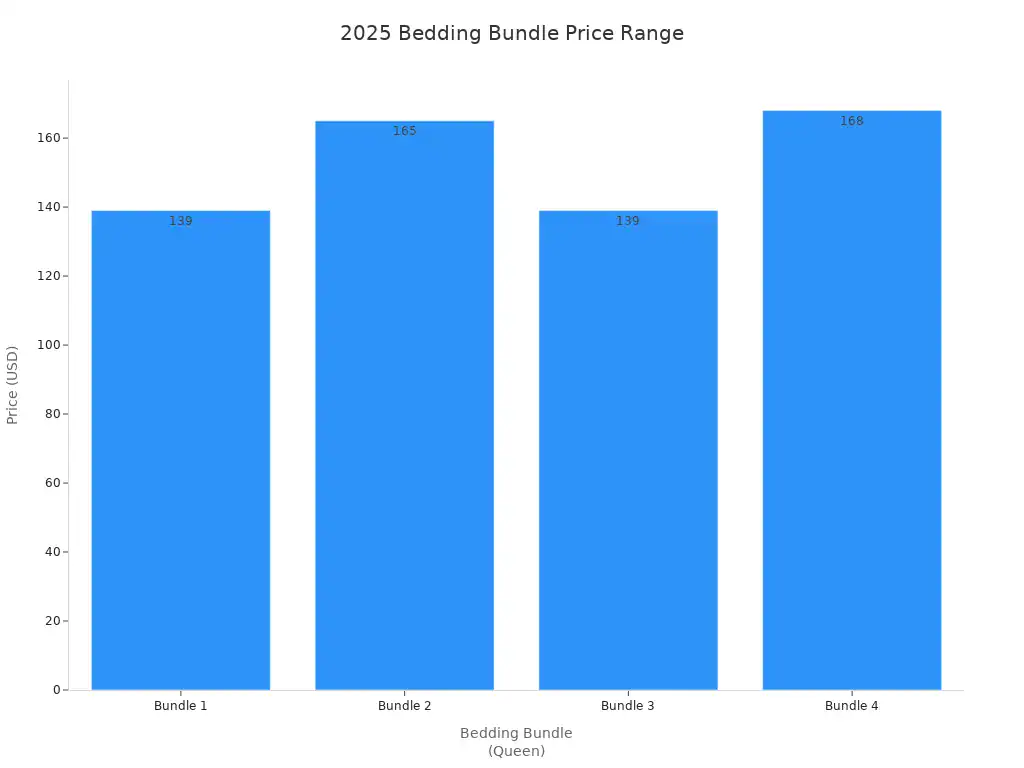
Cotton sheets are affordable and offer good value. Tencel sits in the mid to high price range. Egyptian cotton and silk cost more, but deliver luxury and comfort. Microfiber is budget-friendly and easy to maintain.
Tip: Choose sheets that match your comfort needs, climate, and budget. You’ll sleep better and get more value for your money.
You have plenty of great bedding choices for 2025, like linen, Egyptian cotton, bamboo viscose, and Tencel. Linen stands out for comfort, durability, and easy care. Your best pick depends on what matters most to you—do you want cool sheets, easy washing, or long-lasting fabric? Use this quick checklist to help you decide:
🌡️ Temperature control: Pick breathable fabrics for summer, like linen or cotton.
🧺 Ease of care: Choose sheets that stay soft after many washes.
💸 Budget: Direct-to-consumer brands offer good value.
🤧 Allergy concerns: Go for hypoallergenic options like bamboo or linen.
Trust your own comfort and style when you choose new bedding!
Perguntas Frequentes
What fabric sheets feel the softest?
You will love Egyptian cotton and silk if you want super soft sheets. Tencel and bamboo viscose also feel smooth and gentle on your skin.
How do I keep my sheets cool at night?
Pick linen, bamboo viscose, or Tencel sheets. These fabrics breathe well and wick away sweat. You will sleep cooler and wake up refreshed.
Are microfiber sheets good for allergies?
Microfiber sheets can help block dust mites and other allergens. If you have sensitive skin, you might also try bamboo or Tencel sheets.
How often should I wash my bedding?
You should wash your sheets every one to two weeks. If you sweat a lot or have allergies, wash them more often to keep them fresh.
Can I mix and match different sheet fabrics?
Yes! You can use a cotton fitted sheet with a linen top sheet. Mixing fabrics lets you enjoy the best features of each one.
Ver também
Comparando Impressão em Painel e Digital para Roupas de Cama de Poliéster em 2025
Escolhendo entre lençóis de microfibra e 100% poliéster
Selecionando o Melhor Método de Impressão para seus Têxteis Domésticos
 Portuguese
 English
 Arabic
 Spanish
 French
 Italian
 Vietnamese