

Polyester woven fabric is a synthetic material you often find in clothes, home textiles, and many other products. You see this fabric everywhere because it combines strength, affordability, and versatility.
Polyester woven fabric starts as man-made fibers created from chemicals, not natural sources.
Here are some reasons you encounter it so often:
Reason | Descrição |
|---|---|
Durabilidade | The fibers resist tearing, stretching, and abrasion. |
Versatilidade | Manufacturers use it to make many types of trendy, affordable clothing. |
Acessibilidade | Production costs are lower than for natural fibers like silk or wool. |
Principais Conclusões
Polyester woven fabric is strong, affordable, and versatile, making it a popular choice for clothing and home textiles.
The fabric is made from synthetic fibers through a process called polymerization, which creates durable and lightweight materials.
Polyester woven fabric resists wrinkles and shrinking, making it easy to care for and maintain its appearance over time.
Different weaving methods, like plain and twill, affect the fabric’s strength, texture, and breathability, allowing for various applications.
While polyester is durable and cost-effective, it can cause skin irritation for some and contributes to microplastic pollution, so consider recycled options.
What is Polyester Woven Fabric
Definition and Main Features
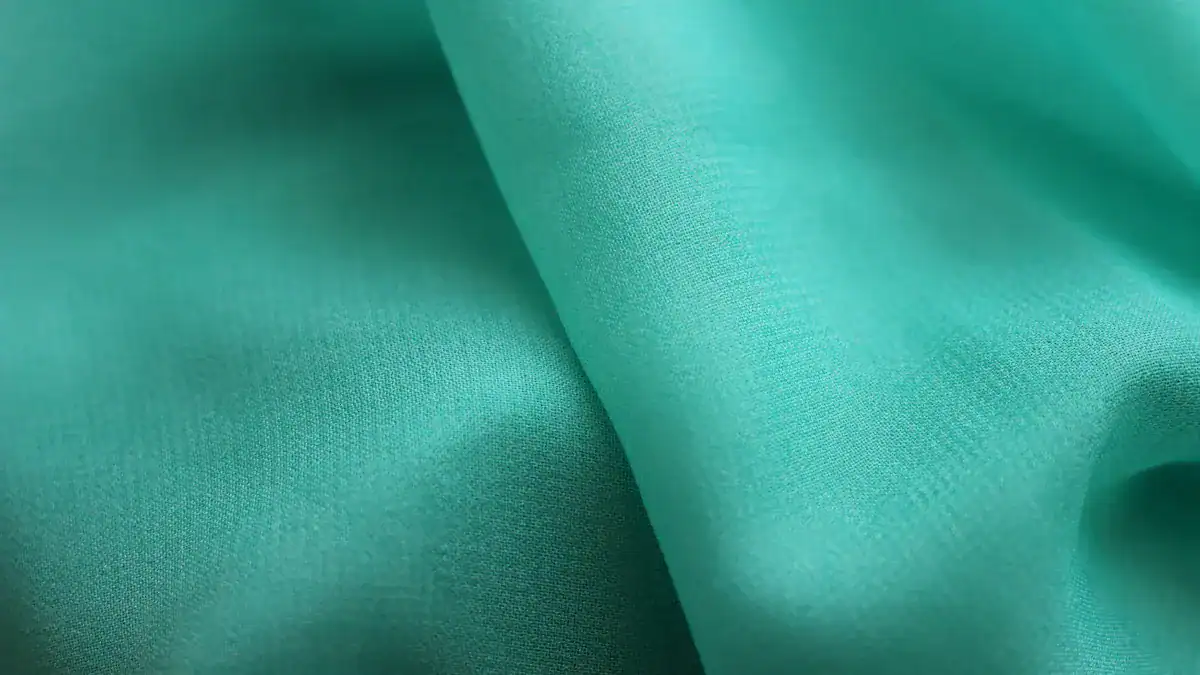
You might wonder what makes tecido de poliéster tecido stand out. This fabric is a textile made by weaving polyester fibers together. Manufacturers use a special process to interlace these synthetic fibers, which creates a strong and lightweight material. You will notice that tecido de poliéster tecido resists stretching and shrinking. It also holds up well against daily wear and tear, so you can rely on it for many uses.
Polyester woven fabric feels smooth and often looks shiny. You can find it in everything from sportswear to curtains because it stays in shape and keeps its color after many washes.
Here are some main features you should know:
Lightweight feel, so you stay comfortable.
Excellent durability, which means your clothes last longer.
Resists wrinkles, making it easy for you to care for.
Keeps its shape, even after repeated use.
How It Differs from Other Fabrics
You may ask how polyester woven fabric compares to other fabrics. The answer lies in its unique physical and chemical features. Take a look at this table to see how it stands out from other synthetic fabrics like nylon and acrylic:
Recurso | Polyester Woven Fabric | Other Synthetic Fabrics (Nylon, Acrylic) |
|---|---|---|
Durability and Strength | Alto | Alto |
Moisture-Wicking Ability | Excelente | Varia |
Secagem Rápida | Sim | Yes (varies by type) |
Leve | Sim | Yes (varies by type) |
Solidez da cor | Excelente | Varia |
Versatility in Design | Alto | Alto |
You will also notice differences when you compare polyester woven fabric to natural fibers like cotton. Polyester can be designed to be highly breathable and moisture-wicking. Cotton, on the other hand, does not wick moisture as well, especially if it is thick. Nylon offers good breathability, but its performance depends on how it is made.
Polyester woven fabric can keep you dry and comfortable during active use.
Cotton feels soft but may hold onto moisture.
Nylon works well for breathability, but results vary.
Durability and environmental impact also set polyester woven fabric apart. Here is a quick comparison:
Tipo de Tecido | Durabilidade | Impacto Ambiental |
|---|---|---|
Fibras Naturais | Generally less durable than synthetics | Minimal processing, but high water usage for cotton |
Poliéster | Highly durable | Requires fossil fuels for production, can be recycled |
You get a fabric that lasts longer and dries quickly. However, you should also know that polyester woven fabric comes from fossil fuels, while natural fibers use more water during production. Polyester can be recycled, which helps reduce its environmental impact.
How Polyester Woven Fabric is Made
Polymerization and Fiber Creation
You start with raw materials that come from petroleum. These materials include purified terephthalic acid (PTA), dimethyl terephthalate (DMT), and monoethylene glycol (MEG). Each one plays a key role in making polyester fibers. Here is a table that shows what these materials are:
Raw Material | Descrição |
|---|---|
Purified Terephthalic Acid (PTA) | A key ingredient derived from petroleum used in polyester synthesis. |
Dimethyl Terephthalate (DMT) | An alternative to PTA, also derived from petroleum, used in polyester making. |
Monoethylene Glycol (MEG) | Another essential component sourced from petroleum, necessary for polymerization. |
You combine these chemicals in a process called polymerization. This process creates long chains of molecules, which form the base of polyester. There are two main ways to do this:
Method of Production | Descrição |
|---|---|
DMT + MEG | Involves the esterification and polycondensation reactions, where DMT and MEG are continuously polymerized. |
TPA + MEG | Similar to DMT, but uses pure terephthalic acid, which is more efficient in terms of by-products and molecular weight. |
Continuous Process | More economical and technologically superior, minimizing undesirable by-products and improving polymer homogeneity. |
You get a substance called polyethylene terephthalate, or PET. This is the main ingredient in tecido de poliéster tecido.
Spinning and Yarn Formation
After you create PET, you need to turn it into fibers. You use a method called melt spinning. In this process, you melt polyester chips and push them through tiny holes in a device called a spinneret. The melted polyester forms long, thin filaments as it cools and hardens.
Melt spinning helps you make strong and even fibers quickly. The way you spin the fibers affects how strong and smooth the yarn will be.
Fabric strength depends on the type of raw materials, yarn structure, spinning method, and even the conditions during weaving and finishing.
You can use different spinning methods, but ring spinning is well-known for making yarns that are both strong and uniform. When you use longer fibers and align them well, you get yarn that holds together better and does not break easily.
A strength of yarn increases when you use longer, well-aligned fibers.
Ring spinning produces yarns with excellent strength and uniformity.
The drafting process, which stretches and aligns fibers, is important for making high-quality yarn.
Weaving Process
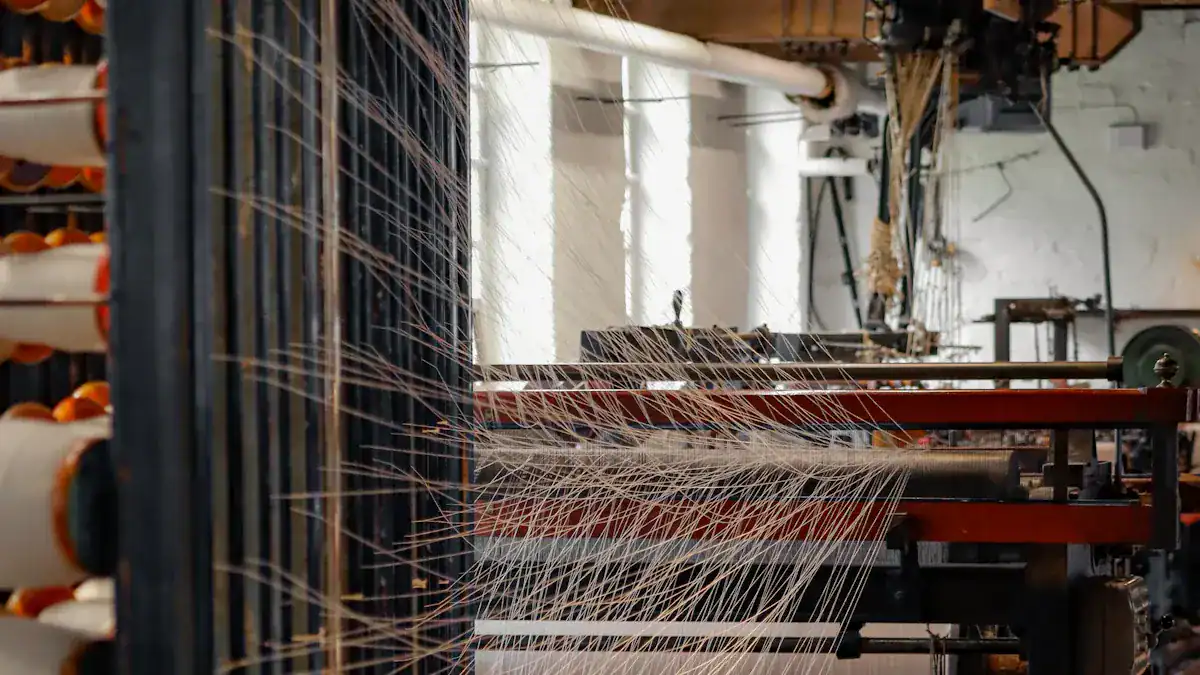
Once you have the yarn, you weave it to make polyester woven fabric. You use weaving machines, or looms, to interlace the yarns in specific patterns. The most common weaving methods are:
Plain Weave: You cross the yarns over and under each other in a simple pattern. This makes a balanced, durable, and versatile fabric. It feels lightweight and lets air pass through easily.
Twill Weave: You create a diagonal pattern by shifting the yarns. This gives the fabric more drape and strength. You often see twill weave in denim and upholstery.
When you choose a weaving method, you change how the fabric feels and works:
Tightly woven fabrics, like plain weave, are more durable.
Looser weaves, such as twill, offer better breathability.
Twill weaves also make the fabric drape better, which is good for clothing that needs to flow.
Modern weaving uses shuttleless looms and automation. These advancements help you make fabric faster, with fewer defects and more design options.
Advancement Type | Benefits |
|---|---|
Shuttleless Looms | High speed, wider fabric, lower labor cost, defect-free cloth, low noise, more color options, and better design capabilities. |
Automation | Electronic controls increase automation and productivity. |
Flexibility | Easier to switch styles and make different kinds of fabric. |
Finishing Steps
After weaving, you finish the fabric to improve its look and performance. You can add many types of finishes to polyester woven fabric. These finishes help the fabric resist stains, feel softer, or last longer.
Stain-Resistant Finishes: You can add coatings like Teflon or use nanotechnology to help the fabric repel stains.
Texture Enhancing Finishes: You might brush or emboss the fabric to give it a soft or textured feel.
Durability and Performance Finishes: You can make the fabric resist pilling, block UV rays, or even stop bacteria from growing.
Water-Repellent and Water-Resistant Finishes: You can treat the fabric so water rolls off or does not soak in.
You can see that each step, from raw materials to finishing, shapes the final polyester woven fabric. This process gives you a fabric that is strong, versatile, and ready for many uses.
Key Properties of Polyester Woven Fabric
Durability and Strength
You can count on tecido de poliéster tecido for its impressive strength and durability. This fabric stands up well to daily wear and repeated washing. The tight weave holds the yarns together, so the fabric does not shed fibers easily. Polyester’s high tensile strength means it can handle a lot of pulling before it breaks. Take a look at how it compares to other common fabrics:
Tipo de Tecido | Abrasion Resistance (Cycles) | Tensile Strength (MPa) |
|---|---|---|
Poliéster | ~60 | |
Nylon | >50,000 | up to 75 |
Algodão | 5,000 – 10,000 | 30 – 50 |
You see that polyester outperforms cotton in both abrasion resistance and strength. The fabric keeps its shape and resists damage, even after many washes.
Tip: Tighter weave structures make the fabric even more durable and help it last longer.
Appearance and Texture
When you touch polyester woven fabric, you may notice a smooth or sometimes slightly coarse feel. The look can be shiny or matte, depending on how the fabric was made. Some fabrics drape softly and flow around your body, while others feel more crisp. The weave pattern changes the way the fabric looks and feels:
The way threads cross each other creates different textures and weights.
Some weaves make the fabric more breathable, while others help block water.
Twill weave gives you a strong, soft fabric with diagonal lines and better drape.
Twill fabrics resist wrinkles more than plain weaves and show clear diagonal ribs.
Cuidados e Manutenção
You can keep your polyester woven fabric looking new by following a few simple steps:
Sempre verifique a etiqueta de cuidados before washing or ironing.
Wash in cold water to help the fabric keep its color and shape.
Use a mild detergent made for delicate fabrics.
Sort by color and wash separately from items that make lint.
Choose a gentle cycle and do not overload the washing machine.
Air dry or use the lowest heat setting in the dryer.
If you need to iron, use a warm setting.
Polyester resists shrinking and wrinkling much better than cotton. Here is a quick comparison:
Tipo de Tecido | Shrinkage (%) | Resistência a Rugas |
|---|---|---|
Pure Cotton | 2–5% | Low to Medium |
Pure Polyester | Alto | |
Polyester-Cotton Blend | 1–2% | Variable |
You will find that polyester woven fabric is easy to care for and keeps its good looks over time.
Types and Blends of Polyester Woven Fabric
Common Weaves (Plain, Twill, Satin)
You can choose from several weave patterns when you look at tecido de poliéster tecido. Each pattern changes how the fabric feels, looks, and performs. The three most common weaves are plain, twill, and satin.
Plain weave gives you a balanced and sturdy fabric. You see this weave in shirts and tablecloths. The threads cross over and under each other in a simple way.
Twill weave creates a diagonal pattern. You notice this weave in jeans and workwear. Twill feels softer and drapes better than plain weave.
Satin weave makes the fabric smooth and shiny. You find satin weave in dresses and luxury items. The threads float over several others, which gives a glossy look.
Tip: The weave pattern affects the strength and how much microplastic fiber (MPF) the fabric releases during washing.
Here is a table that shows how each weave performs:
Weave Pattern | Tensile Strength (Warp) | Tensile Strength (Weft) | MPF Emissions (First Drainage) | MPF Emissions (Second Drainage) | MPF Emissions (Final Drainage) |
|---|---|---|---|---|---|
Plain | Baixo | Baixo | 3189 particles/L | 1056 particles/L | 602 particles/L |
Twill | Mais alto | Highest | 2962 particles/L | 796 particles/L | 742 particles/L |
Cetim | Highest | Baixo | 2948 particles/L | 1180 particles/L | 926 particles/L |
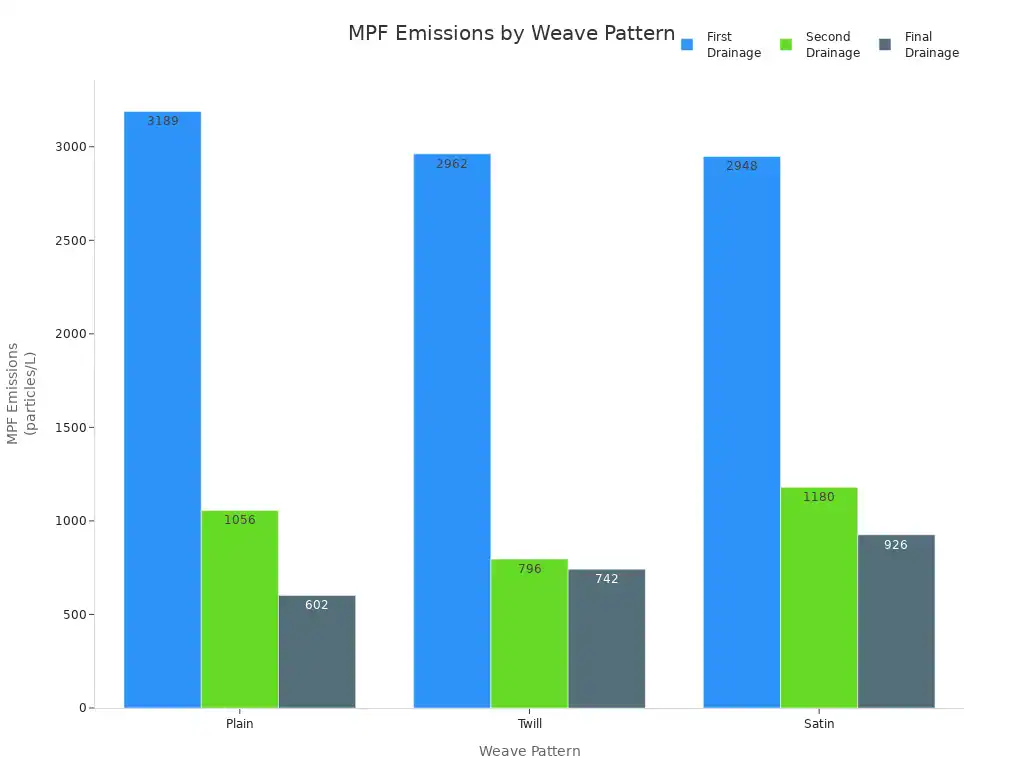
You see that twill and satin weaves offer higher strength. Plain weave releases more MPF at first, but twill releases less over time.
Polyester Woven Fabric Blends
You often find polyester woven fabric blended with other fibers. Blending changes how the fabric feels, looks, and performs. Here are the most popular blends:
Cotton-Polyester: You get softness and breathability from cotton. Polyester adds durability and wrinkle resistance. This blend works well for everyday clothes.
Linen-Polyester: Linen gives a crisp feel. Polyester helps the fabric stay neat and resist wrinkles. You see this blend in summer shirts and dresses.
Polyester-Acrylic: Acrylic makes the fabric warm and soft, like wool. Polyester keeps it strong and colorful. You find this blend in winter wear.
Note: Blending polyester with other fibers lowers the cost and improves comfort.
Here is a table that shows how blends impact cost and sustainability:
Aspecto | Polyester Blends Impact |
|---|---|
Custo | Cheaper compared to natural fibers |
Durabilidade | Lasts longer and is strong when dry or wet |
Eficiência Energética | Easier to handle, machine wash at low temperatures saves energy |
Longevidade | Can be worn for many years, reducing overall impact |
The production of recycled polyester (rPET) uses less water and energy than making new polyester.
Using recycled fibers helps make textile manufacturing greener.
You can choose blends to match your needs for comfort, cost, and sustainability.
Uses, Pros, and Cons
Main Applications
You see polyester woven fabric in many areas of daily life and industry. This fabric works well because it is strong, easy to care for, and cost-effective. Here is a table that shows where you might find it:
Industry | Products/Applications |
|---|---|
Outdoor Equipment | Tents, awnings, outdoor furniture |
Construction | PVC coated and laminated tarpaulins |
Transportation | Various demanding applications |
Agriculture | Durable materials for agricultural use |
Environmental Protection | Fabrics used in protective applications |
You also find this fabric in clothing, home textiles, upholstery, and sportswear. Its versatility makes it a popular choice for many products.
Vantagens
You benefit from many advantages when you choose polyester woven fabric. This fabric stands out for its strength, flexibility, and low cost. It resists moisture and dries quickly. You can wash it easily, and it keeps its color after many washes. Here are some key advantages:
Enhanced comfort and fit for better movement
Increased durability and long lifespan
Versatility for use in apparel, workwear, and upholstery
Easy care: machine washable, quick-drying, and wrinkle-resistant
Bright colors that stay vibrant
You get a fabric that works well for both clothing and industrial uses. Manufacturers can offer high-quality products at lower prices because they use cheap raw materials and efficient processes.
Desvantagens
You should also know about the drawbacks. Some people may have skin irritation or allergies when wearing polyester. The chemicals used in production can affect health. Washing this fabric releases microplastics into water, which harms the environment. Here are the main concerns:
Skin irritation and allergic reactions, especially for sensitive skin
Chemical finishes may disrupt hormones and cause health issues
Microplastic shedding during washing, leading to pollution
Carbon-intensive production that increases greenhouse gas emissions
Limited biodegradability, which means it stays in landfills for a long time
Recycling technology for polyester is improving, but challenges like microplastic pollution remain. You can help by choosing recycled options when possible.
You now understand polyester woven fabric. You see how manufacturers create it from petroleum-based chemicals. You learn about its strength, easy care, and many uses. You find it in clothing, home goods, and industry.
Polyester woven fabric gives you durability and versatility.
Choose it for long-lasting products
Consider its properties for your needs
Polyester woven fabric helps you enjoy reliable and affordable textiles every day.
Perguntas Frequentes
What makes polyester woven fabric different from polyester knit fabric?
You get a tighter, less stretchy fabric with woven polyester. Knit polyester feels softer and stretches more. Woven fabric works well for shirts, pants, and home textiles. Knit fabric suits t-shirts and sportswear.
Can you wash polyester woven fabric in a washing machine?
Yes, you can wash tecido de poliéster tecido in a washing machine. Use cold water and a gentle cycle. Avoid high heat when drying. This helps your fabric keep its shape and color.
Does polyester woven fabric shrink after washing?
Polyester woven fabric resists shrinking. You do not need to worry about your clothes getting smaller after washing. Always follow the care label for best results.
Is polyester woven fabric safe for sensitive skin?
Most people can wear tecido de poliéster tecido without problems. Some people with very sensitive skin may feel irritation. If you have allergies, try wearing a cotton layer under your polyester clothes.
Ver também
Comparing Panel And Digital Printing For Polyester Bedding Fabrics
 Portuguese
 English
 Arabic
 Spanish
 French
 Italian
 Vietnamese