
Brushed microfiber, in a bedding context, is a woven fabric made from fine polyester filament yarn that has gone through a mechanical brushing process to raise fine fibers on the fabric surface. The result is a softer, more velvety hand feel than an unbrushed woven polyester. "Microfiber" and "brushed" describe two different things — one is about fiber fineness, the other is a finishing step — and this guide walks through what the fabric is made of, what it feels like, how it's produced, and what to check before you place an order.
What Is Brushed Microfiber?
Brushed microfiber is not a single fixed technical standard — it's a category name used across the bedding supply chain for woven fabric made from fine synthetic filament that has been surface-brushed after weaving. The "microfiber" part refers to very fine fibers or filaments. In commercial specifications, buyers should confirm the actual yarn count and construction rather than relying on the category name alone. "Brushed" refers to a separate mechanical step where rollers with fine abrasive or napping surfaces pass over the woven fabric and lift some of the surface fibers.
These are two different classification layers. A fabric can be microfiber and left unbrushed, or brushed to varying degrees of intensity. When buyers ask what brushed microfiber means, they're usually asking about this combination: a fine-filament woven base, finished with a brushing step that softens the surface.
What Is Brushed Microfiber Made Of?
In the bedding fabric market, brushed microfiber is most commonly 100% polyester microfiber. That's the composition we work with at Perfectextile, and it's the composition most buyers encounter when sourcing this fabric for sheets, duvet covers, and pillowcases. Polyester microfiber fabric is woven from fine-denier filament yarn, with the exact yarn specification selected according to the required construction and hand feel.
That said, "microfiber" itself is a fineness classification, not a single polymer name — microfiber yarn can technically be produced from different synthetic polymers, and some fabrics on the market do blend fibers. This is exactly why buyers shouldn't assume any brushed microfiber automatically contains a fixed polyester/nylon blend, or assume it's always 100% polyester either. If fiber composition matters for your labeling, certification, or end-market requirements, confirm it directly with your supplier as part of the fabric specification — don't infer it from the product name alone.
What Does Brushed Microfiber Feel Like?
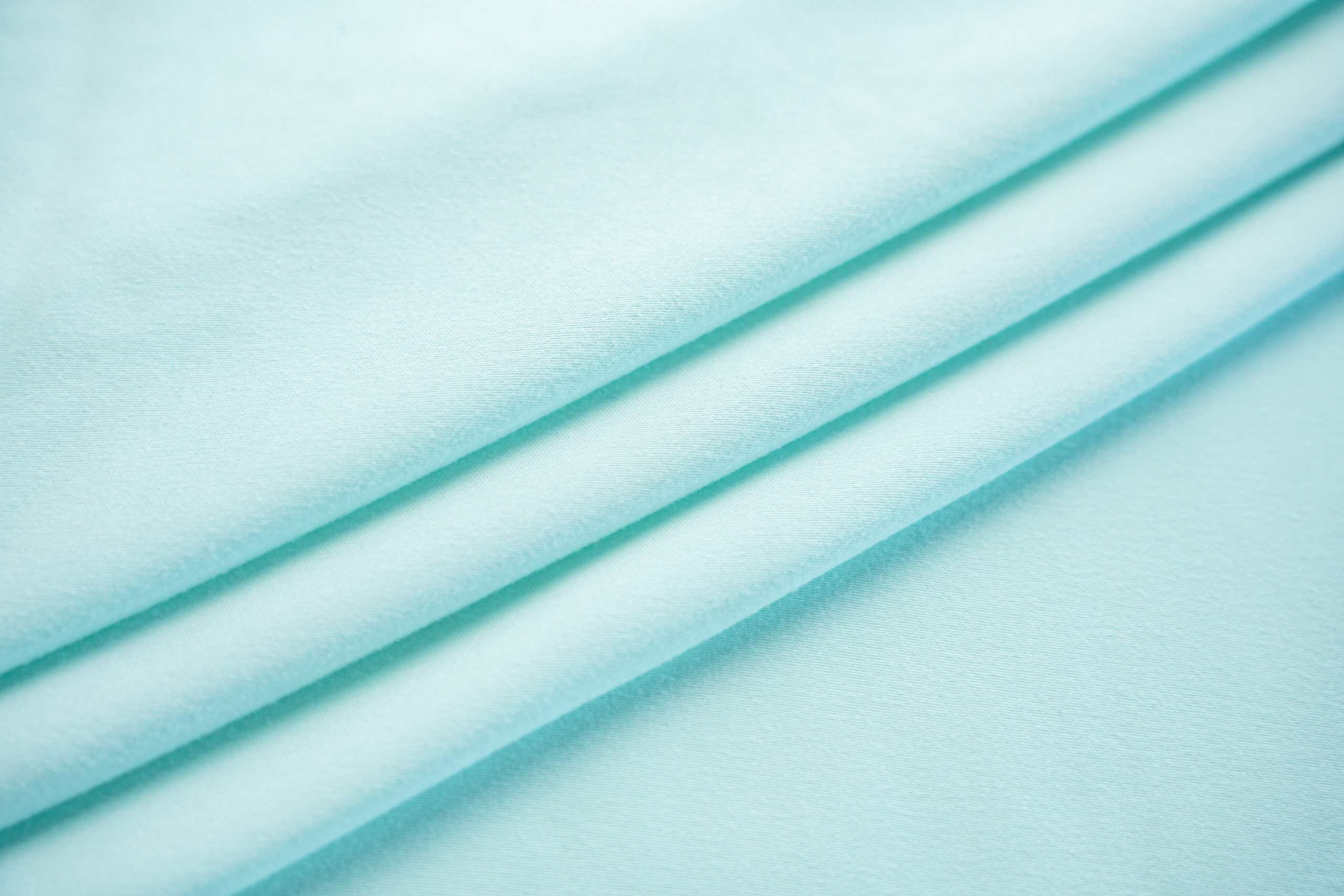
Brushed microfiber generally feels soft, smooth, and fine to the touch. Depending on the brushing intensity, it can read anywhere from lightly velvety to closer to a peach-like surface. Compared to an unbrushed woven polyester of the same yarn and construction, brushed fabric feels less crisp and less slick — the brushing softens the surface rather than the fiber's underlying chemistry.
Hand feel isn't determined by brushing alone. Yarn fineness, weave structure, GSM, fabric density, brushing uniformity, and the finishing steps that follow all shape the final feel. Two brushed microfiber fabrics from different mills — or even different production runs — can feel noticeably different if any of these variables shift. This is why a pre-production hand-feel sample matters more than a spec sheet description when you're qualifying a supplier.
How Is Brushed Microfiber Fabric Made?
The production sequence matters because brushing has to happen at a specific point in the process — before dyeing or printing, not after. Here's how it typically runs, and why each step matters for a buyer:
- Yarn preparation. Polyester filament yarn is prepared — this may include a DTY (draw texturizing) stage depending on the yarn type the order calls for. Yarn specification here affects the final hand feel and strength of the fabric, so it's worth confirming with your supplier upfront.
- Weaving the greige fabric. The prepared yarn is woven into greige (unfinished) fabric on looms. Weave construction and density are set at this stage and define the fabric's base structure before any surface treatment.
- Brushing. The greige fabric passes through brushing equipment, where rollers with fine napping surfaces lift part of the surface fiber under controlled tension and speed. Brushing intensity, number of passes, and roller settings are adjusted based on the target hand feel, weave, and GSM — they aren't identical across every order or every mill.
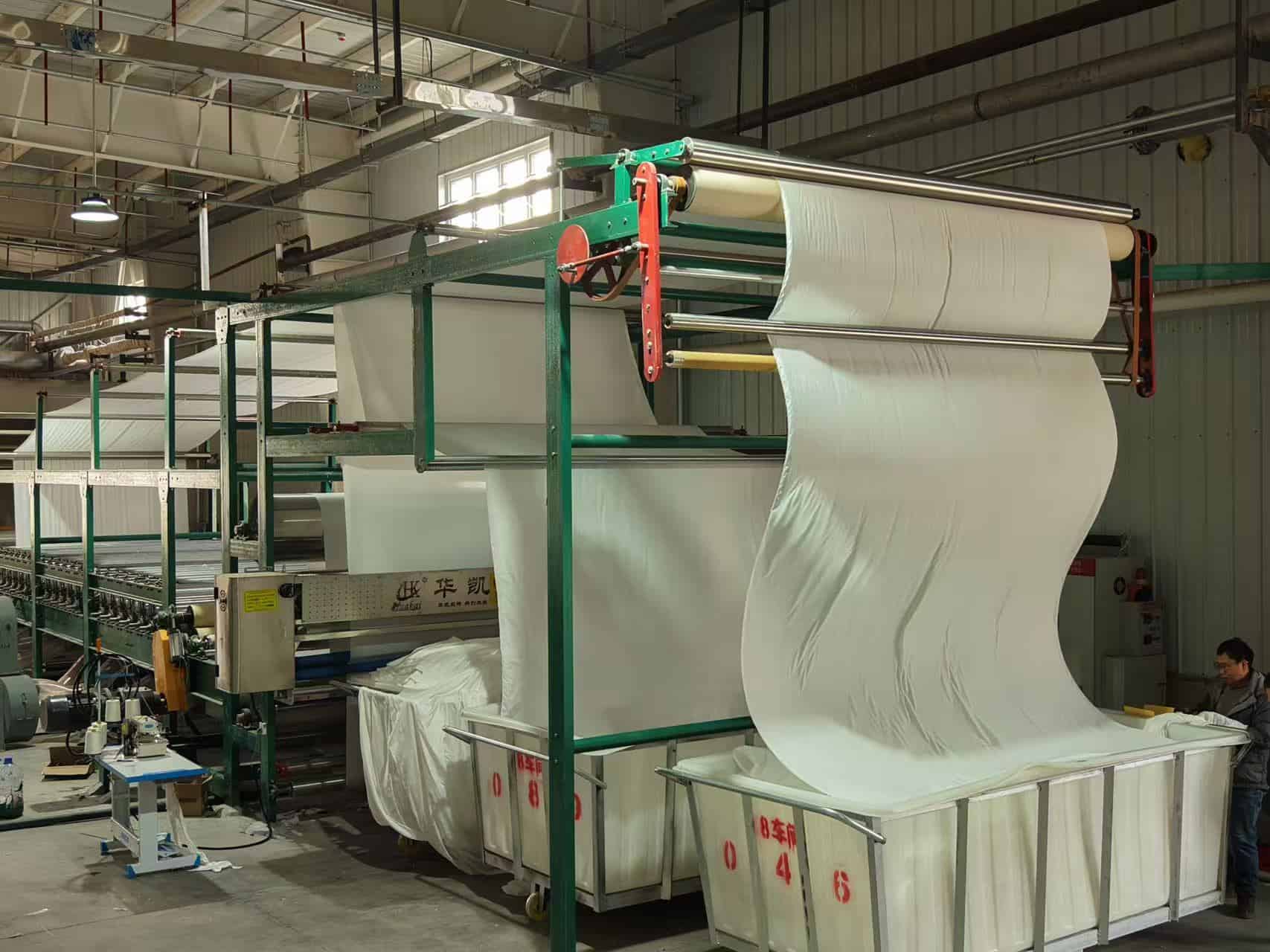
Fabric passing through the brushing stage - Dyeing or printing. In our production route, brushing is completed before dyeing or printing. The brushed surface then moves into the selected coloration process, where temperature, tension, dye or paste formulation, and finishing conditions must still be controlled.
- Finishing and heat setting. The fabric is finished and heat-set to stabilize dimensions and set the final hand feel.
- Surface cleaning, inspection, and packing. Loose surface fiber is cleaned off, the fabric is inspected for width, GSM, color consistency, and surface quality, then rolled and packed. This is the stage where quality issues — uneven brushing, inconsistent width, color variation — get caught before shipment.
Across our integrated production operations, the process is managed from yarn preparation and weaving through coloration, finishing and inspection — see our production capabilities for more on how this is organized.
Single-Brushed vs Double-Brushed Microfiber
Single-brushed generally means one side of the fabric is brushed. Double-brushed means both sides go through the brushing process. Double-brushed doesn't mean the fabric was run through an identical process twice — the treatment on each side, and the parameters used, are set by the supplier based on the target result, and should be confirmed as part of your order spec rather than assumed from the name.
| Fatorar | Single-Brushed | Double-Brushed |
|---|---|---|
| Surface treated | One side | Both sides |
| Hand feel | Soft on the brushed face | Soft on both faces |
| Typical application consideration | Fine when only one side contacts the user | Useful when both faces may be touched or seen |
| Quality-control focus | Uniformity on one face | Uniformity on two faces, plus consistency between them |
| Cost implication | Generally lower processing cost | Generally higher due to the extra treatment |
Neither option is universally "better" — it depends on the end product and how the fabric will be used. A duvet cover where only the outer face is seen may not need double-brushing; a reversible product might.
Brushed Microfiber vs Regular Microfiber
Microfiber describes fiber fineness and yarn classification. Brushed describes a surface treatment applied after weaving. A microfiber fabric can be left unbrushed — sometimes called "regular" microfiber in casual market language, though that's not a fixed technical term — or it can be brushed to different intensities.
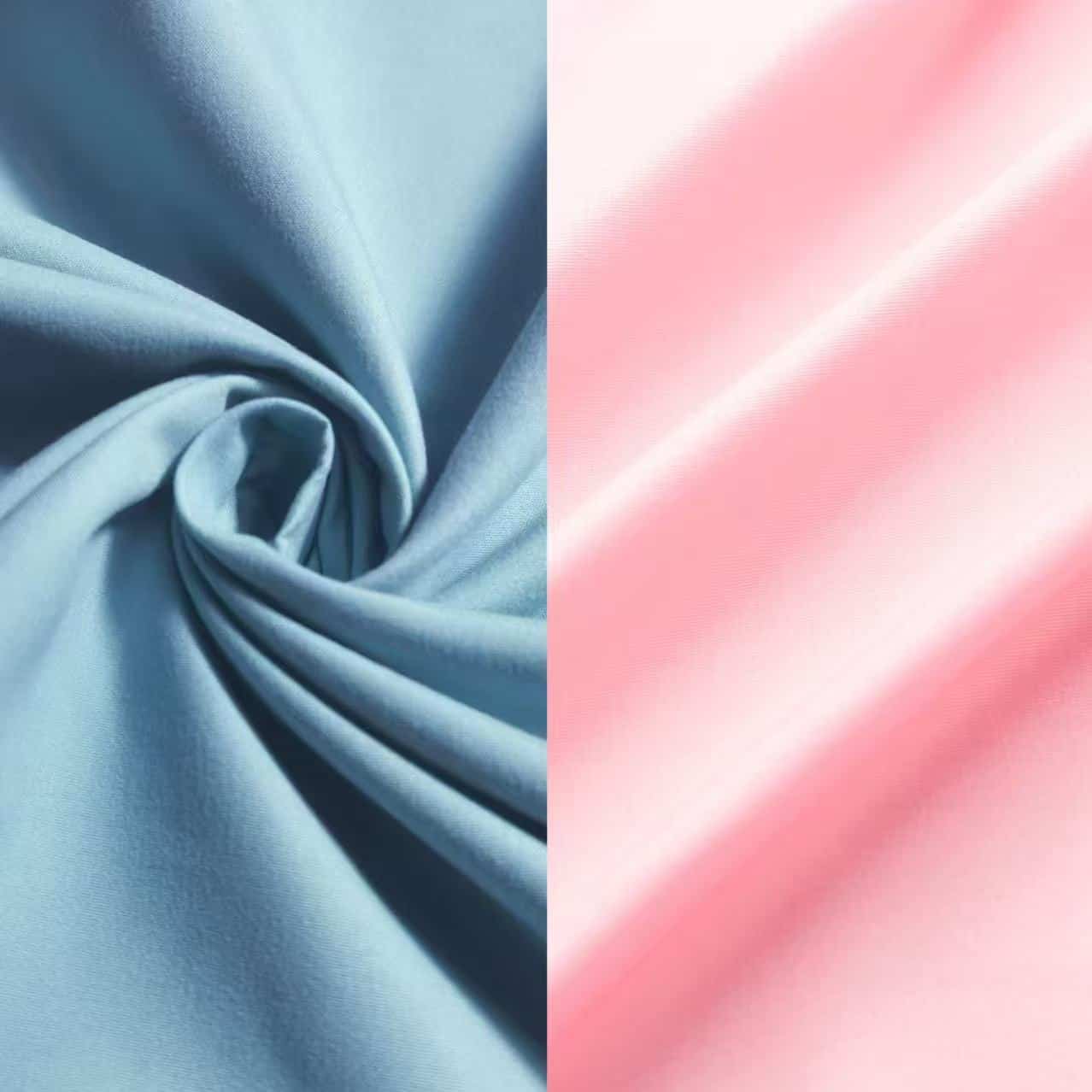
Unbrushed microfiber tends to have a smoother, slightly crisper surface and a more defined weave appearance. Brushed microfiber softens that surface and mutes the visible weave texture. For buyers, the practical difference shows up in hand feel and in how the fabric takes color and light — brushed surfaces tend to look slightly more matte. When you're specifying an order, it helps to say explicitly whether you want the fabric brushed, and on which side, rather than relying on "regular" as a shorthand, since usage of that term varies between suppliers.
Why Is Brushed Microfiber Used for Bedding?
Brushed microfiber is common in bedding for a few practical reasons. The soft surface suits sheets, duvet covers, and pillowcases where hand feel matters directly against skin. Polyester microfiber can be produced in wide finished widths commonly required for bedding applications, subject to the selected construction and production specification. Dyeing and printing options are broad on this base fabric, so solid dyed colors e printed patterns are both readily available.
It's worth being direct about what brushed microfiber doesn't guarantee. It isn't automatically more breathable than cotton, isn't suited to every climate, and won't be immune to shrinkage or wrinkling without the right finishing and care. Any performance claim beyond basic hand feel and appearance should be tied to a specific fabric spec and, where it matters, an actual test result — not assumed from the fiber type.
Quality Problems Buyers Should Check
From a factory floor perspective, most complaints about brushed microfiber trace back to a handful of recurring issues:
- Uneven brushing — patches where the brushing intensity isn't consistent across the roll.
- Visible brushing lines — streaking from roller wear or inconsistent tension.
- Excessive loose fiber or lint — surface fiber that wasn't adequately cleaned off after brushing.
- Embolar — pilling cannot be judged from the word "polyester" alone. Fiber and yarn characteristics, fabric construction, brushing intensity, loose-fiber removal, finishing and actual use conditions all affect the result.
- Inconsistent hand feel batch to batch — usually a sign that brushing parameters weren't held constant across production runs.
- Color variation and shade drift — differences between rolls, or against an approved lab dip, without batch-to-batch shade control in place.
- Width and GSM variation — deviation from the confirmed spec, which affects cutting yield downstream.
- Print or dyeing inconsistency — pattern misregistration or uneven color depth across a print or dye lot.
None of these are inevitable with polyester microfiber — they're process and quality-control issues, and they're exactly what a supplier's inspection process should be built to catch before goods ship. Reducing this risk on your side usually comes down to a few concrete steps: pre-production sample approval and bulk-production sample confirmation, an agreed hand-feel reference sample kept on file for comparison, abrasion testing where your end market requires it, and confirmed width/GSM tolerances up front. None of this requires quoting a specific pass/fail number in advance — it requires agreeing on the reference and the check points before the order runs.
How to Specify Brushed Microfiber Fabric
When you send an inquiry, the more of this you confirm upfront, the fewer surprises later:
- Fiber composition and yarn specification
- Weave or construction
- Finished width
- GSM (fabric weight)
- Which side(s) are brushed, and target brushing intensity or hand feel
- Dyed or printed finish requirement
- Color-fastness requirement
- Pilling requirement, where relevant to your end use
- Packing method
- Order quantity
We can't quote a single universal GSM or width as "standard" for brushed microfiber — those vary by product line and by order — but our team can confirm current specs for a given fabric type once we know your intended application.
Perguntas Frequentes
Is brushed microfiber the same as polyester?
In bedding fabric, brushed microfiber is most commonly made from polyester, but "microfiber" itself describes fiber fineness rather than naming a single polymer. Confirm fiber composition in your spec rather than assuming it from the name.
What is brushed microfiber made of?
Typically fine-denier polyester filament yarn, woven and then surface-brushed. Always confirm exact composition with your supplier, since usage varies across the market.
What does brushed microfiber feel like?
Soft, smooth, and fine, ranging from lightly velvety to a more peach-like surface depending on brushing intensity, yarn, weave, and GSM.
What is double-brushed microfiber?
Fabric that has been brushed on both sides rather than one. It suits applications where both faces may be touched or seen, and typically costs more to process than single-brushed fabric.
Does brushed microfiber pill?
Pilling risk depends on fiber and yarn characteristics, weave density, brushing intensity, and finishing — not on polyester as a word by itself. A pilling test can be arranged if it matters for your order.
Is brushed microfiber suitable for bedding?
Yes — it's widely used for sheets, duvet covers, and pillowcases because of its soft surface and the wide dyeing and printing range available on this base fabric.
Is brushed microfiber the same as peach skin fabric?
Not necessarily. Both can achieve a soft surface through mechanical treatment, but tecido pele de pêssego typically refers to a finer, short-nap, peach-like surface specifically. Market naming overlaps between the two, so don't rely on the name alone — confirm construction, yarn, GSM, brushed face, and target hand feel when sourcing either one.
For buyers, the practical takeaway is this: brushed microfiber isn't one fixed spec — it's a fabric category shaped by fiber composition, weave, brushing intensity, and finishing. Confirming those details before production, rather than after, is what keeps hand feel and quality consistent across a bulk order. If you're sourcing from our bedding fabric range and want to lock in a specification, our team can walk through it with you.
Need to confirm the right brushed microfiber specification for your market?
Tell us your intended use, target GSM, finished width, dyed or printed requirement, target hand feel, order quantity, and any testing requirement — we'll confirm what we can produce.
Discuss Your Fabric Specification Portuguese
 English
 Arabic
 Spanish
 French
 Italian
 Vietnamese