
You encounter polyester woven fabric in many parts of your daily life. This fabric comes from synthetic materials made with petroleum-based chemicals. You will notice its strength and how it resists wrinkles. It can also look and feel like cotton, silk, or wool. The table below shows where you might find it used most often:
Industry/Application | Descrição |
|---|---|
Clothing | Used for everyday wear, sportswear, and fashion due to durability and low cost. |
Home Furnishings | Utilized for upholstery, drapes, and other interior furnishings. |
Industrial Textiles | Employed in conveyor belts, filter fabrics, and tire reinforcements. |
Performance Fabrics | Used in active wear and outdoor gear for moisture-wicking and quick-drying. |
Safety Belts | Essential in car seat belts for their tensile strength and durability. |
Principais Conclusões
Polyester woven fabric is strong, durable, and wrinkle-resistant, making it ideal for clothing and home furnishings.
A manufacturing process involves polymerization, fiber spinning, and weaving, which creates a versatile material from petroleum-based chemicals.
Polyester excels in moisture-wicking and quick-drying properties, making it a popular choice for activewear and outdoor gear.
Blending polyester with natural fibers like cotton enhances comfort while maintaining durability and easy care.
Consider the environmental impact of polyester production and opt for recycled polyester to reduce waste.
What is Polyester Woven Fabric
Definition & Main Features
You might wonder what makes polyester woven fabric unique. This fabric comes from synthetic fibers created through a chemical process. Manufacturers combine ethylene and terephthalic acid to form a strong polymer. They melt this polymer and spin it into long, continuous fibers. These fibers are then woven together to create the fabric you see in clothing, upholstery, and many other products.
Aqui estão os main steps in making polyester woven fabric:
Polymerization: Ethylene and terephthalic acid combine to create the polyester polymer.
Melt Spinning: The polymer melts and passes through spinnerets to form fibers.
Drawing: The fibers stretch to align the polymer chains, which makes them stronger.
Texturing (Optional): Some fibers get textured for a bulkier look.
Finishing: Treatments improve performance and appearance.
Fabric Production: The fibers are woven or knitted into fabric.
Polyester woven fabric stands out because of its impressive physical and mechanical properties. You will notice these features:
Grab strength increases as the fabric weight rises.
Tear strength ranges from 14 to 35 newtons, depending on the direction and fiber content.
Unrecovered stretch remains low, which helps the fabric keep its shape.
You can count on polyester woven fabric for its durability, wrinkle resistance, and ability to mimic the feel of natural fibers.
Comparison with Other Fabrics
When you compare polyester woven fabric to other materials, you see clear differences in strength, durability, and comfort. Take a look at the table below to understand how polyester stacks up against nylon and cotton:
Tipo de Tecido | Tensile Strength (MPa) | Abrasion Resistance (Martindale cycles) |
|---|---|---|
Nylon | 800–1,200 | >50,000 |
Poliéster | 500–800 | 30,000–45,000 |
Algodão | 350–600 | 10,000–20,000 |
Polyester woven fabric is strong and keeps its shape well. You will find it useful in products that need to last a long time.
Cotton feels soft and lets your skin breathe, but it does not last as long and can lose strength when wet or exposed to sunlight.
Nylon offers even more durability and elasticity, which makes it perfect for items that face a lot of wear and tear.
“The moisture vapor transport rate for linen is much greater than that for cotton or polyester.”
Natural fibers like cotton, linen, and wool allow more air to pass through and manage moisture better than polyester woven fabric. If you want a fabric that dries quickly and resists wrinkles, polyester is a smart choice. If you prefer breathability and comfort, natural fibers might suit you better.
You can see that polyester woven fabric offers a balance of strength, durability, and easy care. It may not match the breathability of natural fibers, but it excels in many other ways.
Making Polyester Woven Fabric
Polymerization & Raw Materials
You start with two main chemicals to make polyester woven fabric. These chemicals are purified terephthalic acid (PTA) and mono ethylene glycol (MEG). Both come from petroleum. PTA is a white powder, and MEG is a clear liquid often used in antifreeze. When you mix and heat these chemicals, they react and form a strong plastic called polyethylene terephthalate (PET). This plastic becomes the base for the fibers in polyester woven fabric.
Raw Material | Descrição |
|---|---|
Purified Terephthalic Acid (PTA) | The primary raw material in polyester production, primarily in powder form. |
Mono Ethylene Glycol (MEG) | The second component of polyester, widely used in various applications, including as anti-freeze. |
You can see that the process begins with simple ingredients, but the result is a versatile material used in many products.
Fiber Spinning & Yarn Creation
After you create PET, you need to turn it into fibers. You melt the PET and push it through tiny holes called spinnerets. This forms long, thin filaments. You cool these filaments quickly so they become solid. Next, you stretch the filaments to make them stronger and more elastic. This step is called drawing. You may also heat-treat the fibers to improve their properties.
Aqui estão os main steps in fiber spinning:
Prepare the polymer by mixing and reacting PTA and MEG.
Melt the polymer to make a spinning fluid.
Spin the fluid by extruding it through spinnerets, then solidify the filaments.
Draw the filaments to increase strength and elasticity.
Apply heat treatment for better performance.
Process the fibers by twisting, oiling, or dyeing.
The way you create yarn affects the final properties of tecido de poliéster tecido. If you stretch the filaments well, you get yarn that is strong and elastic. This makes the fabric durable and suitable for many uses. You also notice that the fabric resists wrinkles and does not shrink. These features make polyester woven fabric ideal for clothing and active wear. The fabric dries quickly and feels comfortable during exercise.
The yarn creation process begins with polymerization of raw materials like purified terephthalic acid (PTA) and monoethylene glycol (MEG) to form polyethylene terephthalate (PET).
The PET is melted and extruded through spinnerets to create continuous filaments, which are then cooled and solidified.
These filaments are stretched and oriented to improve their strength and elasticity, leading to yarn with enhanced properties.
Polyester fabric is durable and suitable for various applications.
It is stretchable, wrinkle-resistant, and does not shrink, making it ideal for everyday clothing.
The fabric’s moisture-wicking and quick-drying properties enhance comfort, especially for active wear.
Weaving Process
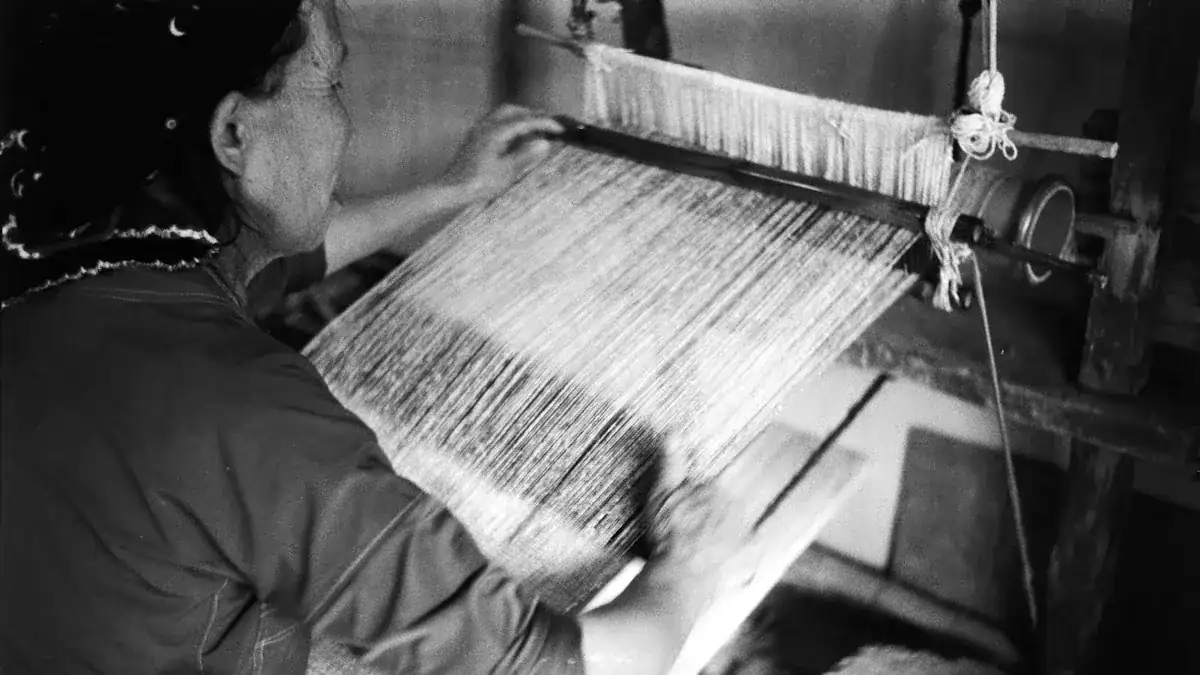
Once you have strong yarn, you weave it into fabric. You use different weaving techniques to create various textures and strengths. The most common methods include plain weave, satin weave, twill weave, jacquard weaving, and dobby weaving.
Técnica de Tecelagem | Descrição |
|---|---|
Plain Weave | Simple, flat pattern with a uniform surface created by alternating warp and weft threads. |
Trama de Cetim | Lustrous appearance with a smooth surface, created by having the warp or weft yarns float over several opposite yarns. |
Twill Weave | Characterized by diagonal lines, providing durability and texture by passing the weft under and over multiple warp yarns. |
Jacquard Weaving | Allows for intricate patterns and designs, commonly used for high-end fabrics. |
Dobby Weaving | Creates repetitive small patterns, adding texture to fabrics. |
A weaving process changes the strength and texture of polyester woven fabric. If you use a tight weave, the fabric becomes stronger and less likely to break. Looser weaves can make the fabric softer but may shed fibers more easily. Warp yarns, which run lengthwise, are usually stronger than weft yarns, which run across the fabric. You choose the weaving method based on the final use of the fabric.
Tip: Tighter weaves make polyester woven fabric more durable, while looser weaves add softness and flexibility.
Finishing Touches
After weaving, you finish the fabric to improve its look and feel. You can use chemical or mechanical treatments. These treatments change the surface and performance of the fabric.
Singeing burns off loose fibers for a smooth surface.
Calendaring uses heated rollers to make the fabric glossy.
Napping raises surface fibers for a soft texture.
Shearing cuts raised fibers to a uniform height.
Brushing removes loose fibers for extra softness.
Sueding abrades the surface for a suede-like feel.
Embossing creates raised patterns.
Beetling pounds the fabric for a flat, shiny effect.
Raising lifts fibers for a fluffy texture.
Compaction reduces shrinkage during washing.
Peaching abrades the surface for a soft touch.
Moiréing produces a wavy pattern.
These finishing processes affect how the fabric feels and performs. They change the surface roughness, which can improve water repellency, durability, and comfort. The way the fabric interacts with finishing agents also matters. Mechanical actions, such as washing and drying, can change the roughness and durability of the fabric.
Impact Factor | Descrição |
|---|---|
Surface Roughness | Finishing processes alter the surface roughness of polyester woven fabric, affecting its properties. |
Functional Properties | Changes in roughness influence water repellency, durability, and tactile perception. |
Interaction with Finishing Agents | The roughness affects how well the fabric can adhere to finishing agents, enhancing its characteristics. |
Mechanical Action | Factors like washing temperature and detergent residues modify fabric roughness and durability. |
You can see that every step, from raw materials to finishing, shapes the final quality of polyester woven fabric. The process gives you a fabric that is strong, versatile, and ready for many uses.
Polyester Woven Fabric Types & Properties
Common Types
You will find several types of polyester woven fabric, each with unique features. The table below shows the most widely used types and what makes them special:
Type of Polyester Fabric | Distinguishing Features |
|---|---|
PET (Polyethylene Terephthalate) | High tensile strength, excellent resistance to stretching and shrinking, cost-efficient, durable. |
PCDT (Poly-1,4-Cyclohexylene-Dimethylene Terephthalate) | Greater elasticity and resilience, superior flexibility, ideal for upholstery and drapery. |
Smooth, soft finish, dense weave, hypoallergenic properties, high moisture absorption. | |
Recycled Polyester (rPET) | Made from post-consumer plastic waste, environmentally friendly, lightweight, and durable. |
You can choose the type that fits your needs, whether you want durability, softness, or eco-friendly options.
Performance & Durability
Polyester woven fabric stands out for its strength and long-lasting nature. You will notice that high-quality polyester can last for years without losing its shape or color. Lower-quality polyester may wear out faster, showing holes or pilling. The weave pattern also matters. Twill, canvas, and ripstop weaves make the fabric even tougher.
Synthetic fabrics can handle over 500 wash cycles.
The weave pattern gives extra reinforcement and helps the fabric resist damage.
Polyester woven fabric also performs well in abrasion resistance and color retention. The table below compares these properties with cotton and linen:
Propriedade | Poliéster | Algodão | Linho |
|---|---|---|---|
Abrasion Resistance (Martindale) | 45,000+ | 15,000 | 12,000 |
Retenção de Cor | Excelente | Fair | Poor |
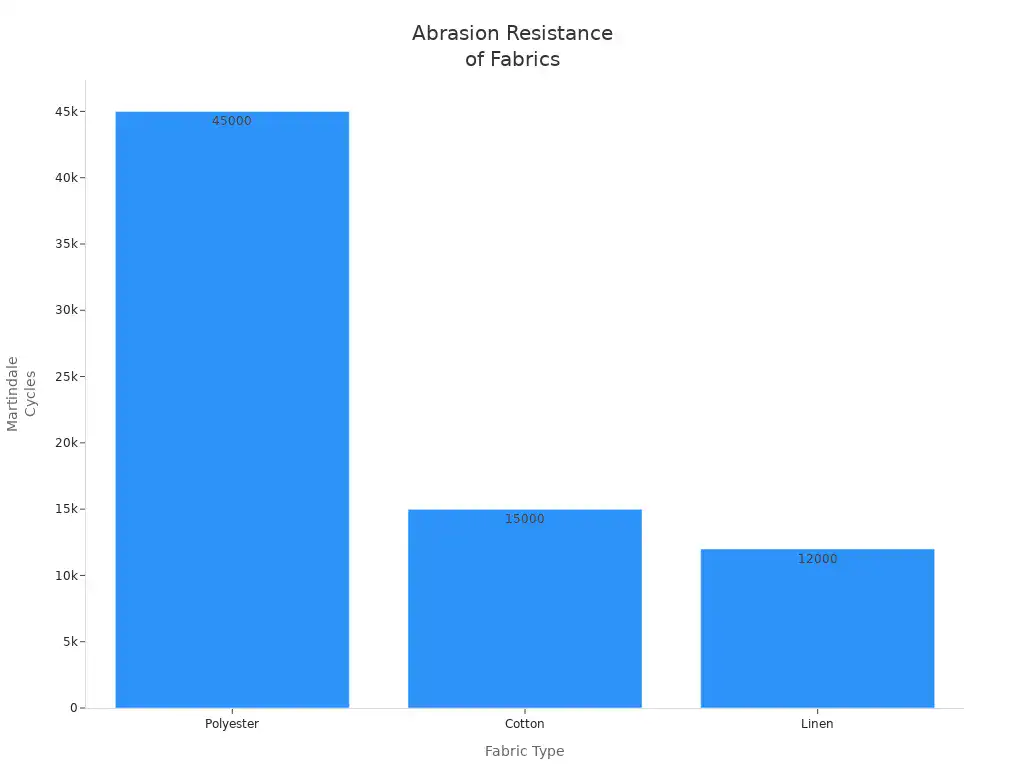
You will see that polyester woven fabric is a smart choice for items that need to last and keep their color, such as home textiles and uniforms.
Blending with Natural Fibers
You can blend polyester with cotton or other fibers to improve comfort and durability. This mix gives you the best of both worlds:
Improved strength and durability: Polyester makes the fabric tough, while cotton keeps it soft.
Moisture management: The blend lets air flow and dries quickly, so you stay comfortable.
Wrinkle and shrink resistance: Polyester helps the fabric keep its shape after washing.
Easy care: The combination creates a lightweight fabric that is simple to wash and lasts a long time.
Blending polyester with natural fibers means you get a fabric that feels good, looks good, and works well for many uses. You will find these blends in shirts, bed sheets, and sportswear.
Tip: If you want a fabric that is soft, easy to care for, and lasts a long time, look for blends of polyester and cotton.
Uses, Environment & Cost
Everyday Applications
You see polyester woven fabric in many parts of your daily life. This fabric appears in gym wear because it wicks away moisture and keeps you dry. You find it in home furnishings, such as curtains and upholstery, because it lasts a long time. Factories use it in heavy-duty conveyor belts for its strength. The fashion industry likes it for clothes that need to be tough and easy to care for. You also notice it in activewear, where a slight stretch helps you move comfortably. Many brands blend it with cotton to make clothes softer and more breathable.
Used in gym wear for moisture control
Applied in home furnishings for durability
Utilized in industrial products like conveyor belts
Chosen for garments needing easy maintenance
Blended with cotton for comfort
Impacto Ambiental
You might wonder about the effect of polyester woven fabric on the environment. Making this fabric uses a lot of energy and water. For every kilogram produced, about 3.12 kilograms of carbon dioxide enter the air. The textile industry creates over 8% of global CO2 emissions. In 2015, factories used about 79 billion cubic meters of water to make textiles. Washing polyester fabrics releases tiny fibers called microplastics. These fibers travel through wastewater and can harm fish and other aquatic life.
Tipo de Evidência | Descrição |
|---|---|
Liberação de Microfibra | Polyester woven fabric releases microfibers during washing. |
Sources of Pollution | Textiles are a major source of microplastic pollution. |
Impact on Aquatic Environments | Released microfibers enter water systems and threaten aquatic life. |
Note: Many brands now use recycled polyester to reduce waste and lower the environmental impact.
Cost Factors
You notice that several things affect the price of polyester woven fabric. The cost of raw materials, like PTA and MEG, changes with oil prices. Complex weaving or special finishes can make the fabric more expensive. Shipping costs and trade policies also play a role. New technology and recycling help lower costs and meet the demand for high-performance fabrics. Government rules that support recycling and waste reduction also shape the market.
Raw material costs depend on oil prices
Manufacturing complexity increases price
Shipping and trade policies affect cost
Technology and recycling lower expenses
Fatorar | Descrição |
|---|---|
PTA and MEG | Both come from crude oil and are key for polyester production. |
Price Influence | Changes in oil prices change polyester costs. |
Market Conditions | Contracts and regions can affect price changes. |
You now know that polyester woven fabric is a strong, lightweight textile made by weaving polyester fibers. The process starts with chemicals, forms fibers, and weaves them into fabric.
Recurso | Descrição |
|---|---|
Definition | Polyester woven fabric is a textile made by weaving polyester fibers together, resulting in a strong and lightweight material. |
Processo de Fabricação | The fabric is created through a process called polymerization, where man-made fibers are produced from chemicals. The weaving process involves using looms to interlace yarns in various patterns, such as plain and twill. |
Key Properties | The fabric is durable, affordable, versatile, resists wrinkles and shrinking, and maintains its appearance over time. |
You choose polyester for its durability, low cost, and versatility in clothing, home goods, and industry. You should also consider its environmental impact and look for recycled options. Polyester woven fabric gives you a practical, long-lasting choice for many needs.
Perguntas Frequentes
What makes polyester woven fabric different from polyester knit fabric?
Polyester woven fabric uses interlaced yarns, which create a sturdy and less stretchy material. Polyester knit fabric uses looped yarns, so it feels softer and stretches more. You choose woven for durability and knit for comfort.
Can you wash polyester woven fabric in a washing machine?
You can wash polyester woven fabric in a washing machine. Use cold or warm water. Avoid high heat when drying. Polyester resists shrinking and wrinkling, so you do not need to iron it often.
Is polyester woven fabric safe for sensitive skin?
Polyester woven fabric does not cause allergies for most people. If you have sensitive skin, you may feel itchy. You can choose blends with cotton for extra comfort.
How do you recycle polyester woven fabric?
You recycle polyester woven fabric by sending it to textile recycling centers. These centers break down the fabric and turn it into new fibers. Many brands use recycled polyester in their products.
Does polyester woven fabric fade in sunlight?
Polyester woven fabric resists fading better than cotton. You can use it for outdoor items. Over time, strong sunlight may cause some color loss, but the fabric stays strong.
Ver também
Comparando Impressão em Painel e Digital para Roupas de Cama de Poliéster em 2025
Escolhendo entre lençóis de microfibra e 100%% poliéster para você
 Portuguese
 English
 Arabic
 Spanish
 French
 Italian
 Vietnamese